Dr. Ing. Jaroslav Šmejkal – Plan4All
Young innovators use Earth Observation and IoT to develop solutions for agriculture and aquaculture in the Lake Victoria Basin
On 24–25 July 2026, LakeHub in Kisumu became a hub of creativity and technological innovation as young developers, engineers, designers, entrepreneurs and innovators gathered for the KijaniSpace Talent Hackathon 2026. The event marked the culmination of the Space-IoT Talent Programme, an initiative designed to equip young people with practical skills in Earth Observation (EO), Internet of Things (IoT) and digital innovation.
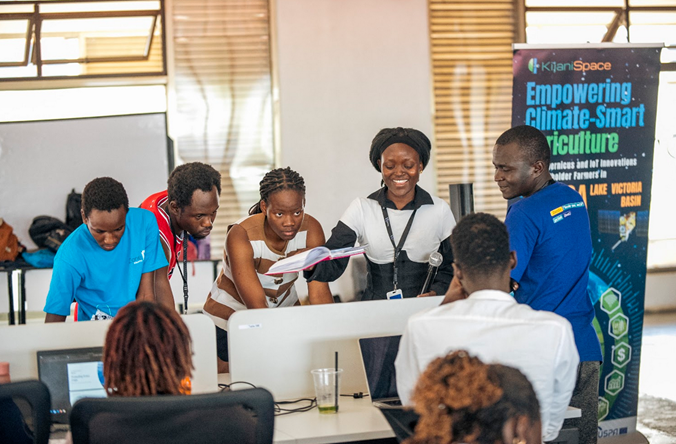
Under the theme “Hack for Aquaculture & Crops Using Earth Observation and IoT Technologies,” participants were challenged to turn technology into practical solutions for real problems facing agriculture and aquaculture in the Lake Victoria Basin. Using Copernicus Earth Observation data together with the Space-IoT Box platform, multidisciplinary teams moved rapidly from identifying challenges to developing functional prototypes.
The hackathon was much more than a competition. It provided a practical environment where participants could apply newly acquired technical knowledge, work across disciplines, receive expert mentoring and explore the entrepreneurial potential of their ideas.
From training to real-world solutions
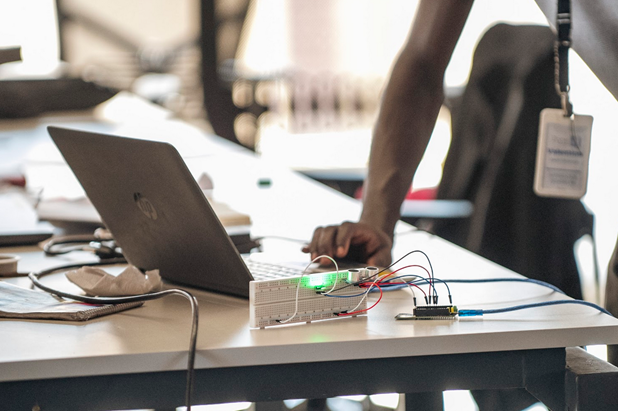
The two-day event followed an intensive process of ideation, prototyping, mentoring and pitching. On the first day, participants formed multidisciplinary teams and were introduced to the challenge, available technologies and expected outputs. Technical demonstrations showed how the Space-IoT Box and Earth Observation data could be combined to support climate-smart agriculture and aquaculture.
Teams then began an intensive development process. Supported by experienced mentors, they worked on software development, systems integration, user experience, business modelling and technical implementation. Regular feedback sessions allowed teams to test their ideas, identify weaknesses and improve their prototypes.
The second day focused on final development and presentation. Teams refined their products, completed their business models and prepared pitches before presenting their solutions to an independent judging panel.
The results were impressive: nine teams developed functional Minimum Viable Products (MVPs) within the limited hackathon period. Each team also prepared a business model and pitch, demonstrating that the programme was not only about building technology but also about understanding users, markets and potential pathways towards implementation.
Nine ideas, one shared ambition
The participating teams—Feed Sync, Nemo, Jonam, Midnight Lab, Terra Tech, Sky Scope, Mwangaza, Soil IQ and Bionode—approached the challenge from different perspectives. Their solutions reflected a common ambition: to use digital technologies to improve agricultural productivity, environmental sustainability, resource management and climate resilience.

The diversity of ideas demonstrated the value of bringing together participants with different technical and professional backgrounds. Software developers, engineers, designers, agriculture specialists and entrepreneurs contributed different perspectives, helping teams look at challenges from both technological and practical points of view.
An independent panel assessed the projects against six criteria: innovation, problem relevance, technical implementation, feasibility and scalability, user experience, and presentation quality. This structured approach allowed all teams to be assessed against the same framework while recognising both technical performance and the practical potential of their ideas.
The experience also highlighted how quickly young innovators can transform an initial concept into a working prototype when provided with the right combination of technology, mentoring and collaborative support.
Beyond the competition
While three teams received awards, the broader outcome extended well beyond the final rankings. Every participating team produced a functional prototype, a business model and a professional presentation. The hackathon therefore served as a practical demonstration of the capacity developed through the Space-IoT Talent Programme.
Participants gained hands-on experience in software development, data analysis, systems integration, user-centred design, rapid prototyping and digital product development. At the same time, they developed skills that are essential for turning technology into sustainable innovation: teamwork, communication, leadership, business modelling and pitching.
The continuous involvement of mentors was particularly important. Rather than providing support only at the end of the process, mentors worked with teams throughout the development cycle, helping them address technical problems, improve system design, strengthen user experience and refine their business models.
The hackathon also created new connections among young innovators, mentors, judges, technical experts and ecosystem partners. These relationships can provide a foundation for future collaboration, incubation and investment.
Lessons for future innovation programmes
The KijaniSpace experience offers several lessons for building effective innovation programmes. First, hands-on learning matters. Moving quickly from theory to real-world problem solving helped participants strengthen their technical skills and confidence.
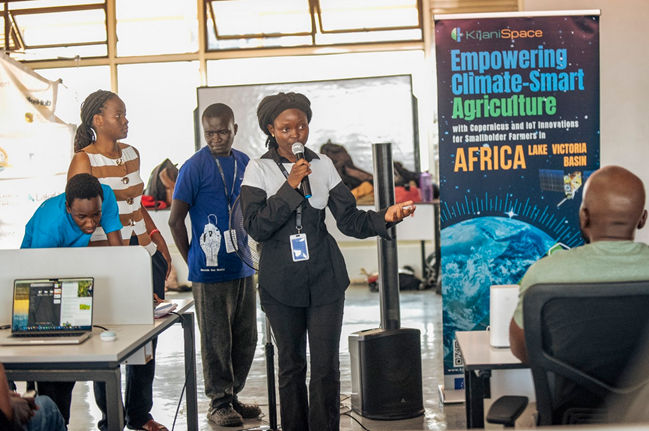
Second, mentorship is critical. Access to experienced professionals throughout the prototyping process enabled teams to overcome technical and strategic challenges and improve the quality of their solutions.
Third, diversity strengthens innovation. Multidisciplinary teams brought together different forms of expertise and encouraged participants to approach problems from multiple perspectives.
Finally, the hackathon demonstrated the importance of combining technical and business thinking. Developing a prototype was only one part of the challenge. Teams also had to consider customer needs, value propositions, sustainability, scalability and market readiness.
A transparent and structured evaluation process further helped participants understand expectations and strengthened the credibility of the competition.
From prototypes to lasting impact
For the organisers and partners, the hackathon is not an endpoint but the beginning of a longer innovation journey. The nine MVPs provide a starting point for further testing, refinement and potential deployment, but turning prototypes into sustainable products will require continued support.
Future priorities include ongoing technical mentoring, incubation and business development, customer validation, intellectual property support and investment readiness. Selected solutions could also be tested through pilot projects with farming and aquaculture communities.
Stronger collaboration between innovation hubs, research organisations, government institutions, development partners and the private sector could help promising solutions move more quickly from prototypes to real-world applications.
The creation of a KijaniSpace Alumni Innovation Network and the organisation of future innovation challenges could further maintain the momentum generated by the programme.
Ultimately, the KijaniSpace Talent Hackathon demonstrated what can happen when young people are given access to emerging technologies, expert guidance and an opportunity to tackle real challenges. By bringing Earth Observation, IoT and entrepreneurship together, the event created not only nine prototypes, but also a growing community of innovators capable of contributing to more sustainable agriculture, aquaculture and digital development in Kenya.
The prototypes may have been built in just two days. Their potential impact, however, depends on what happens next.