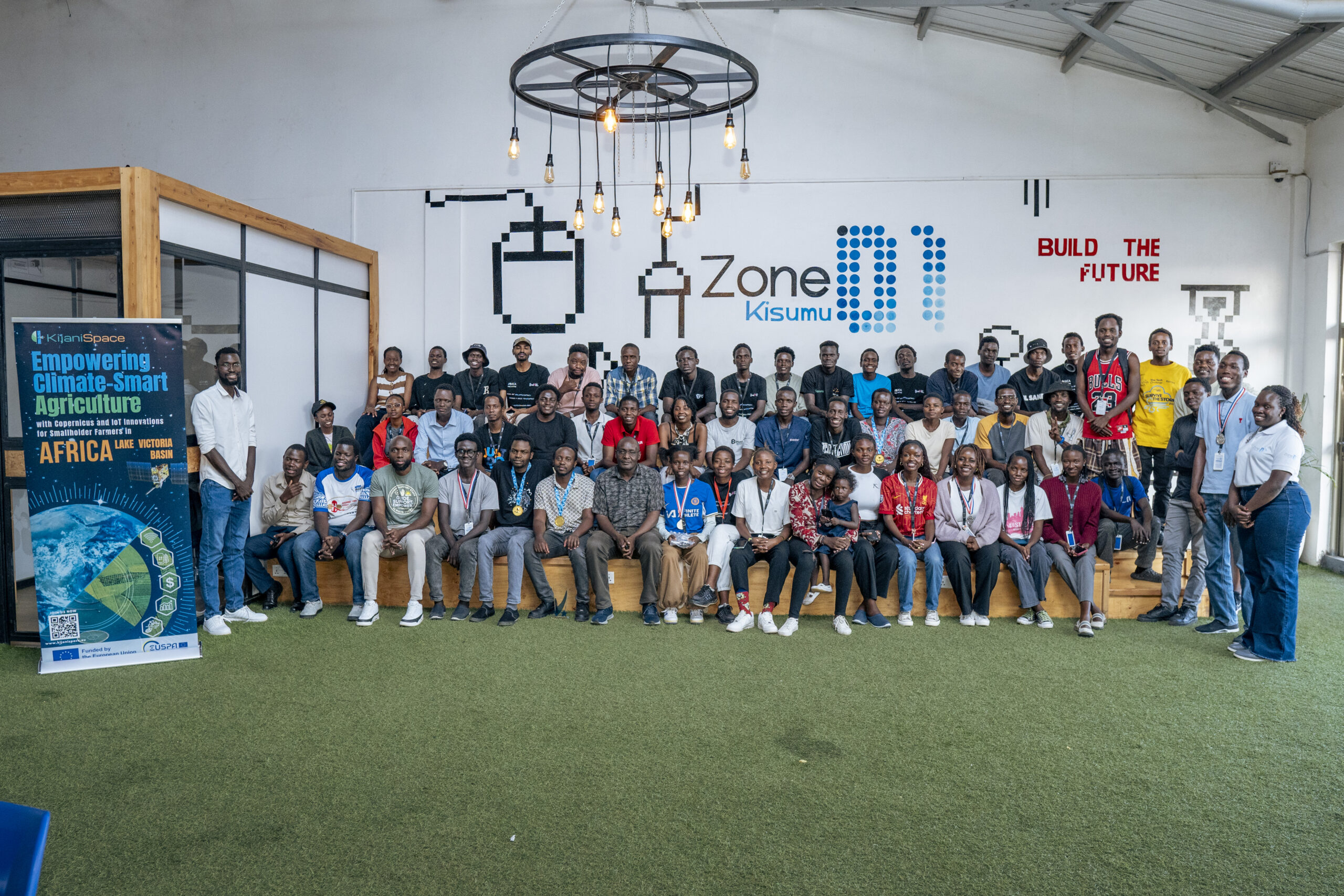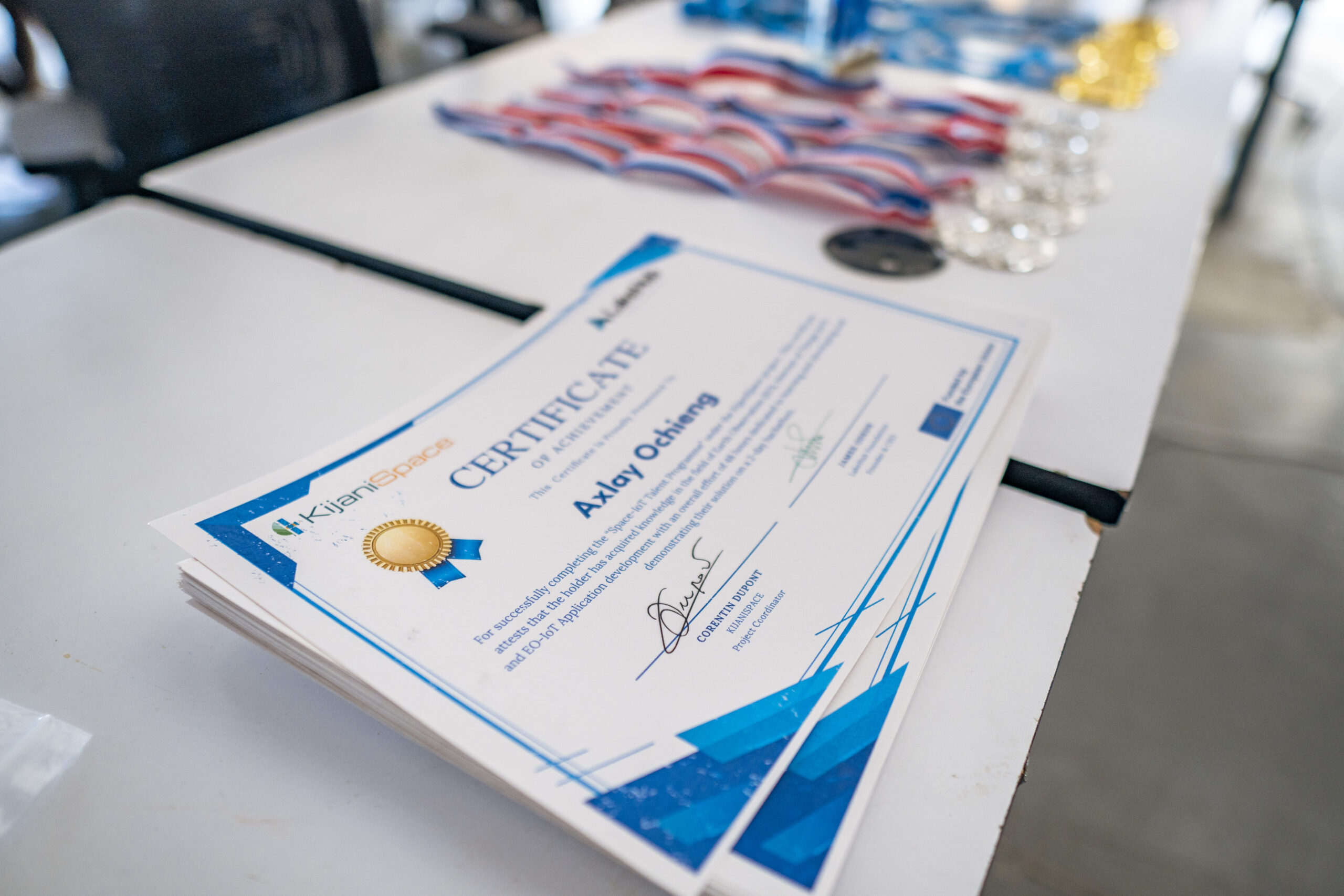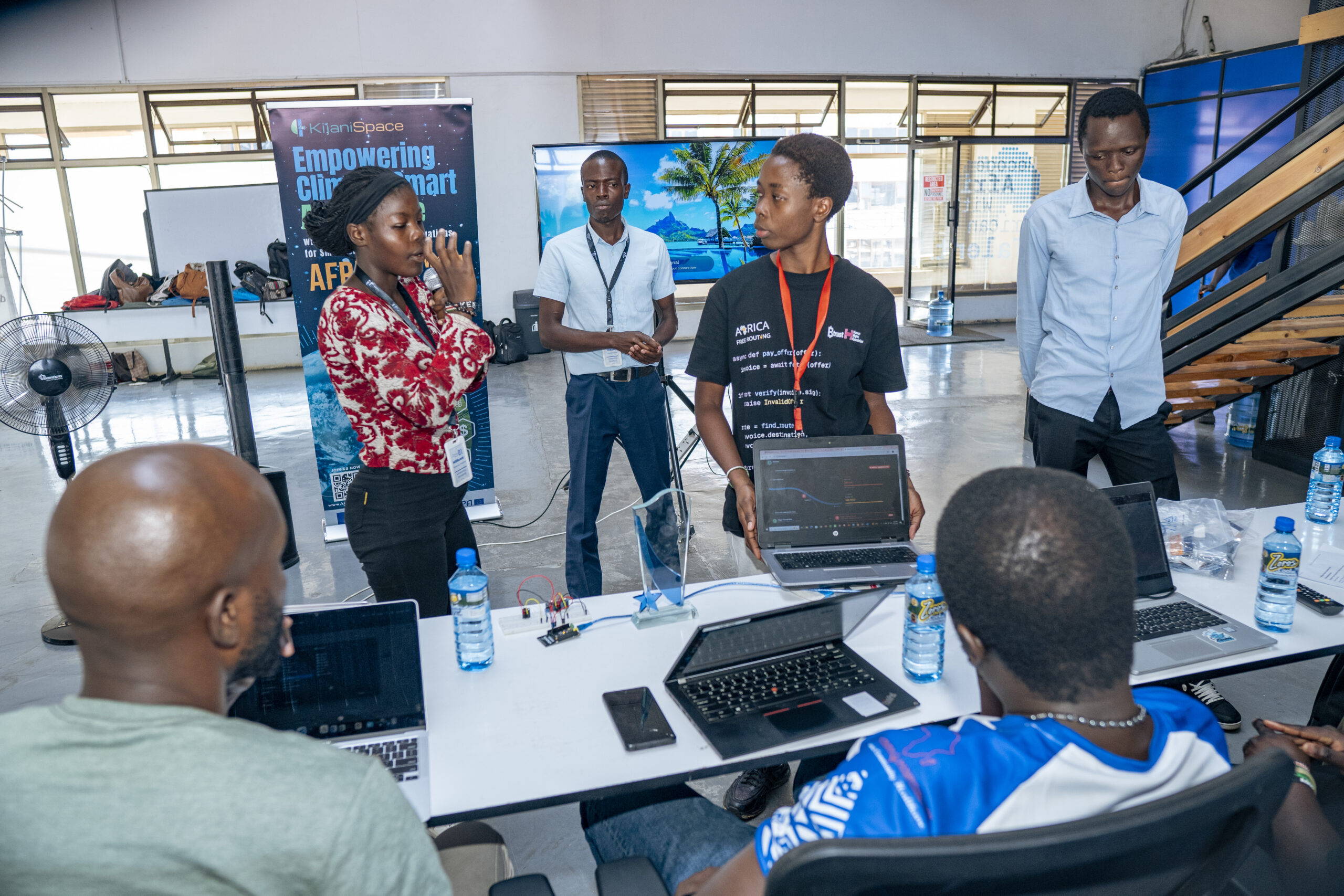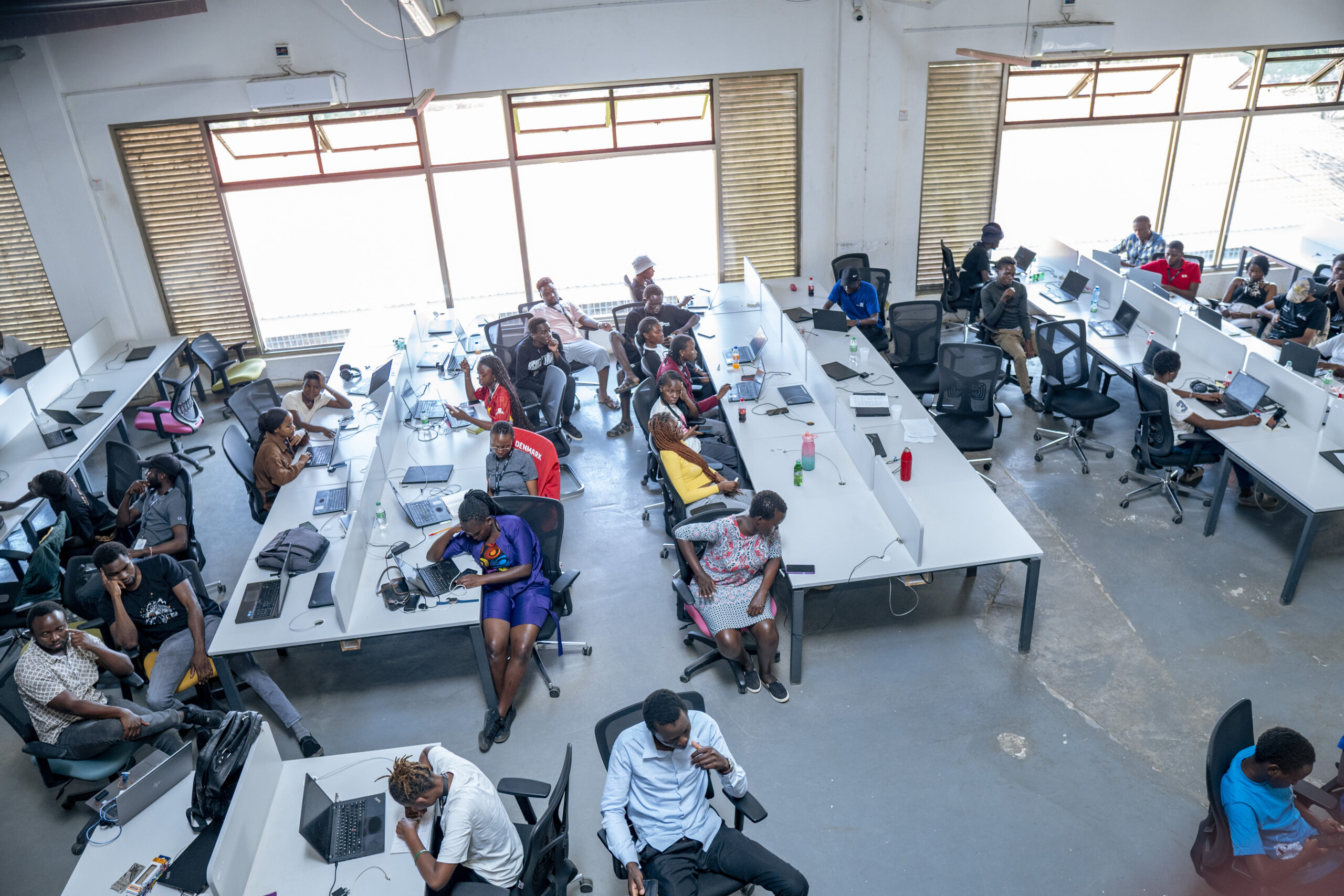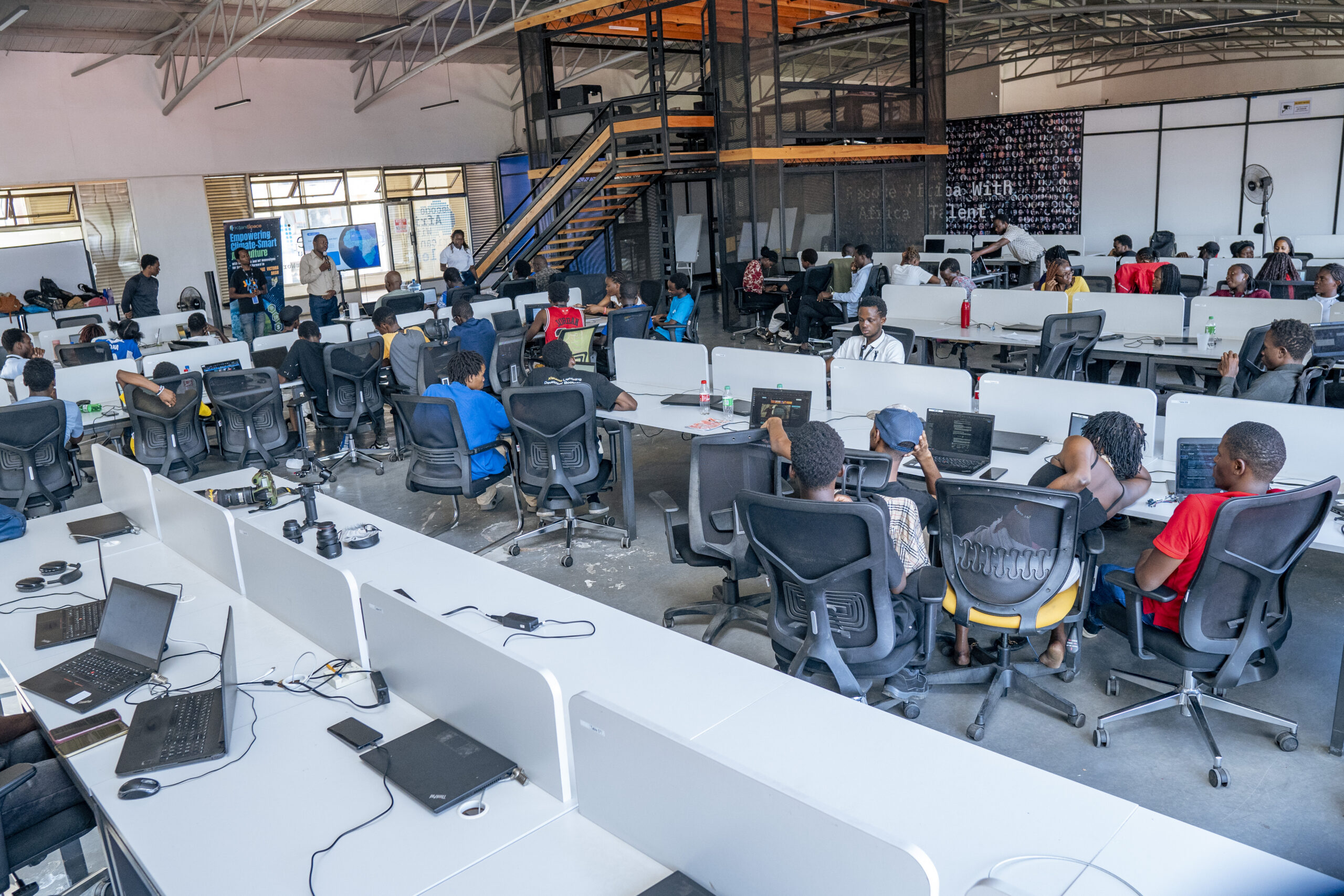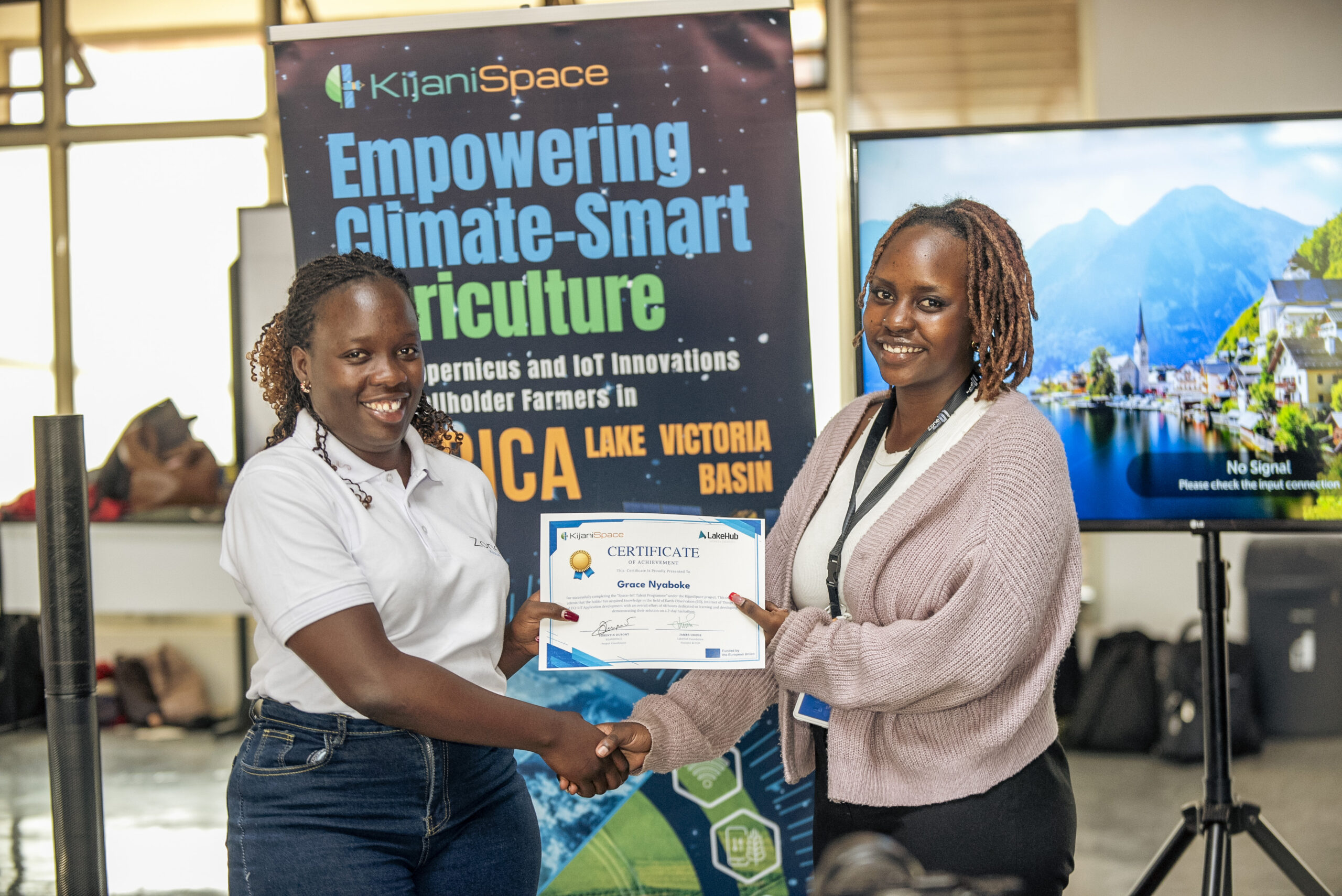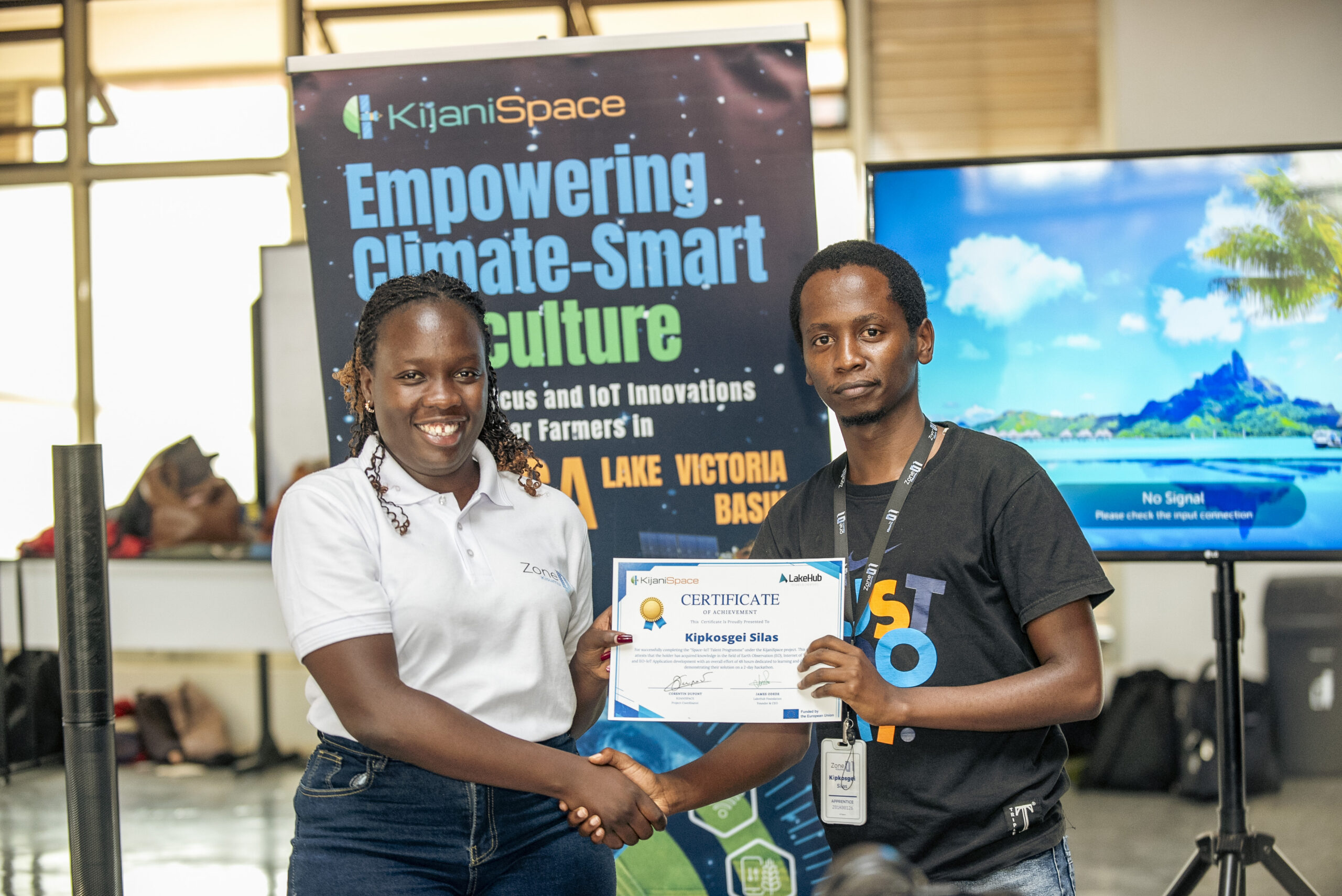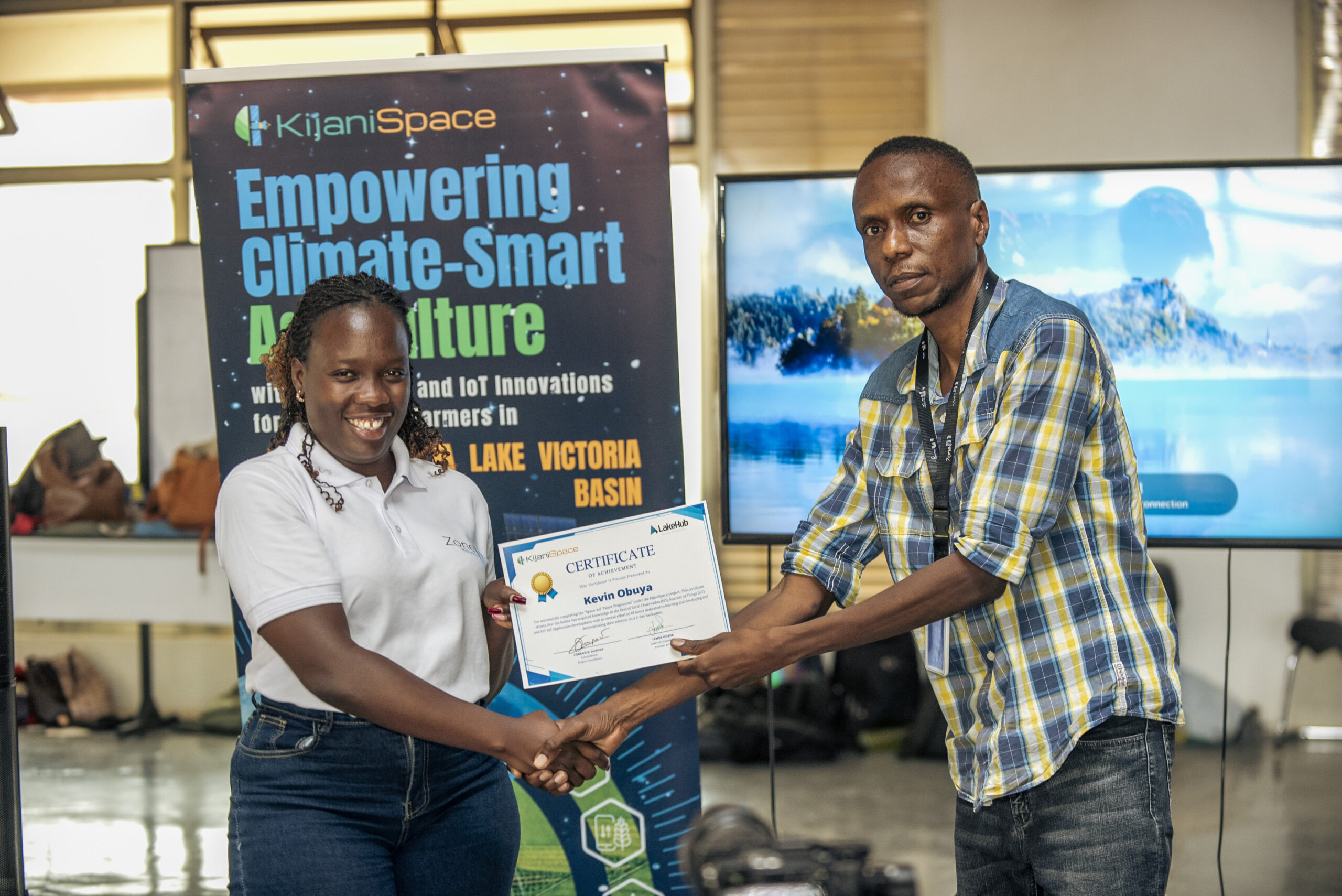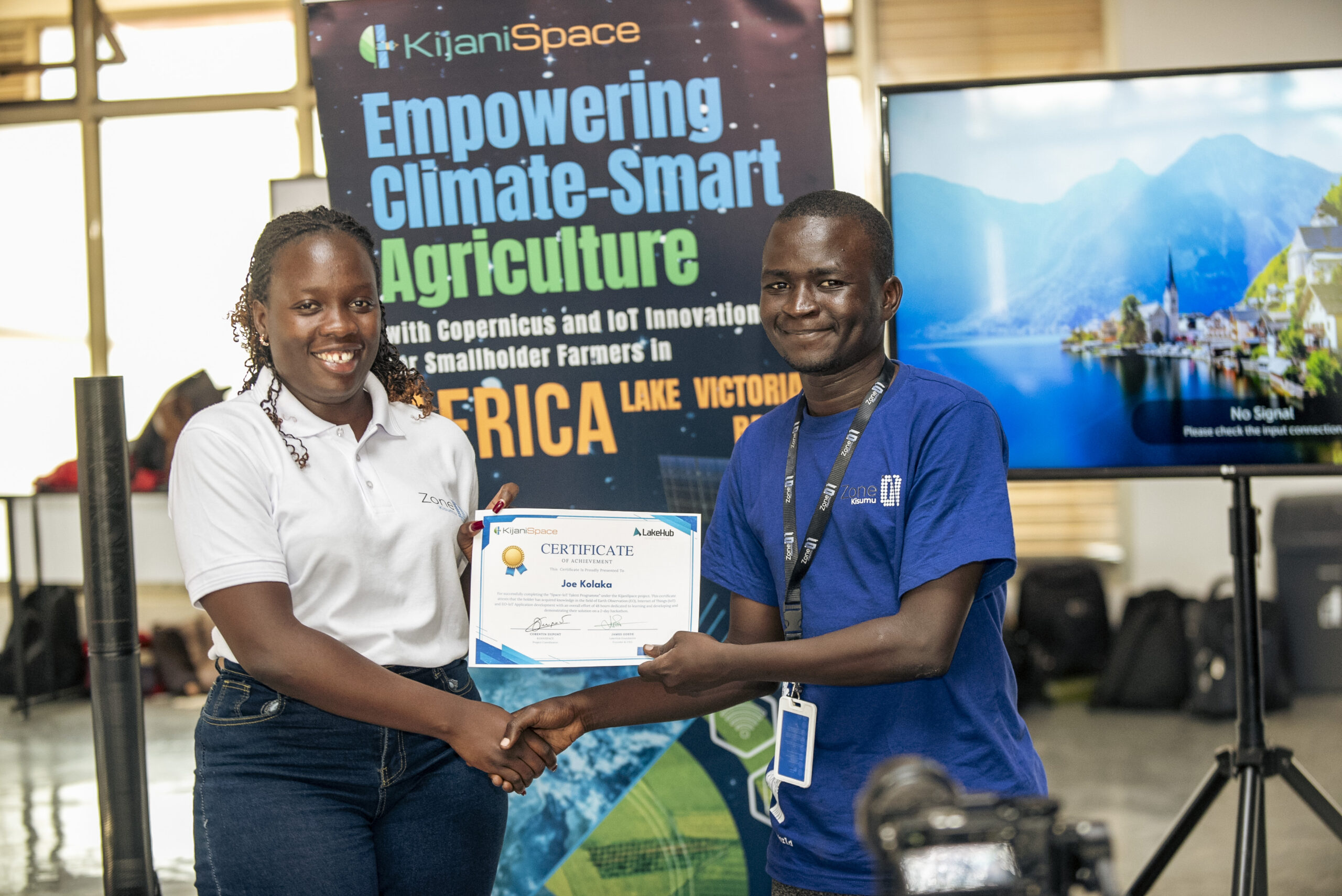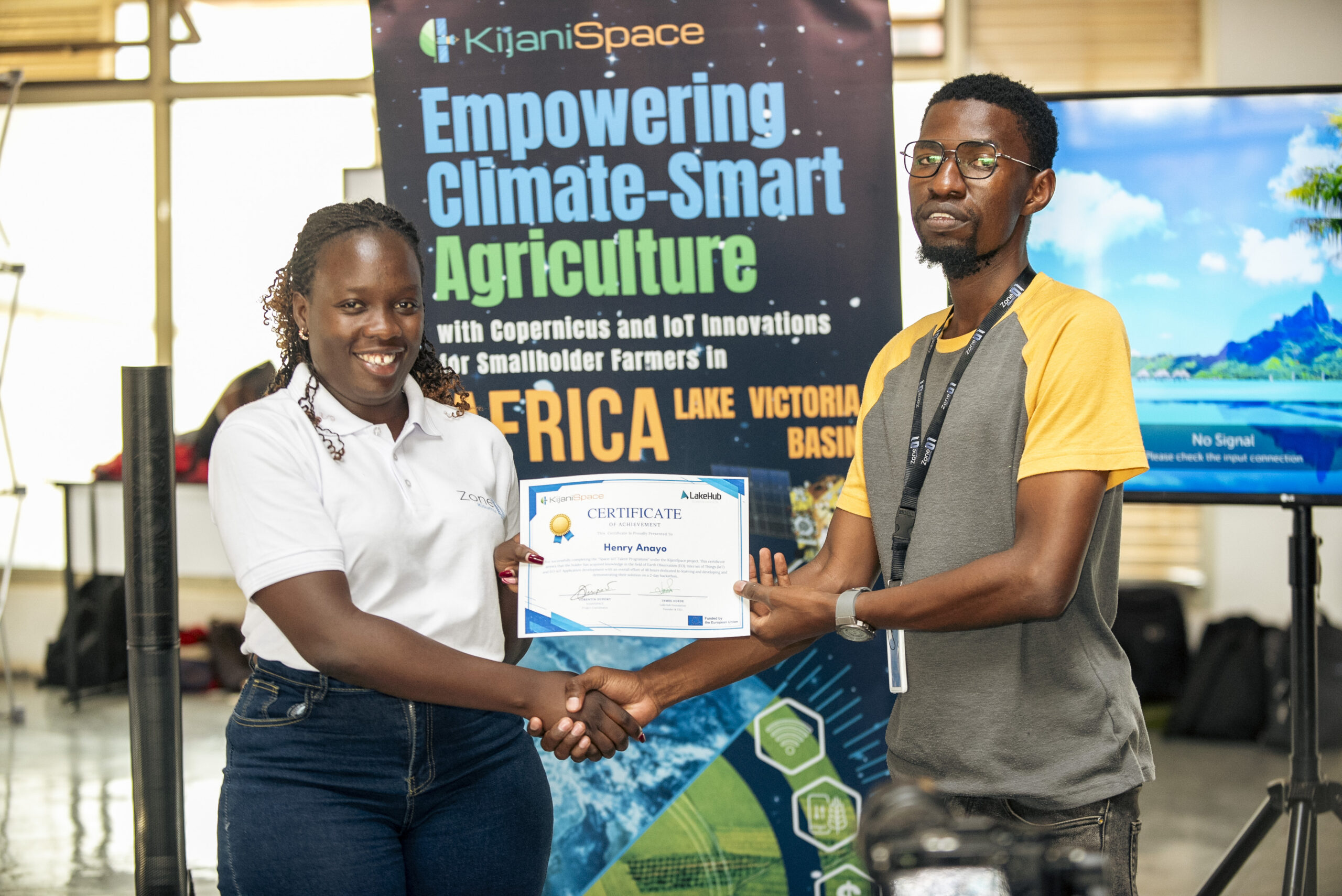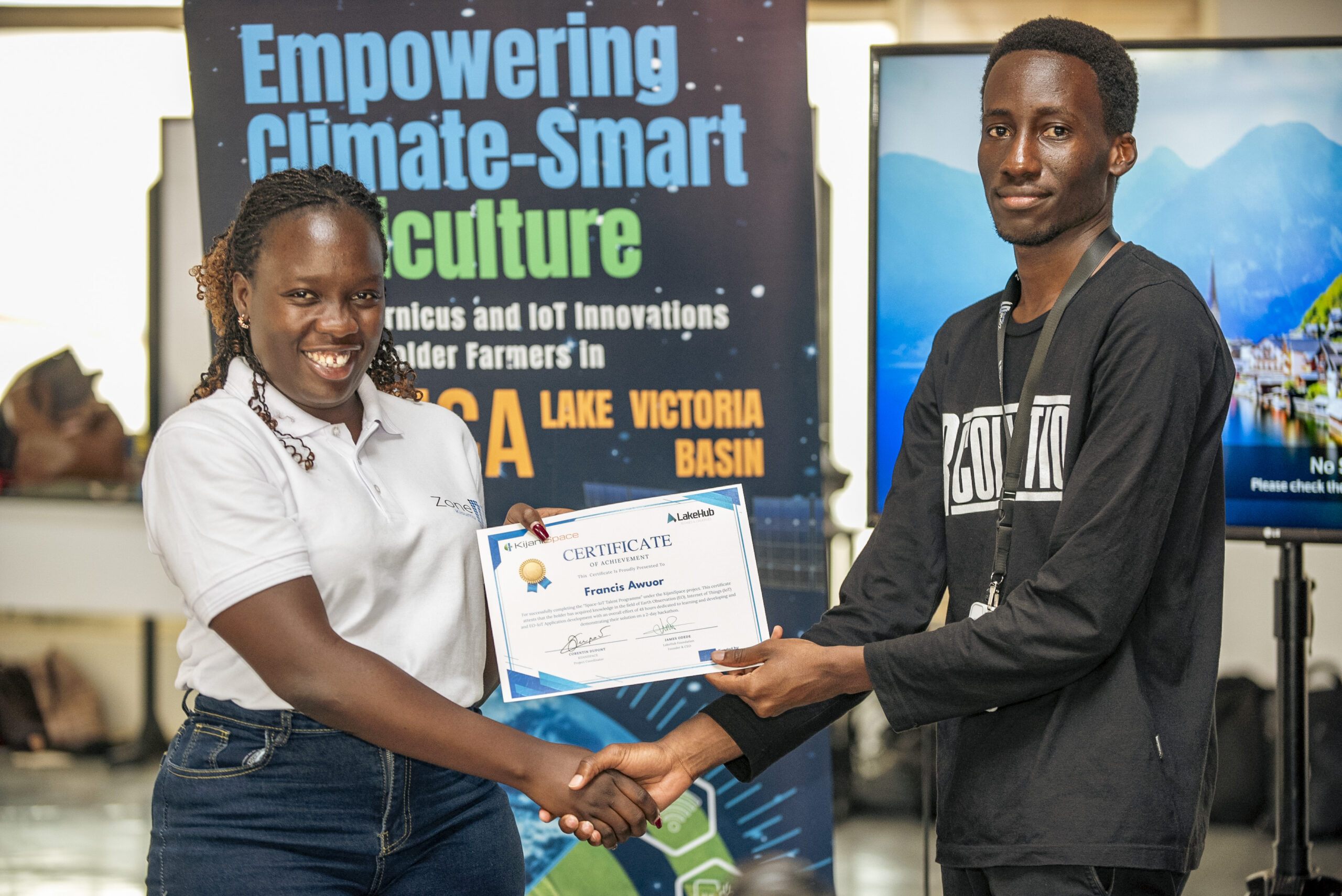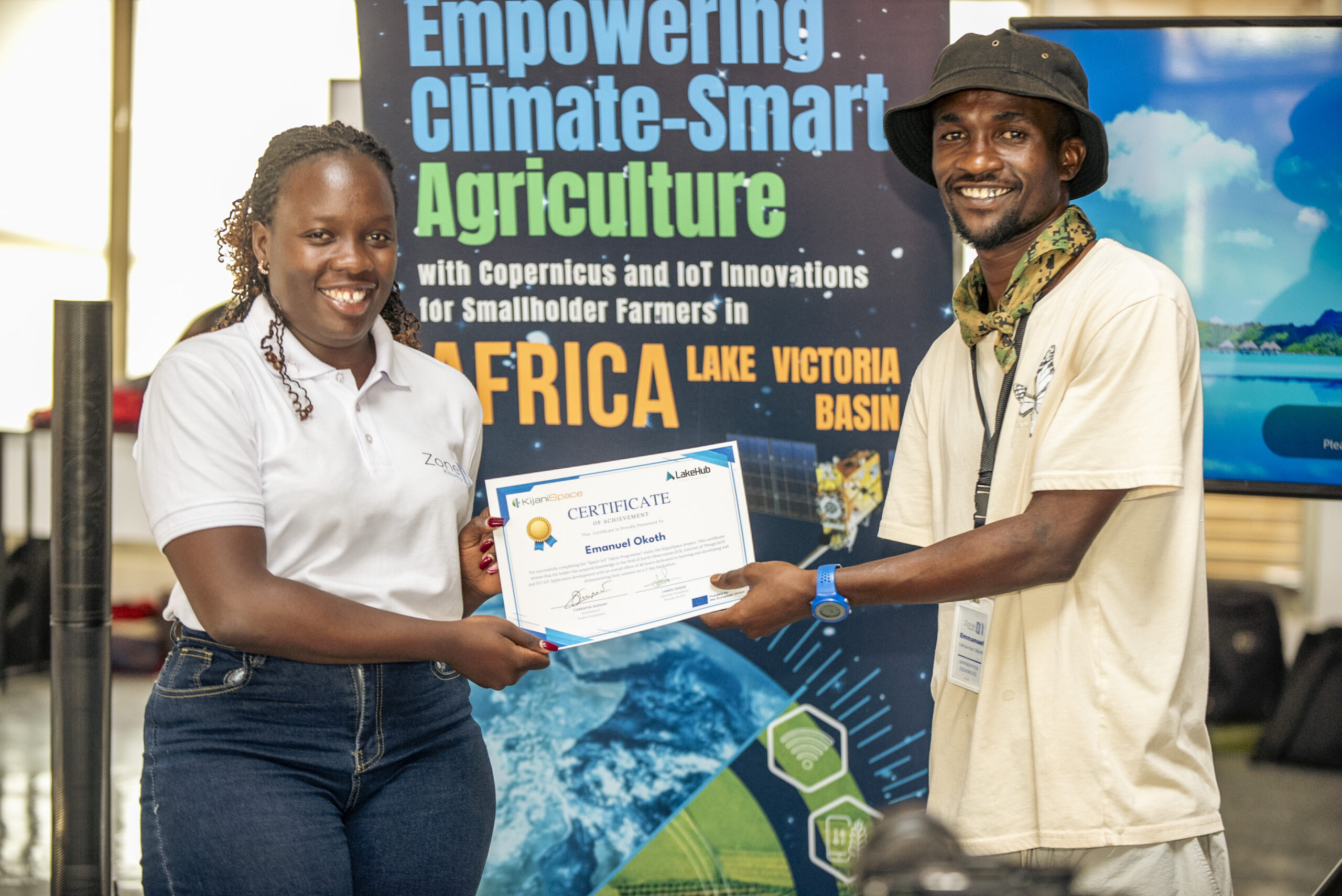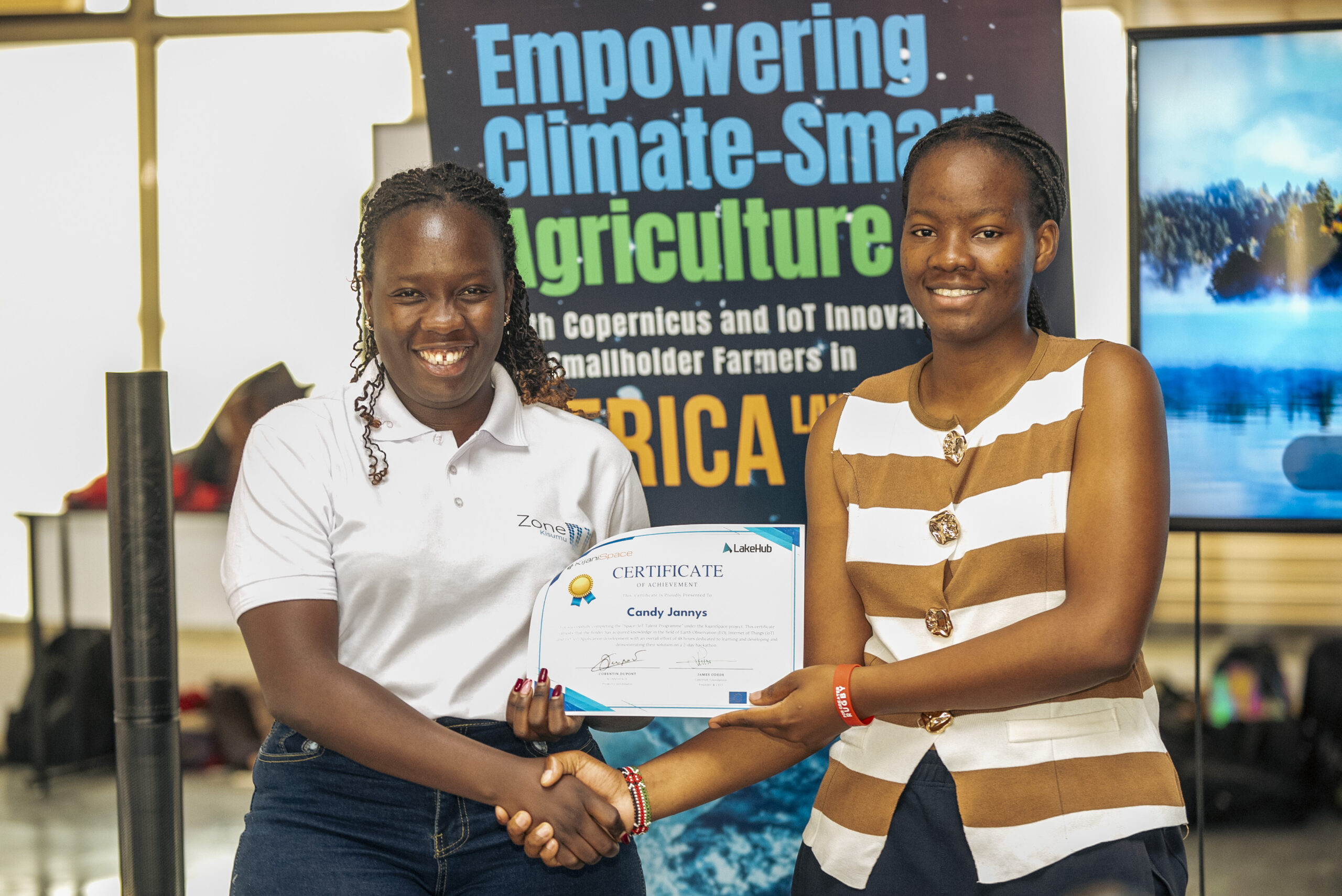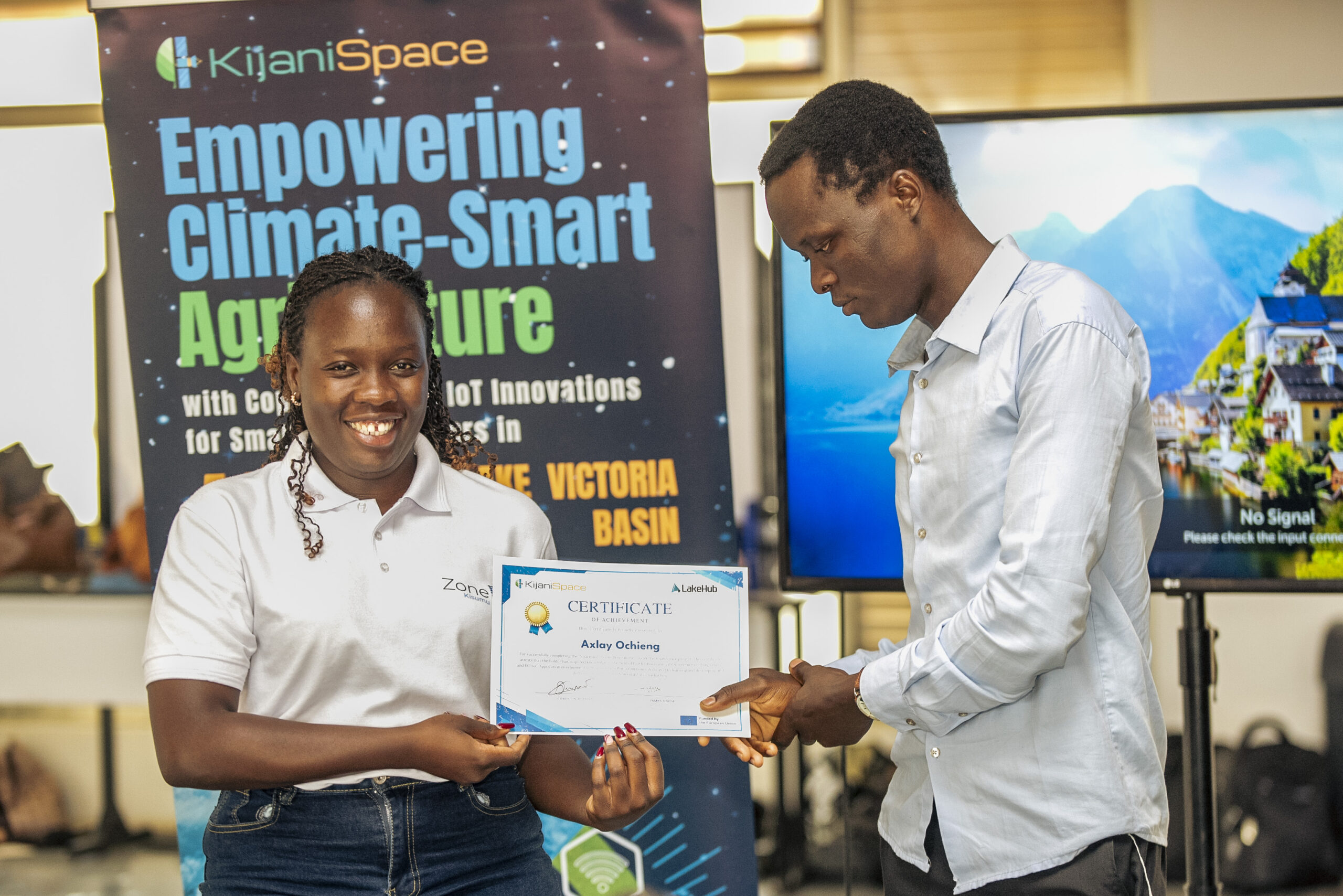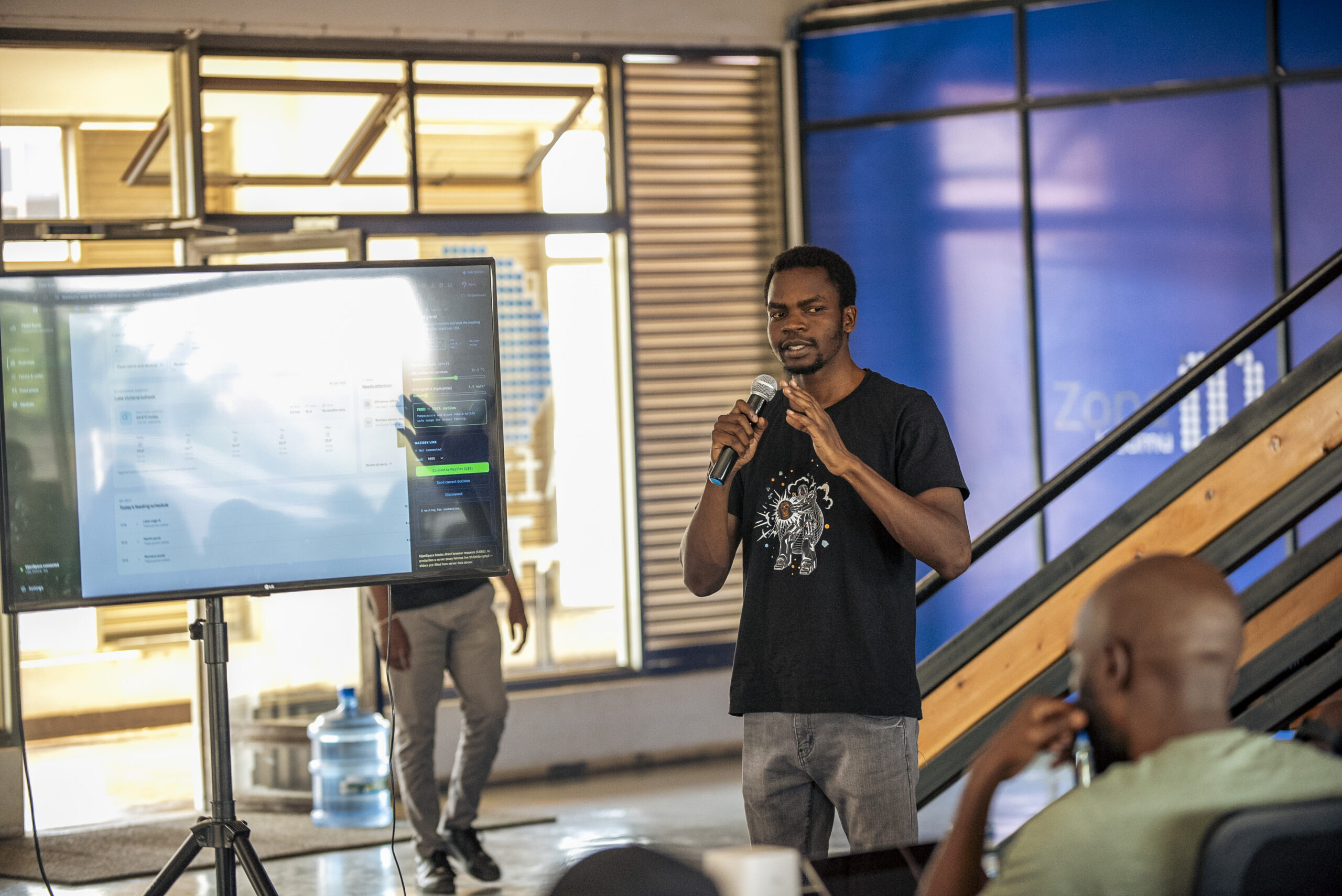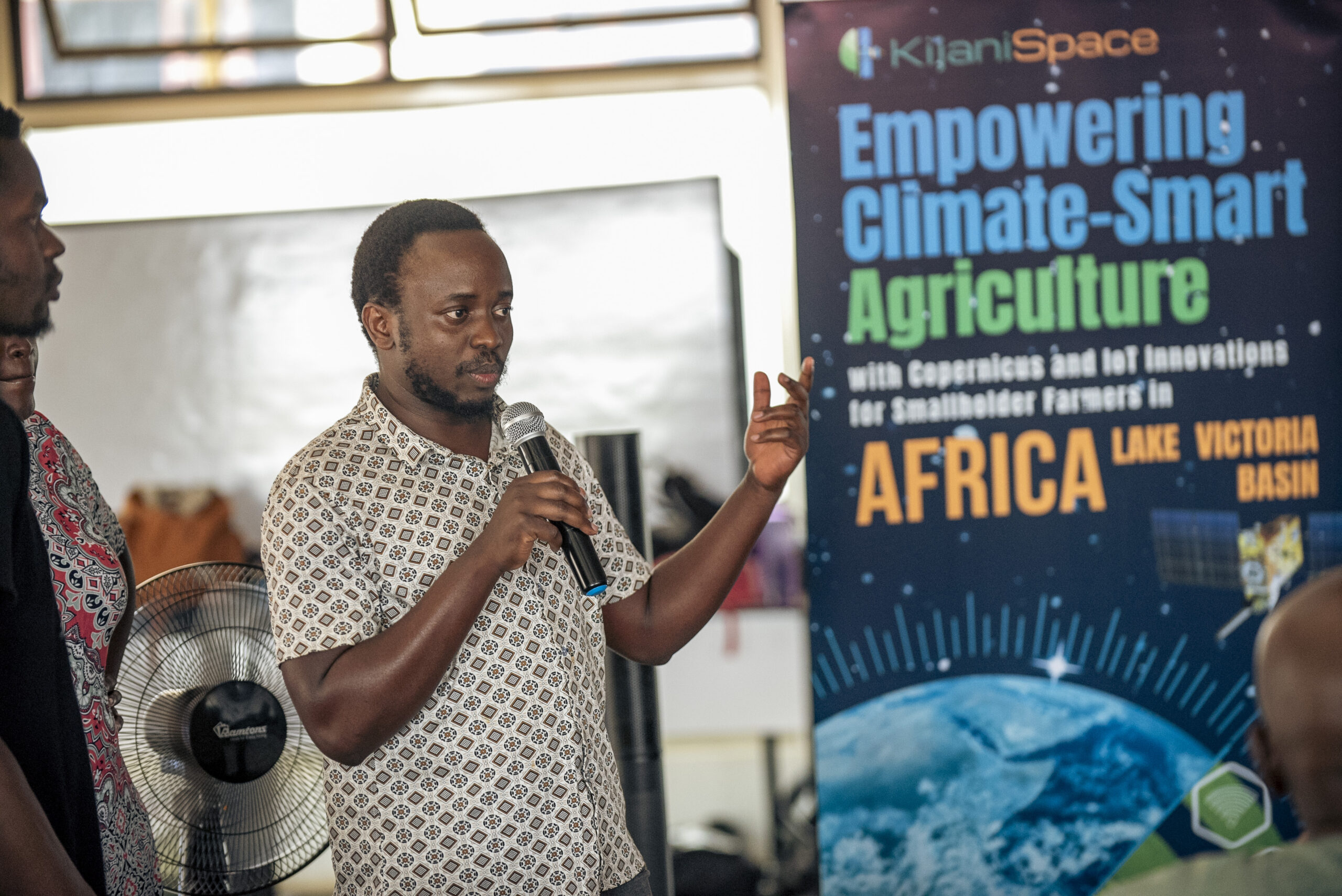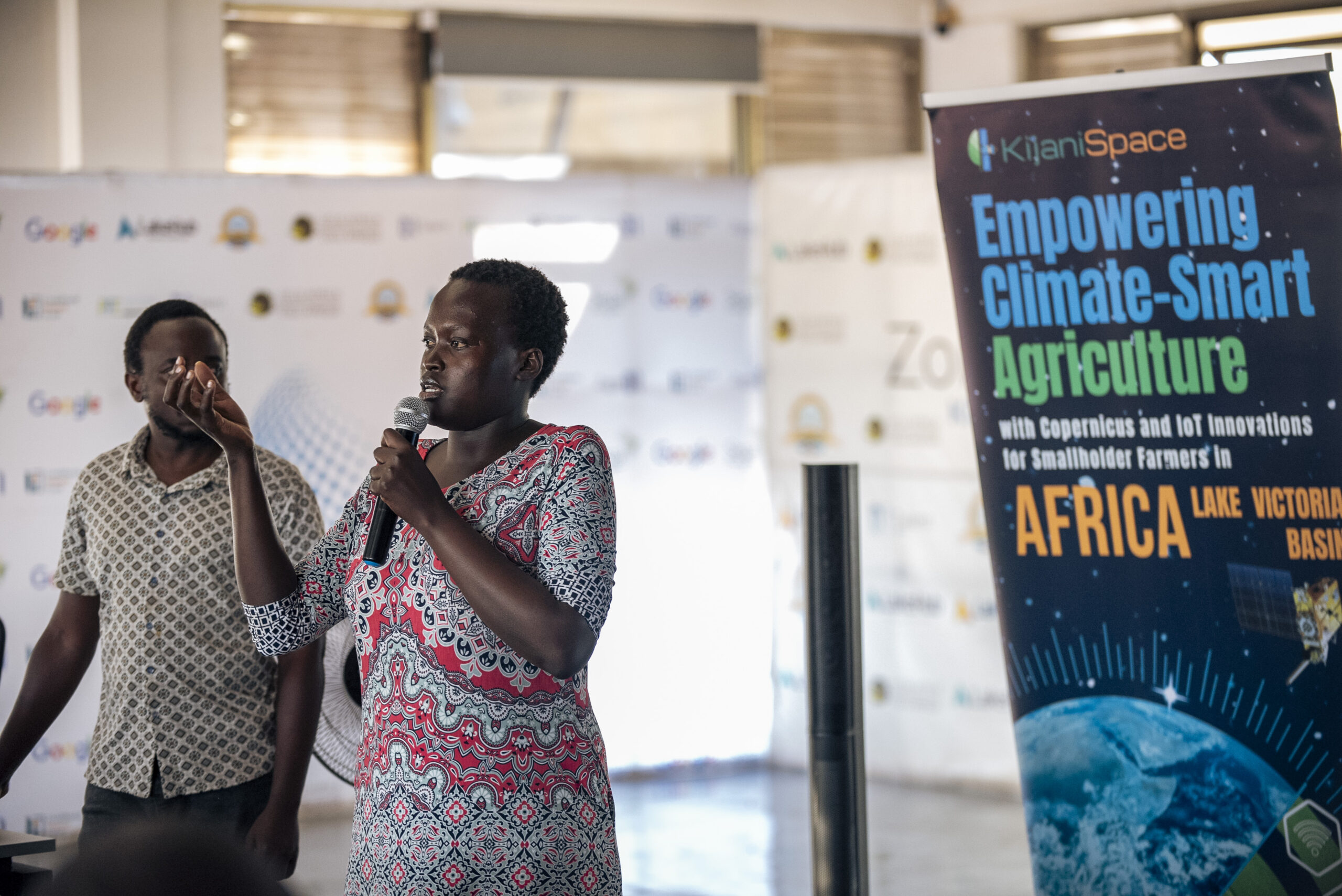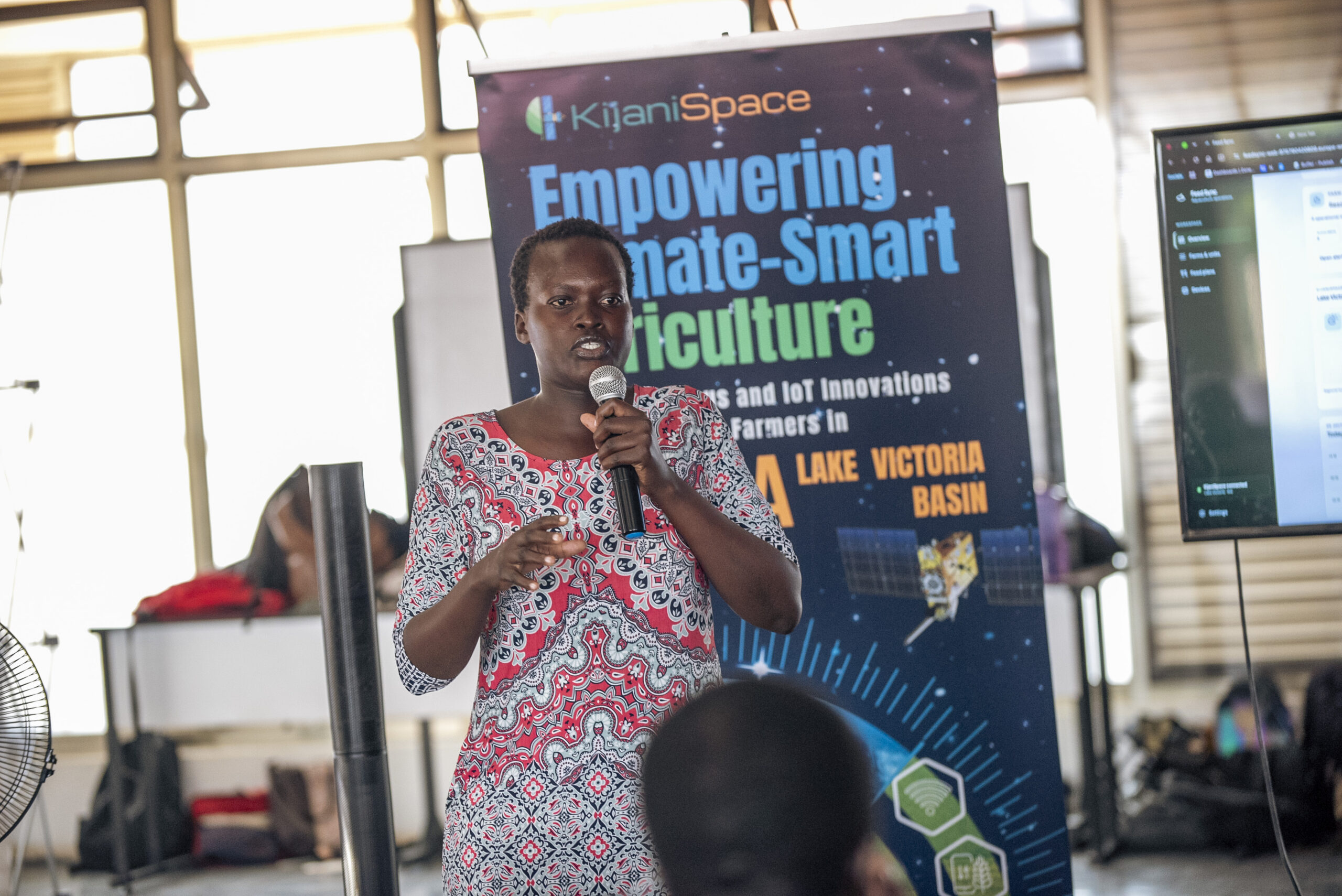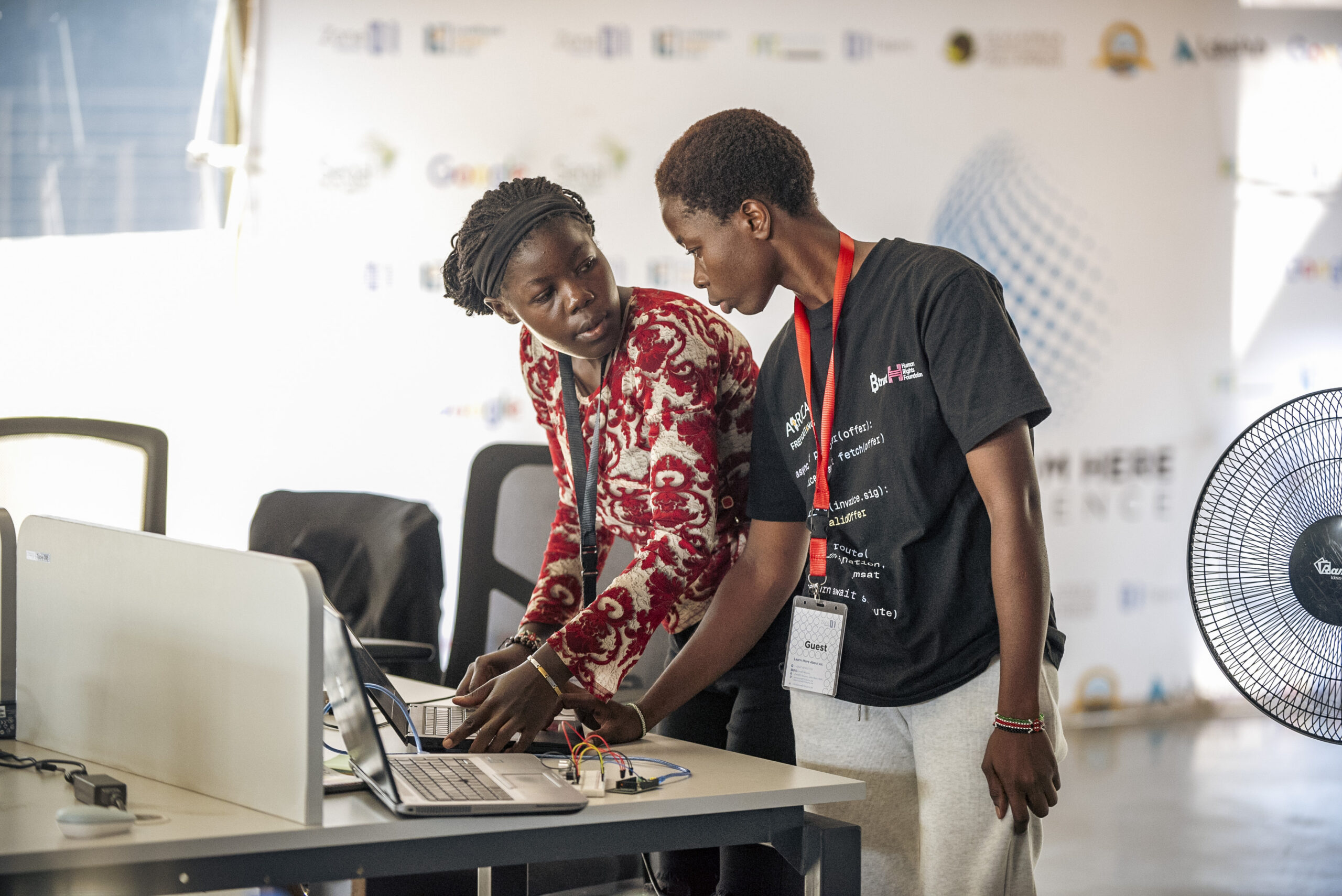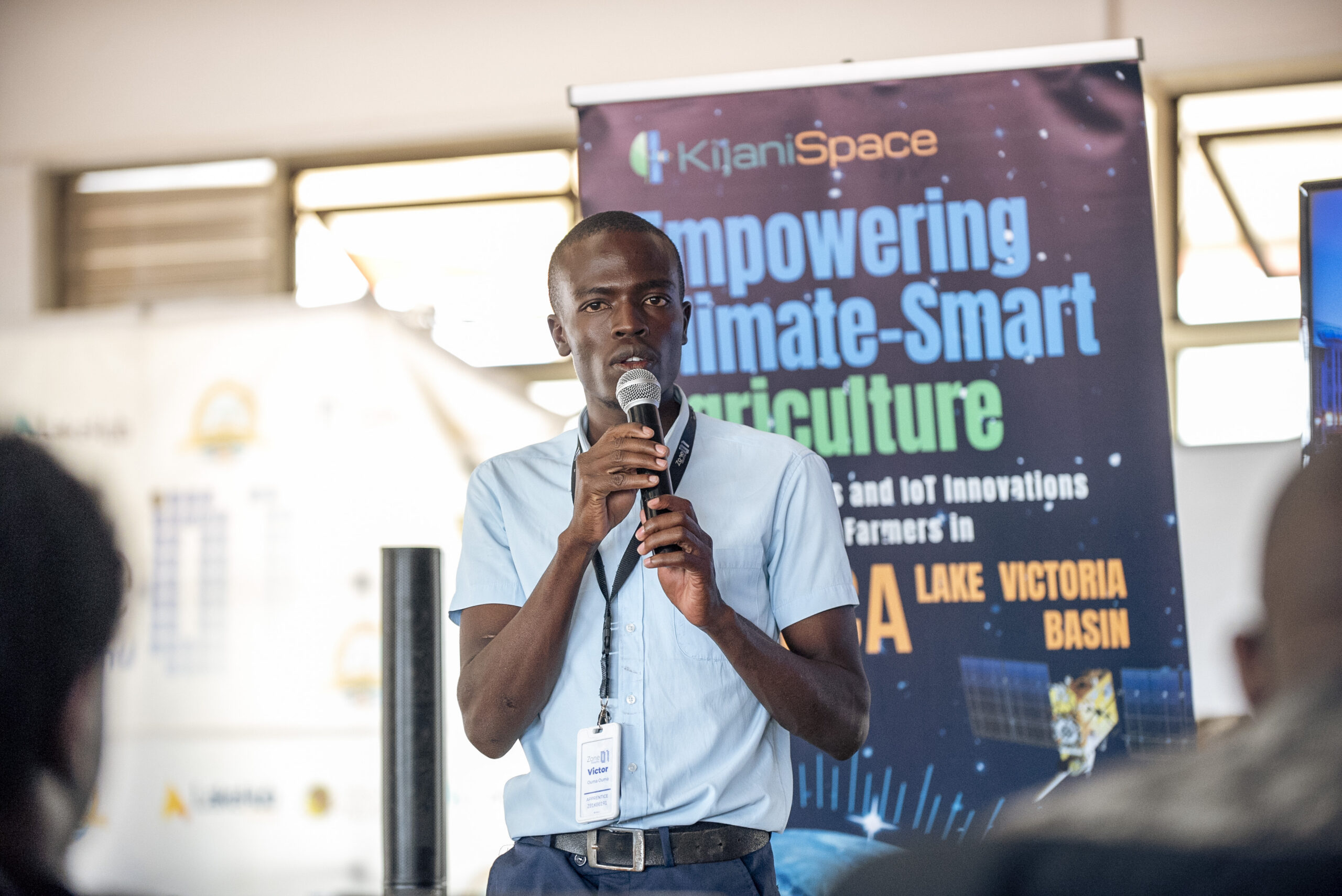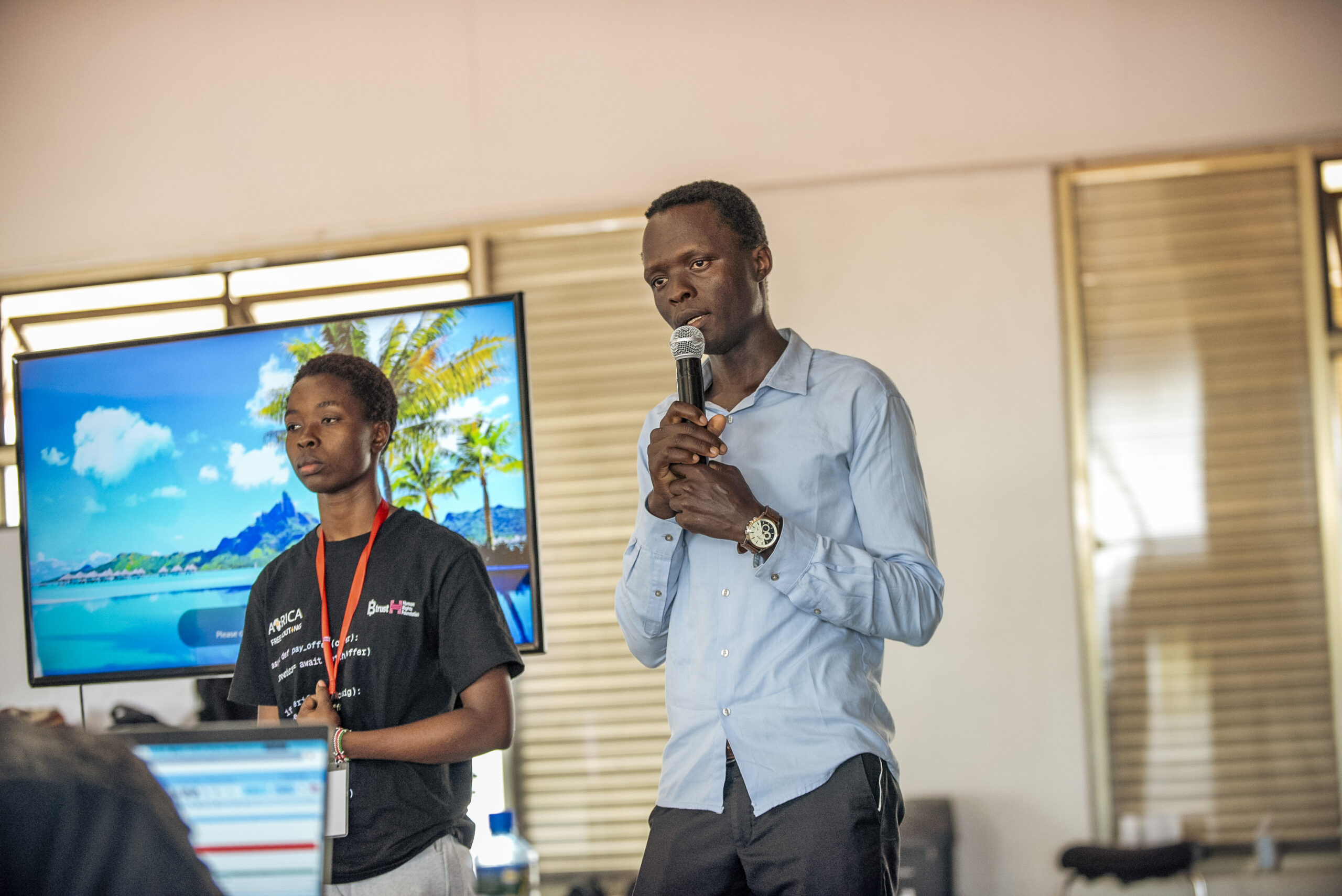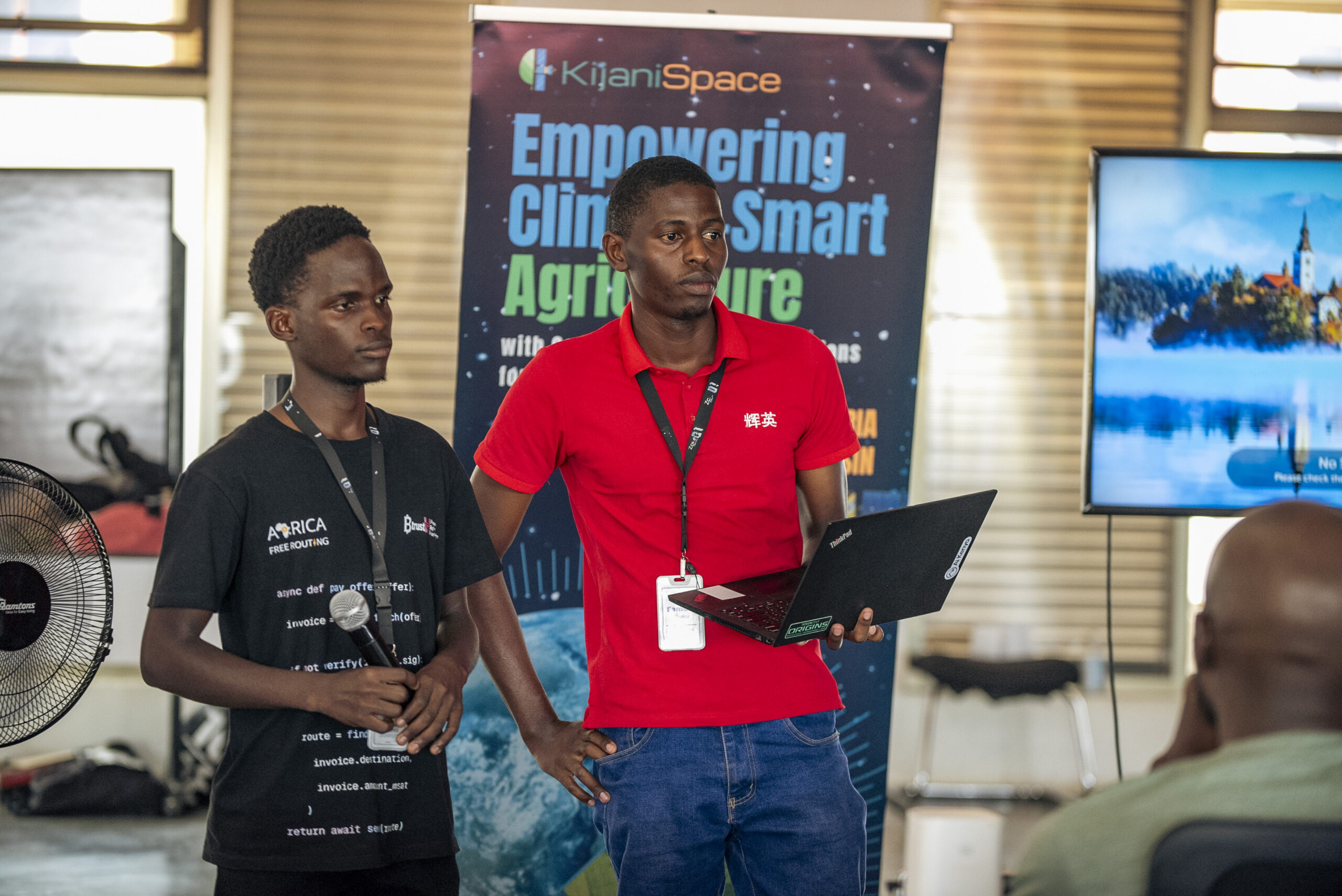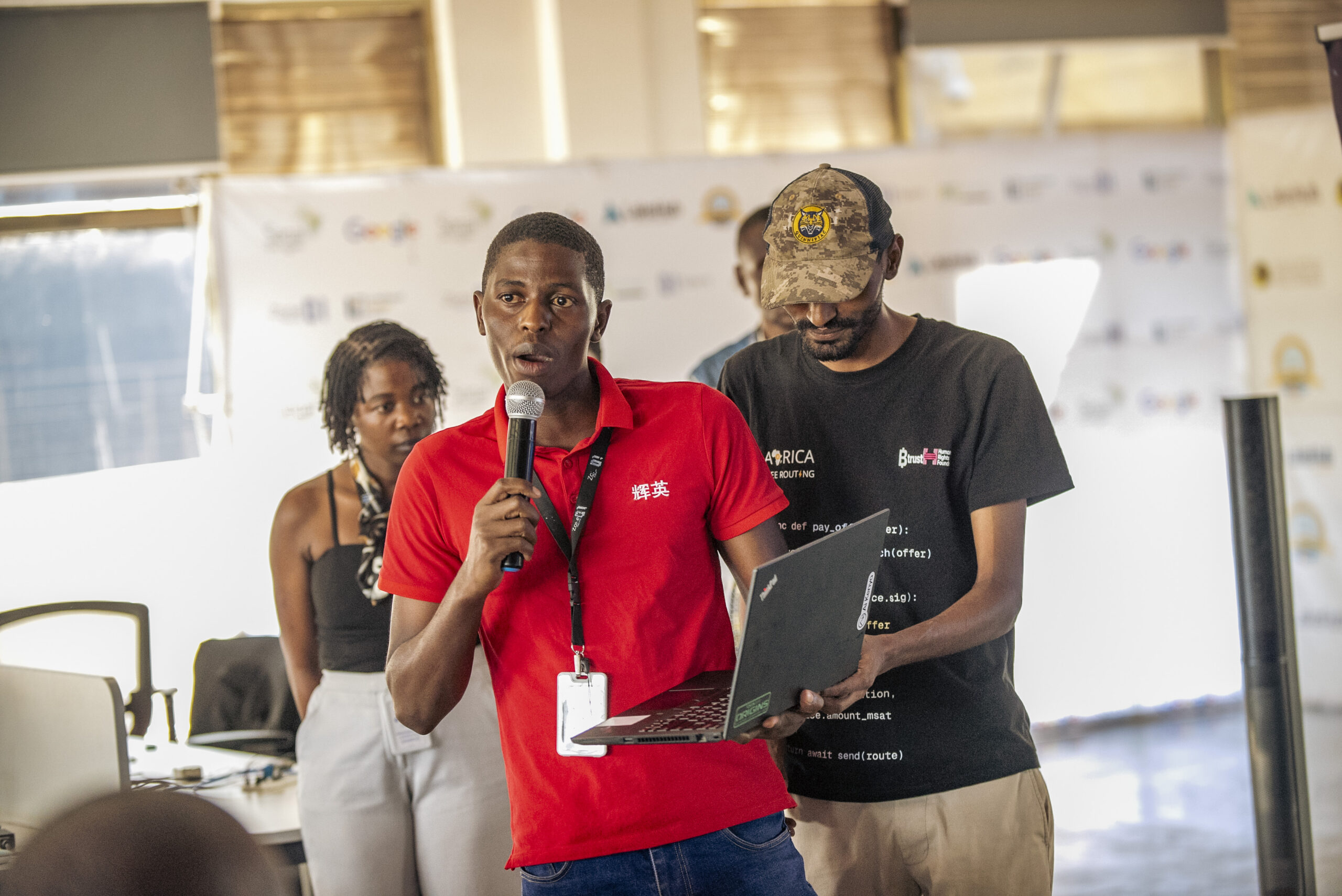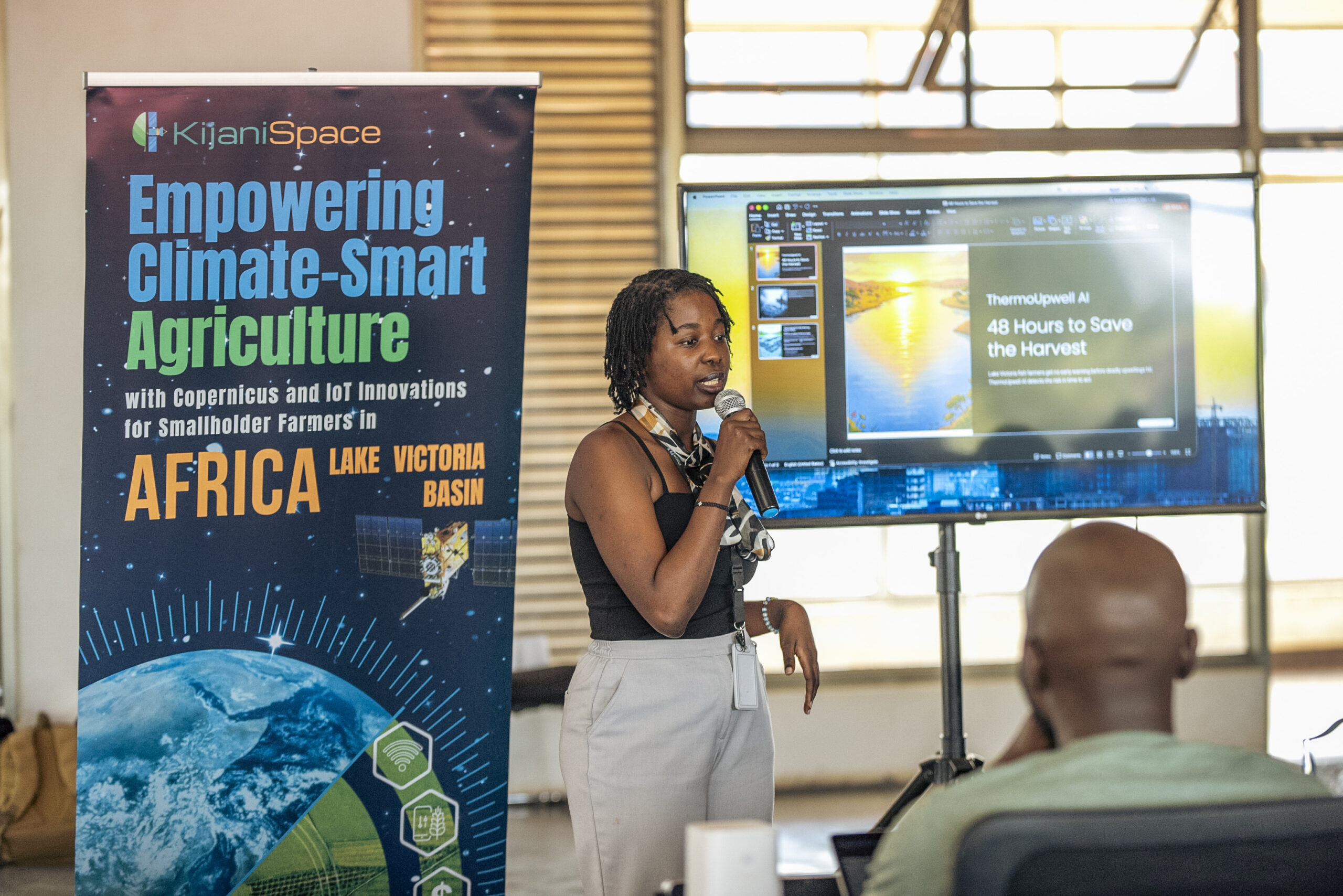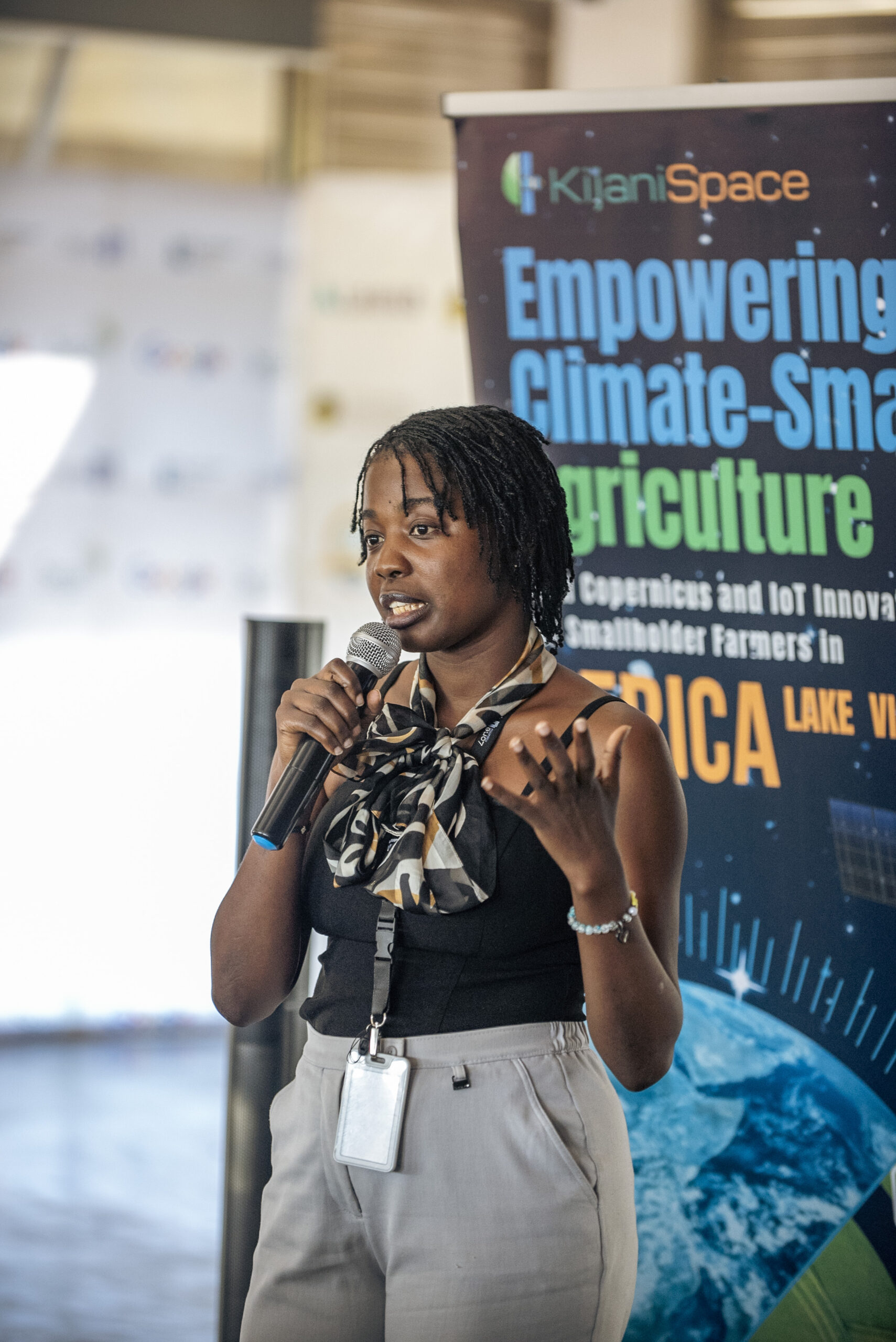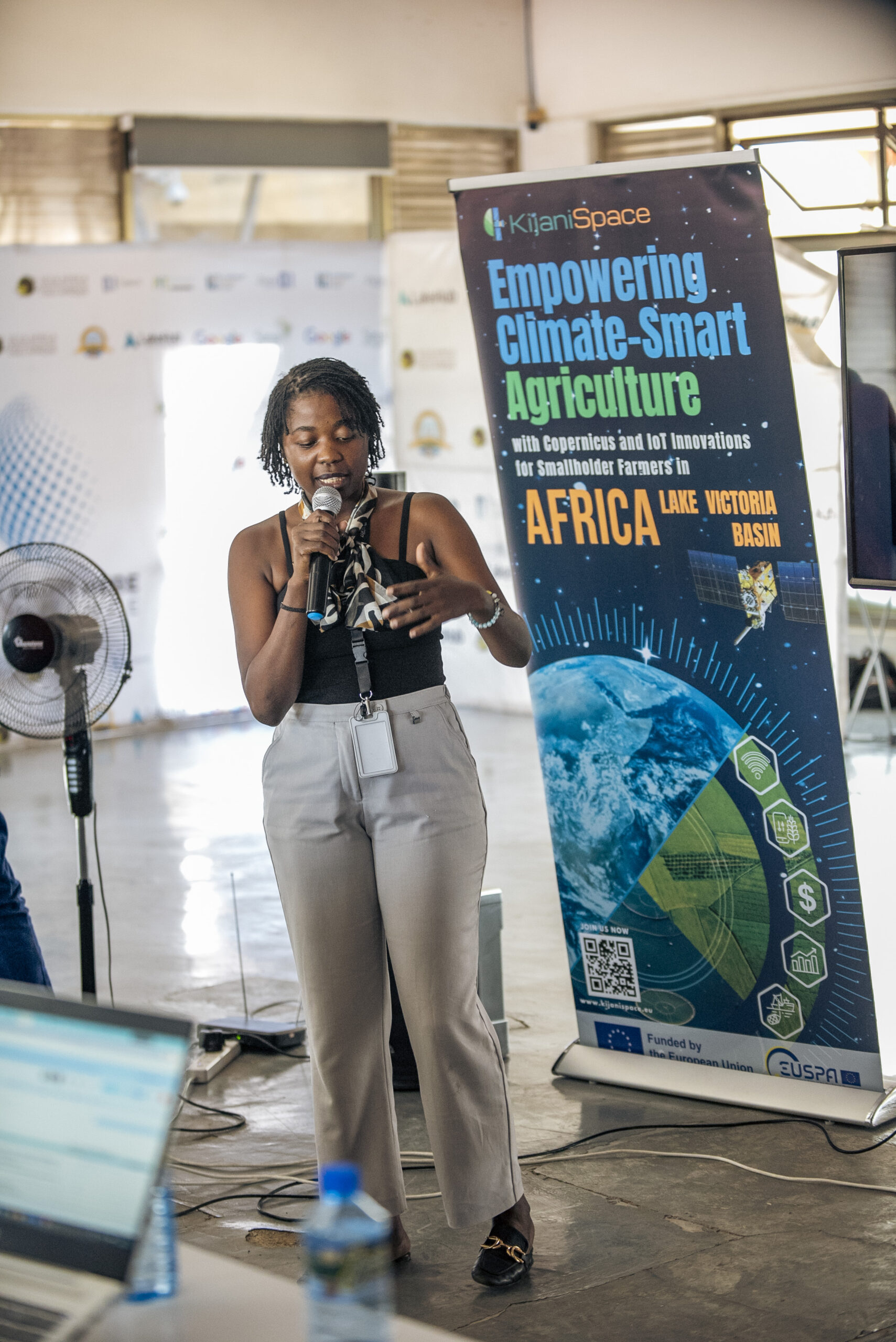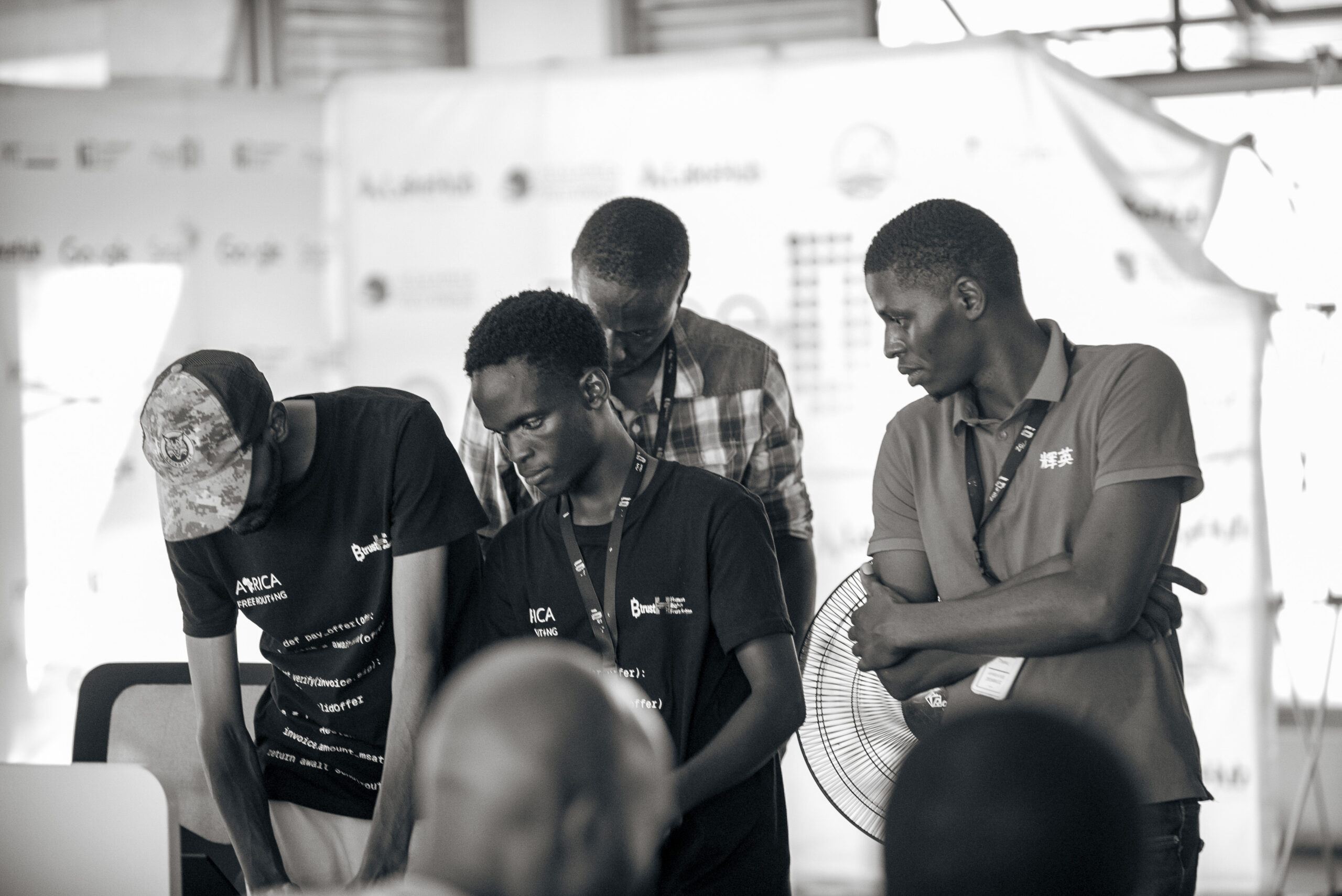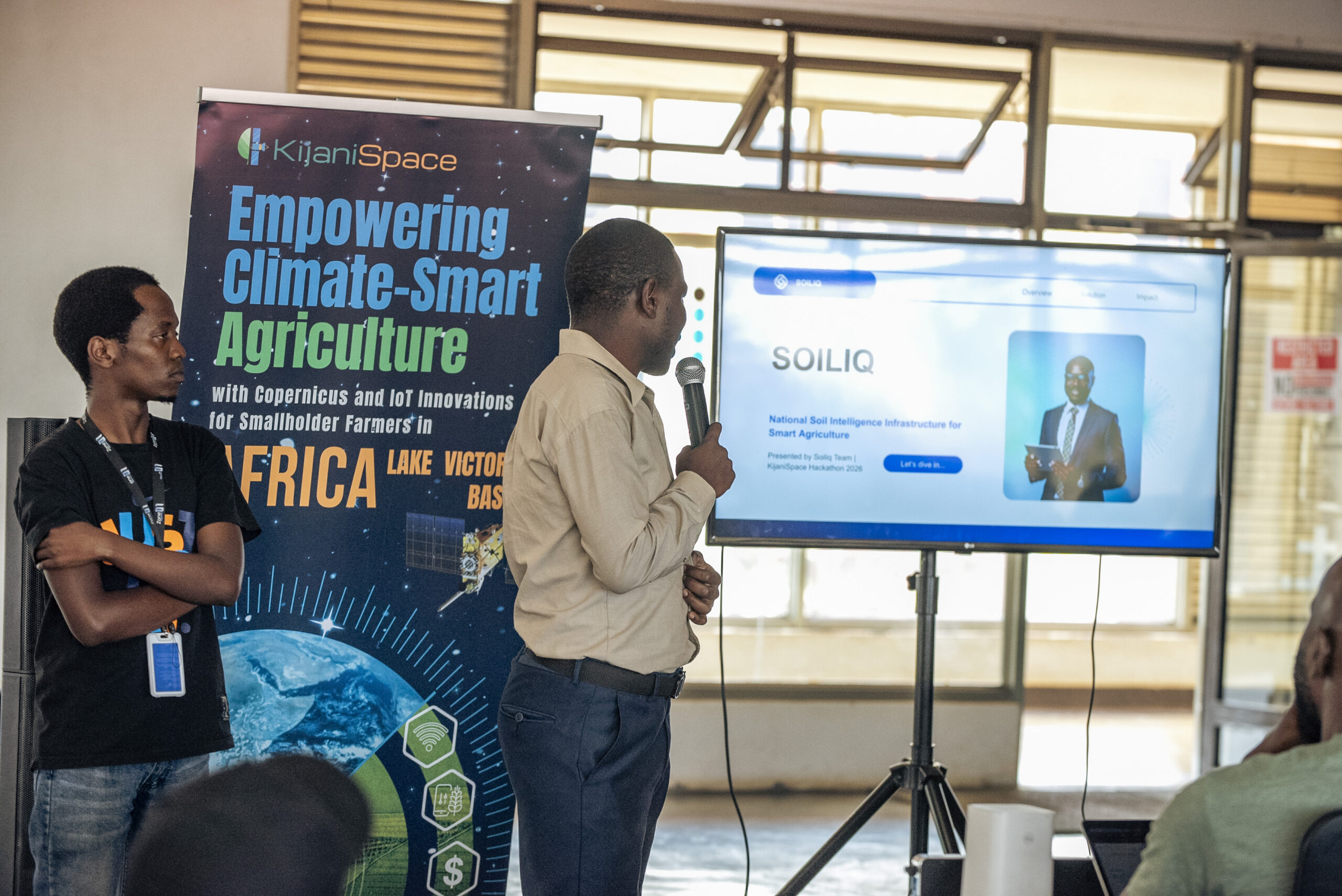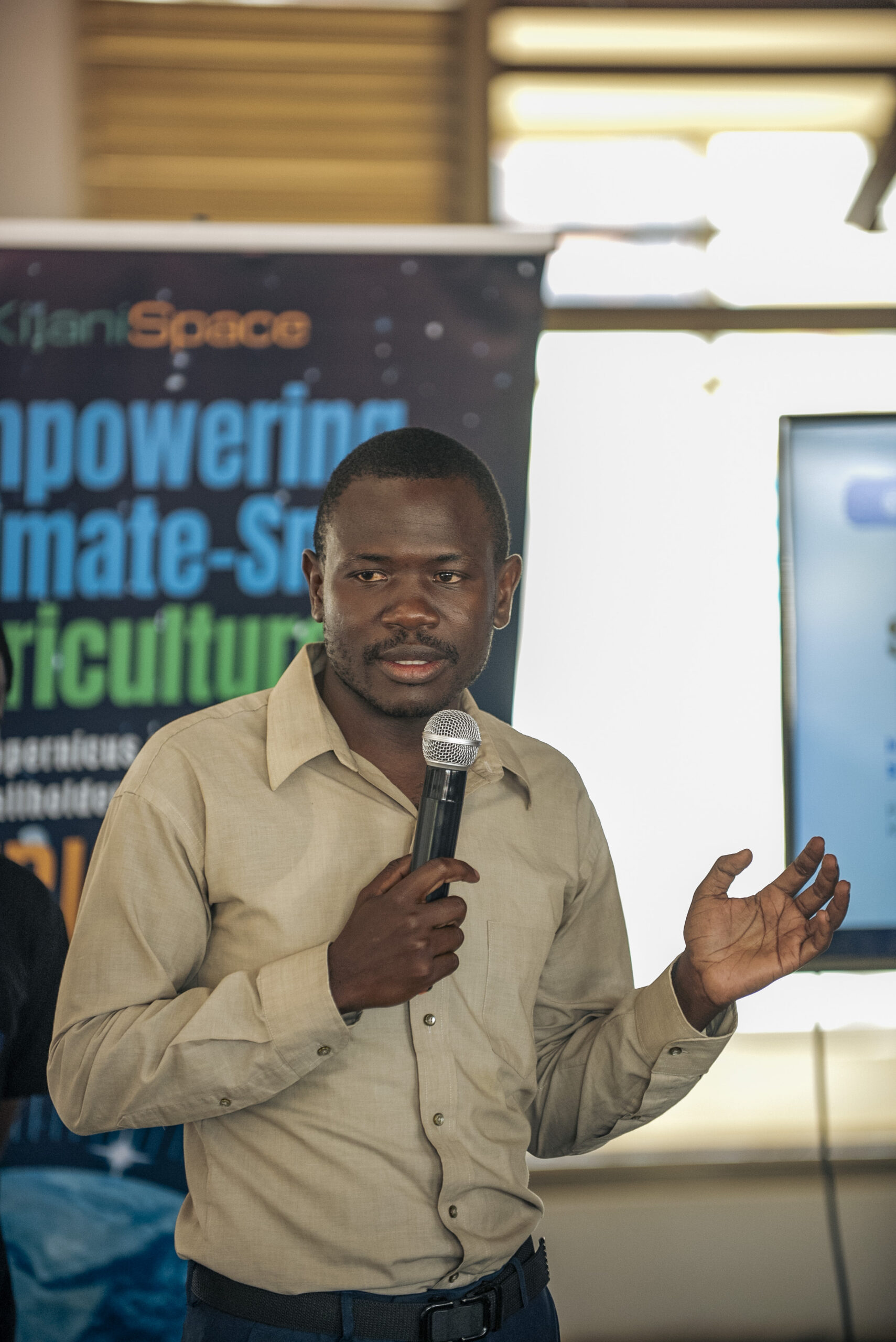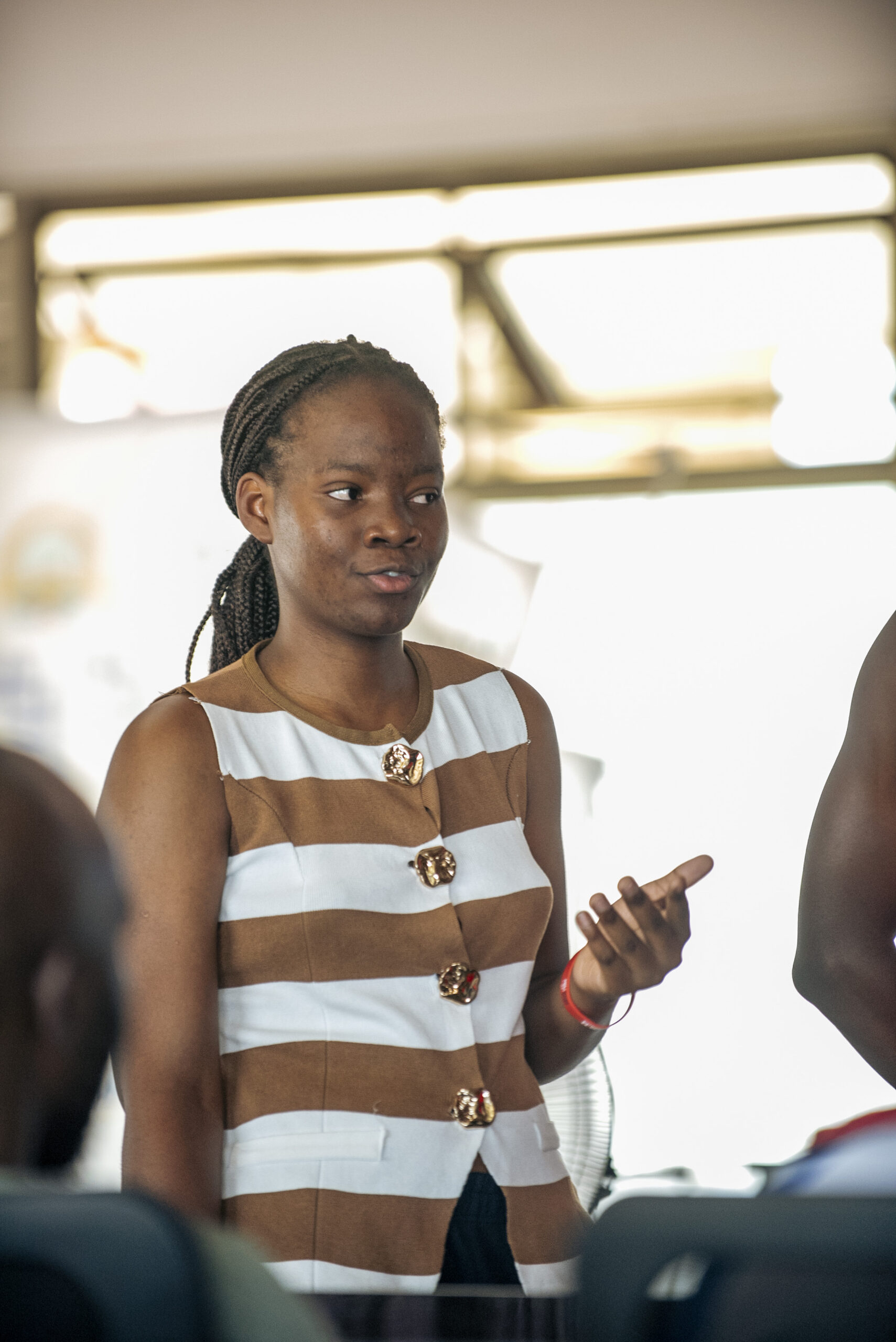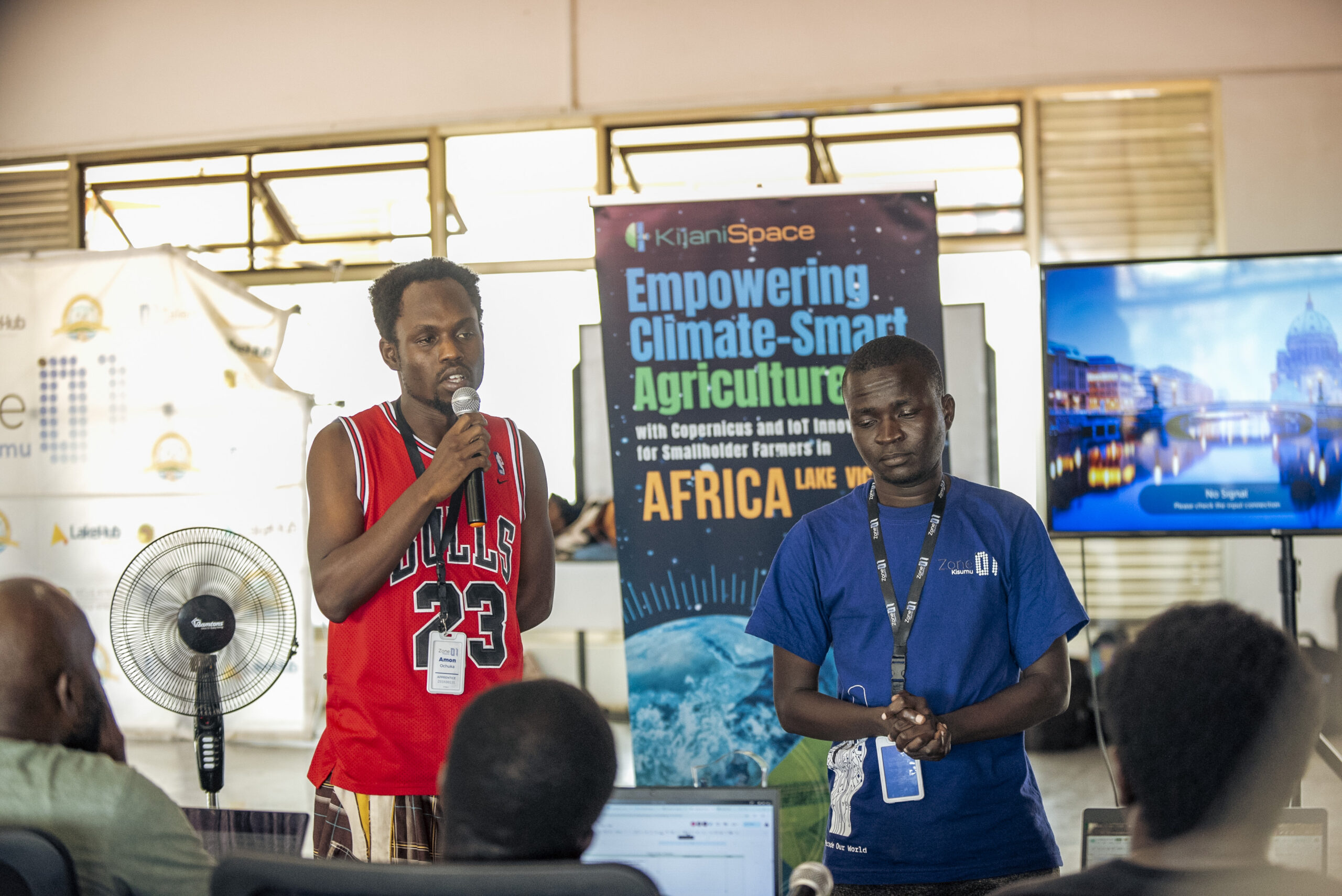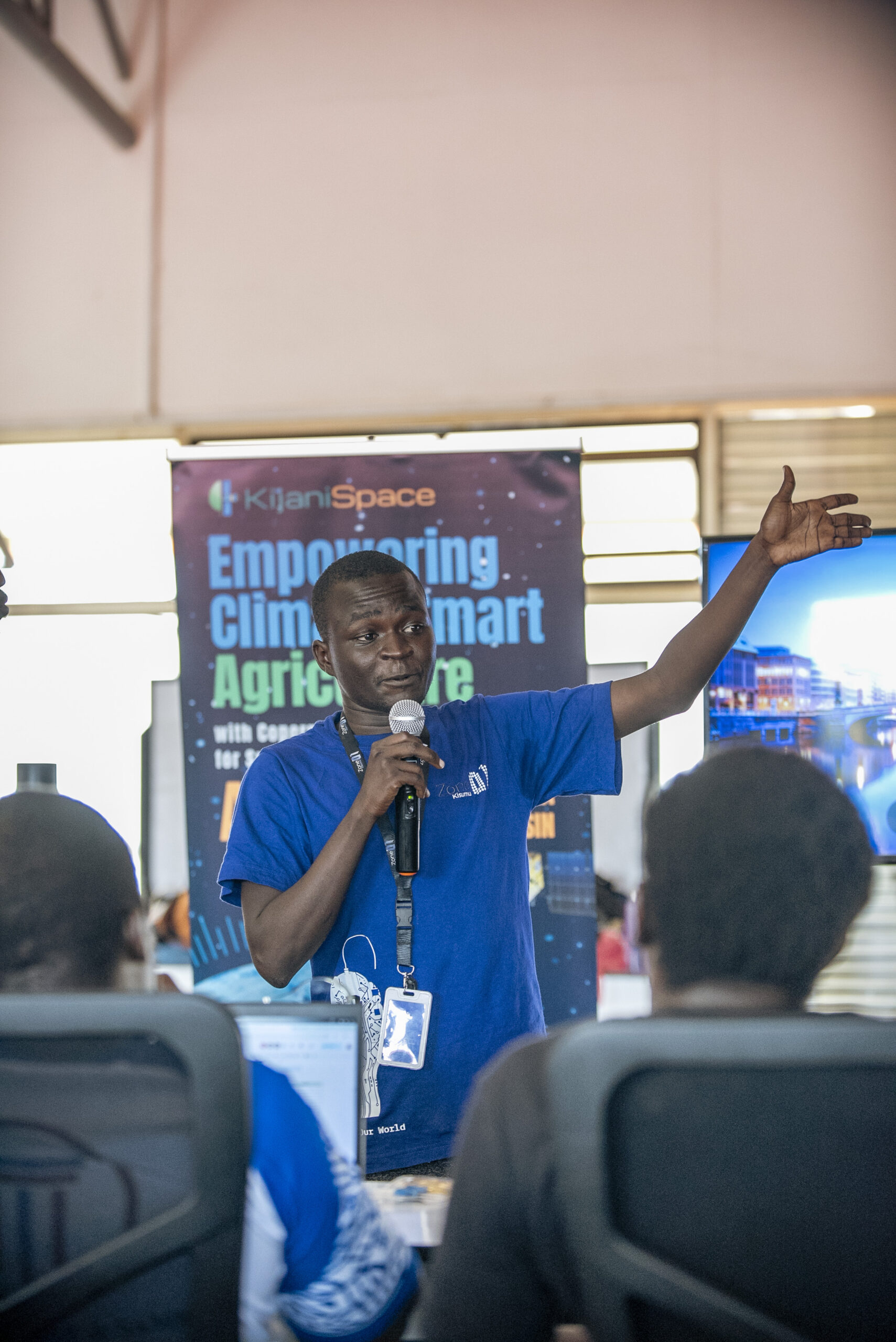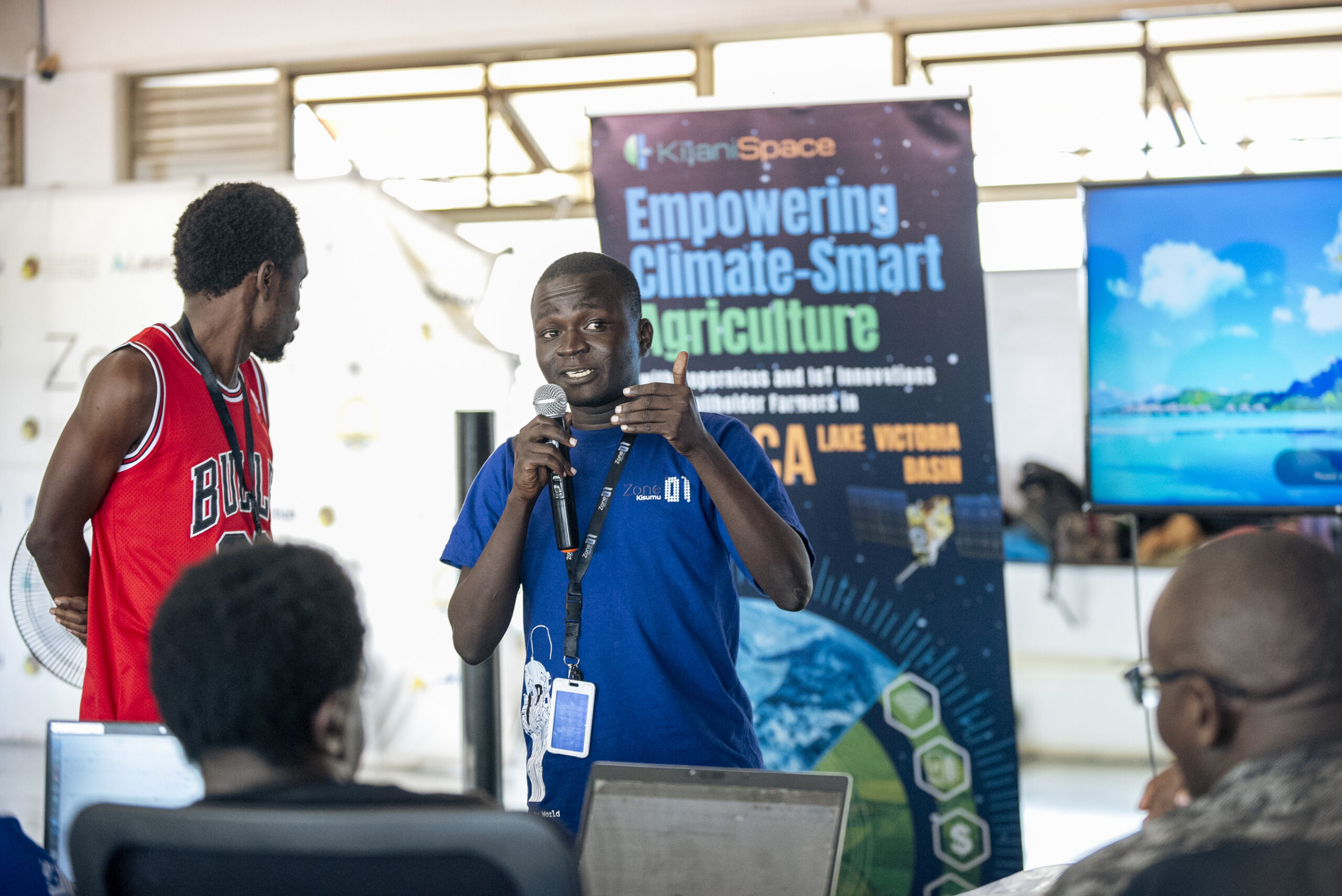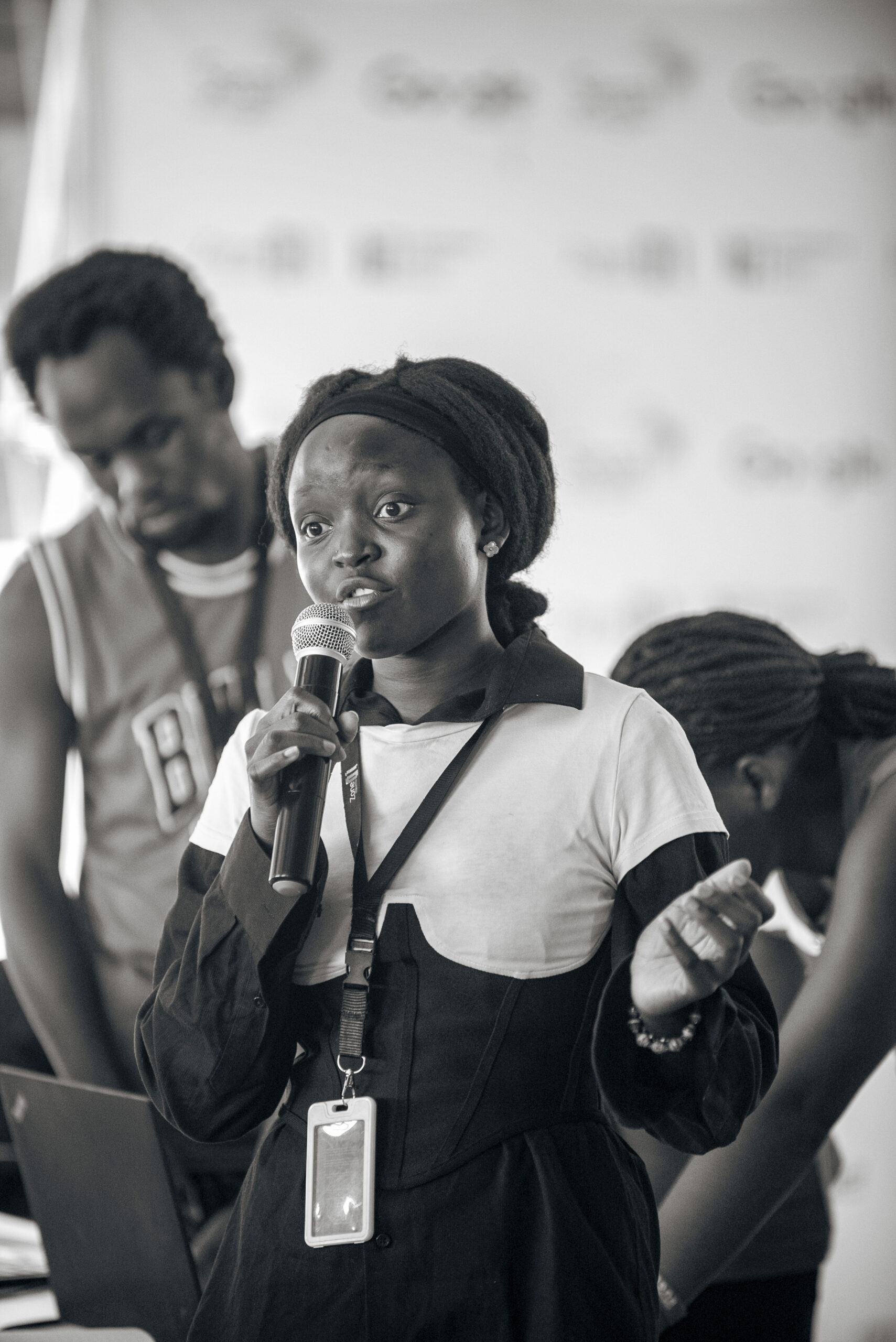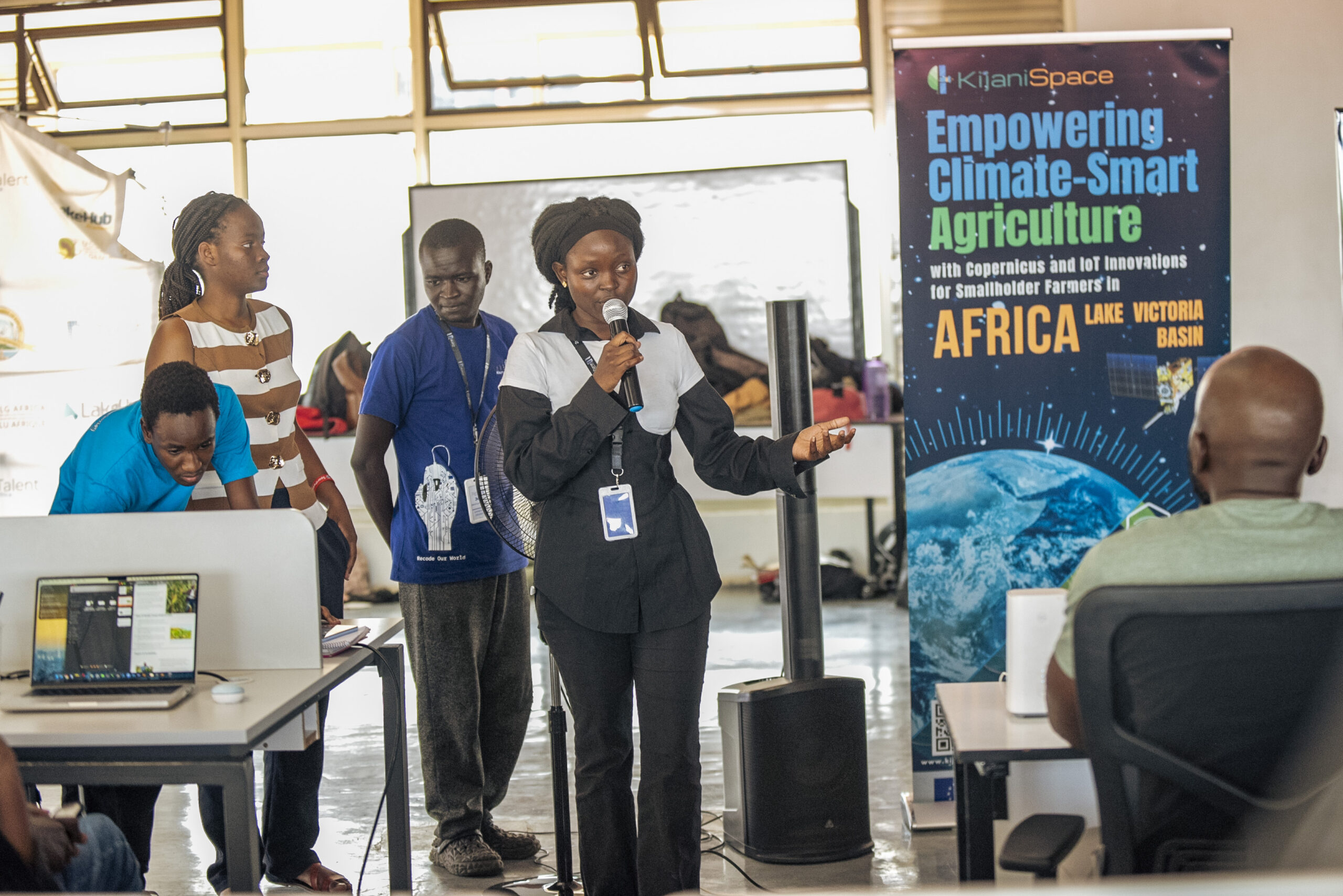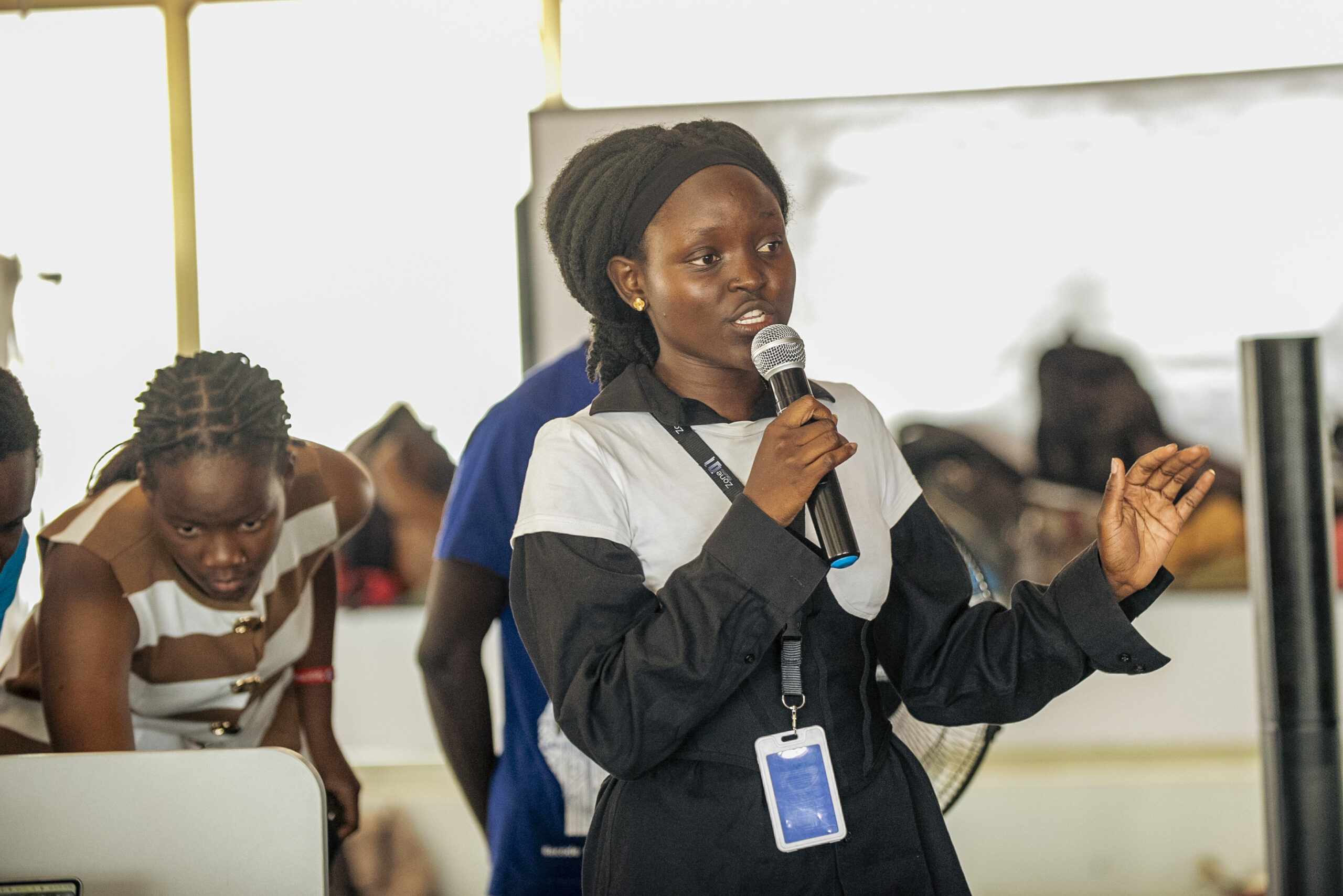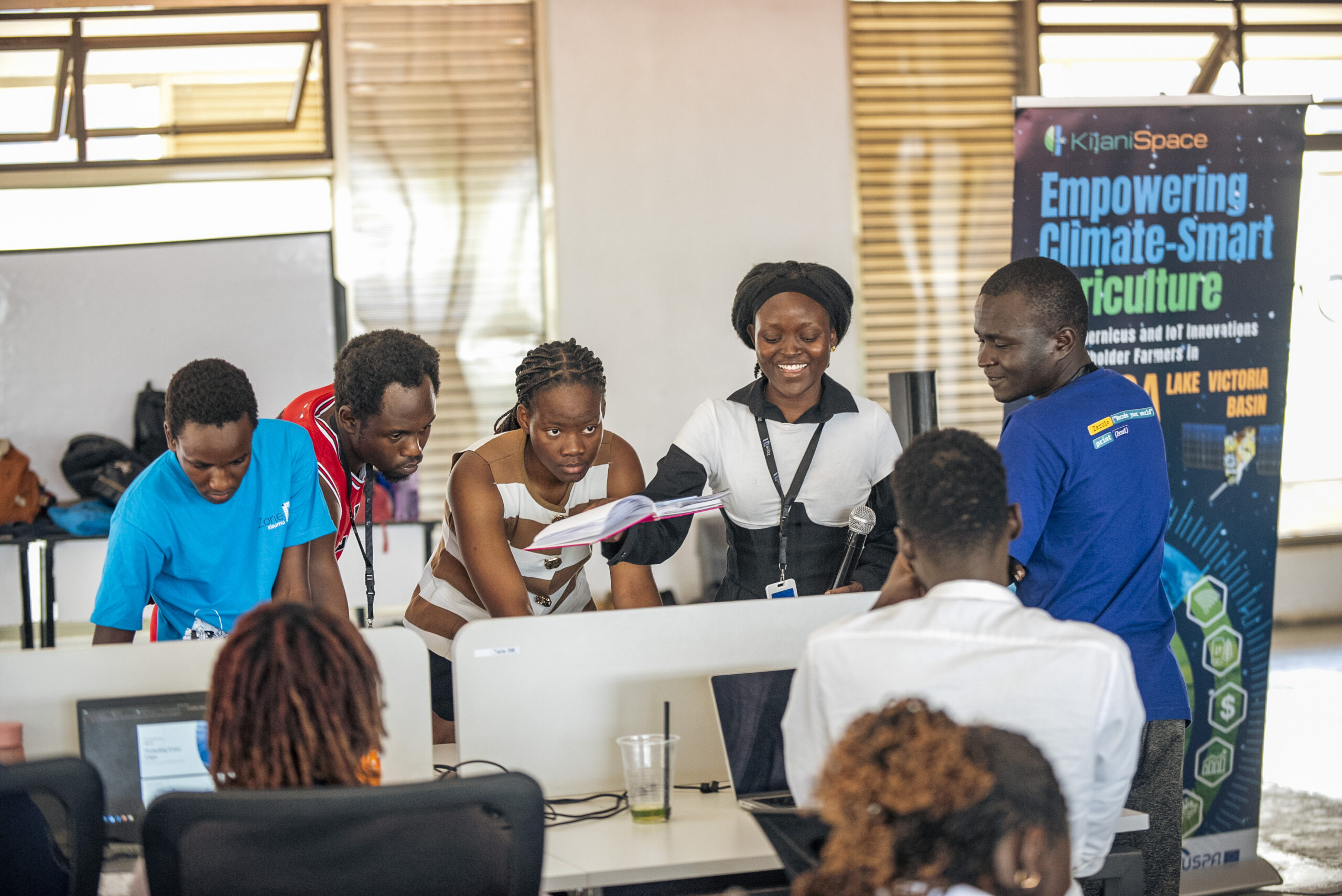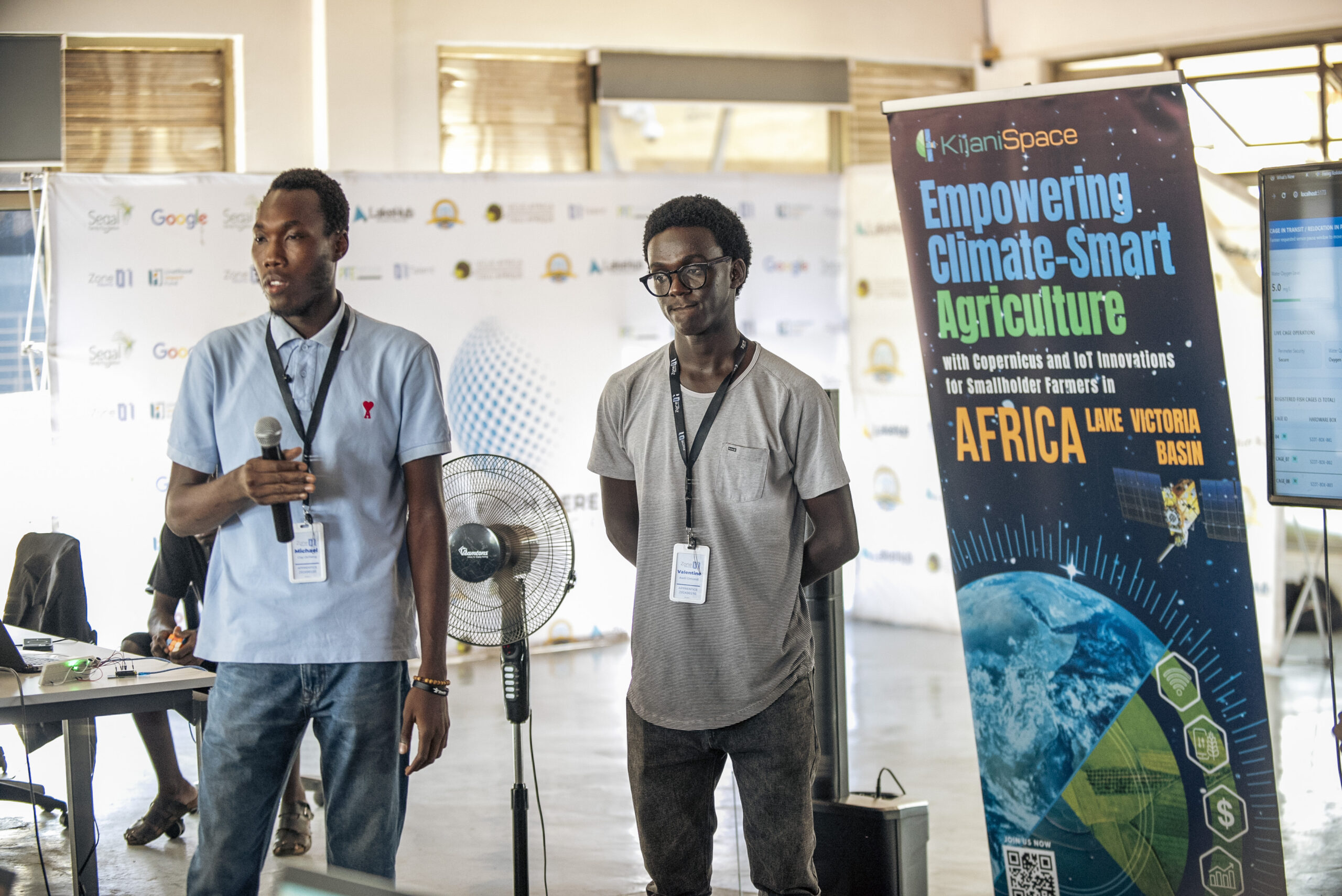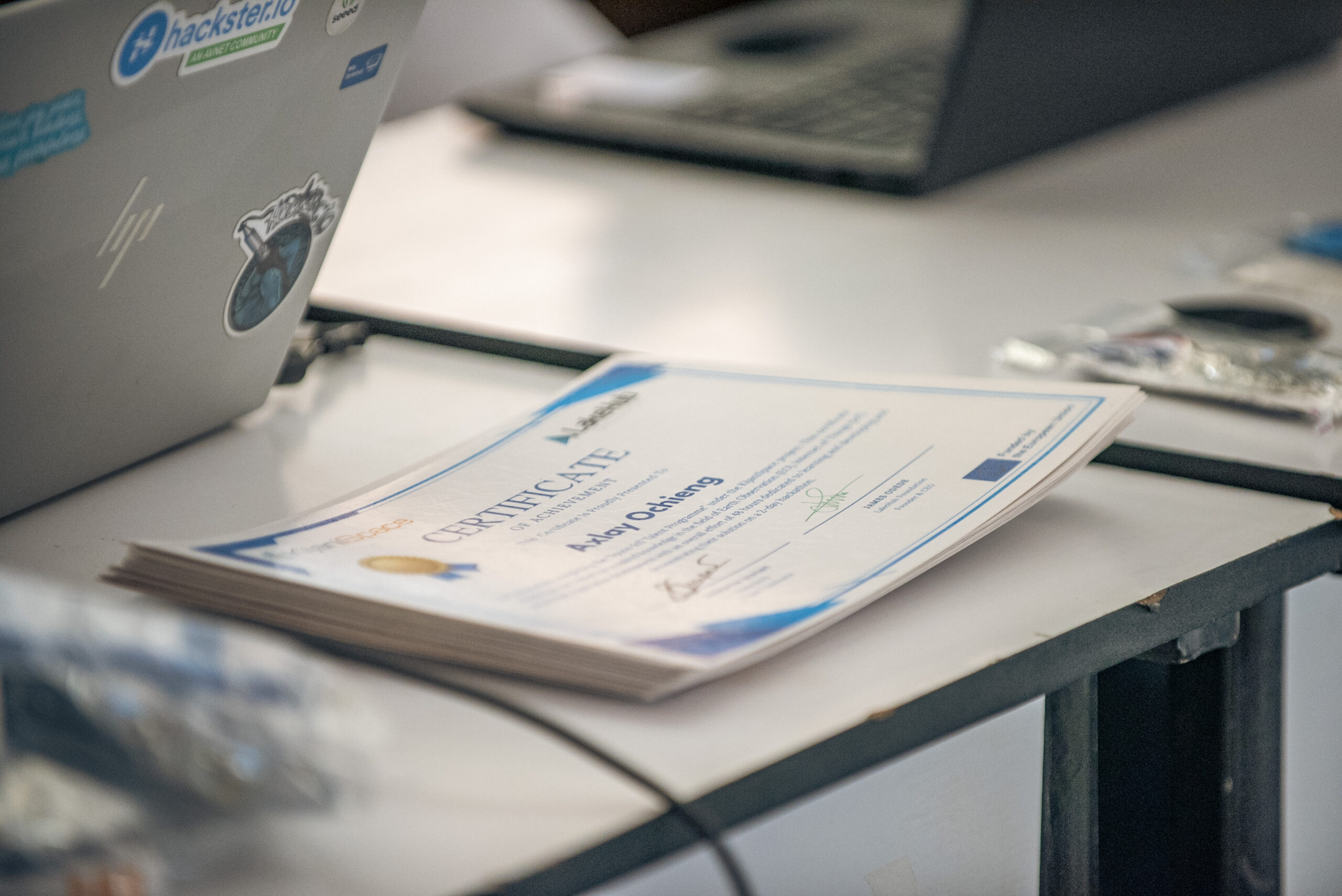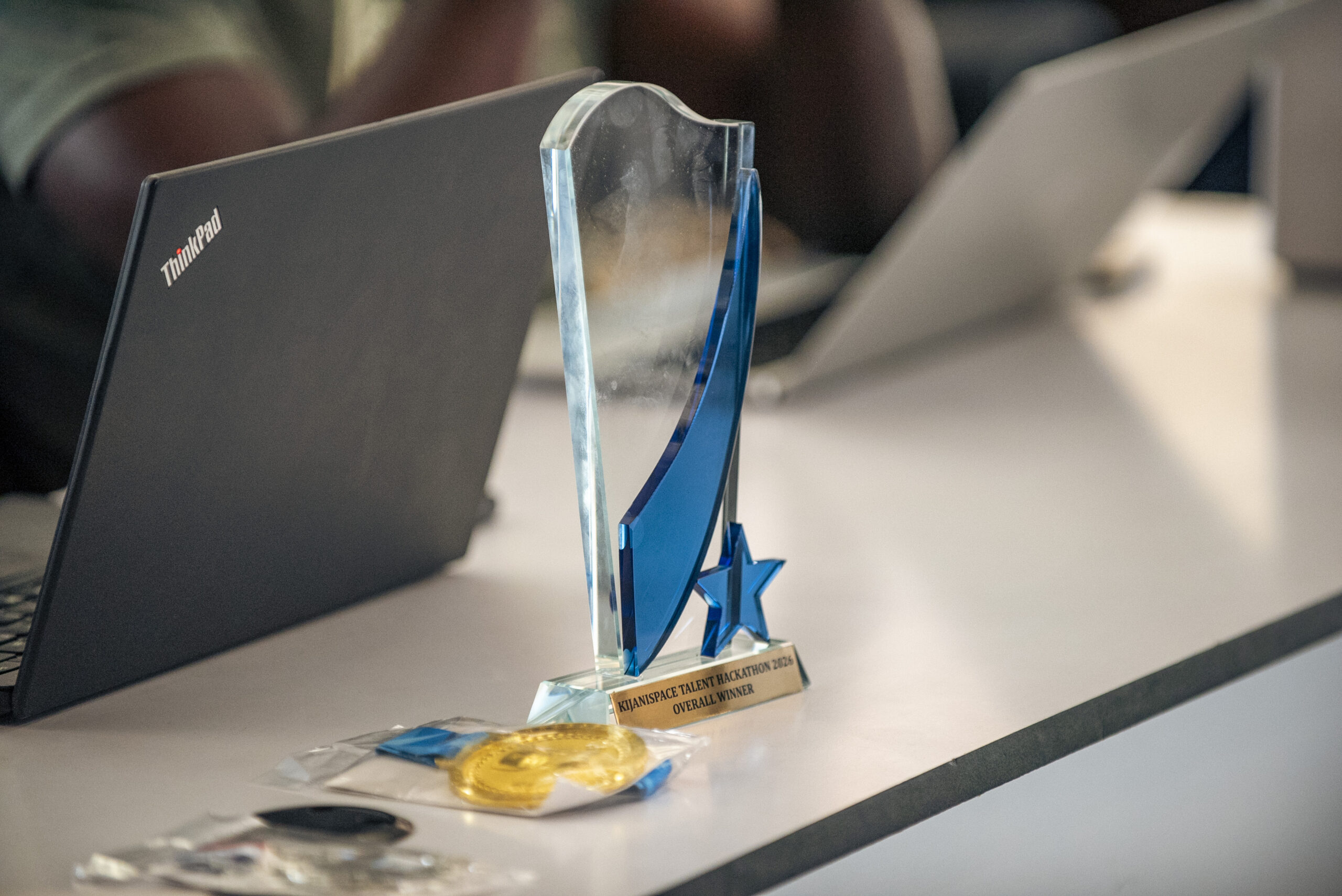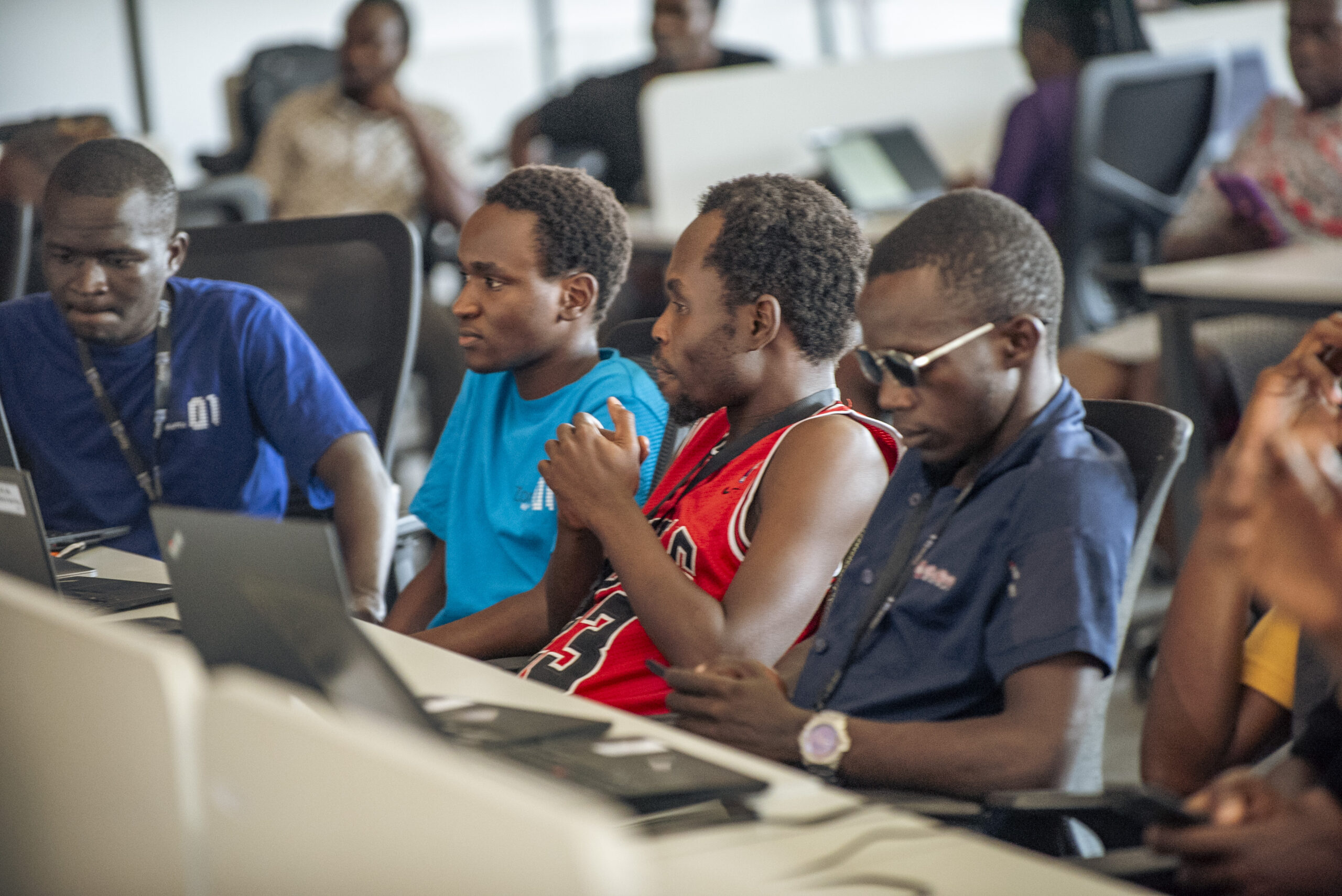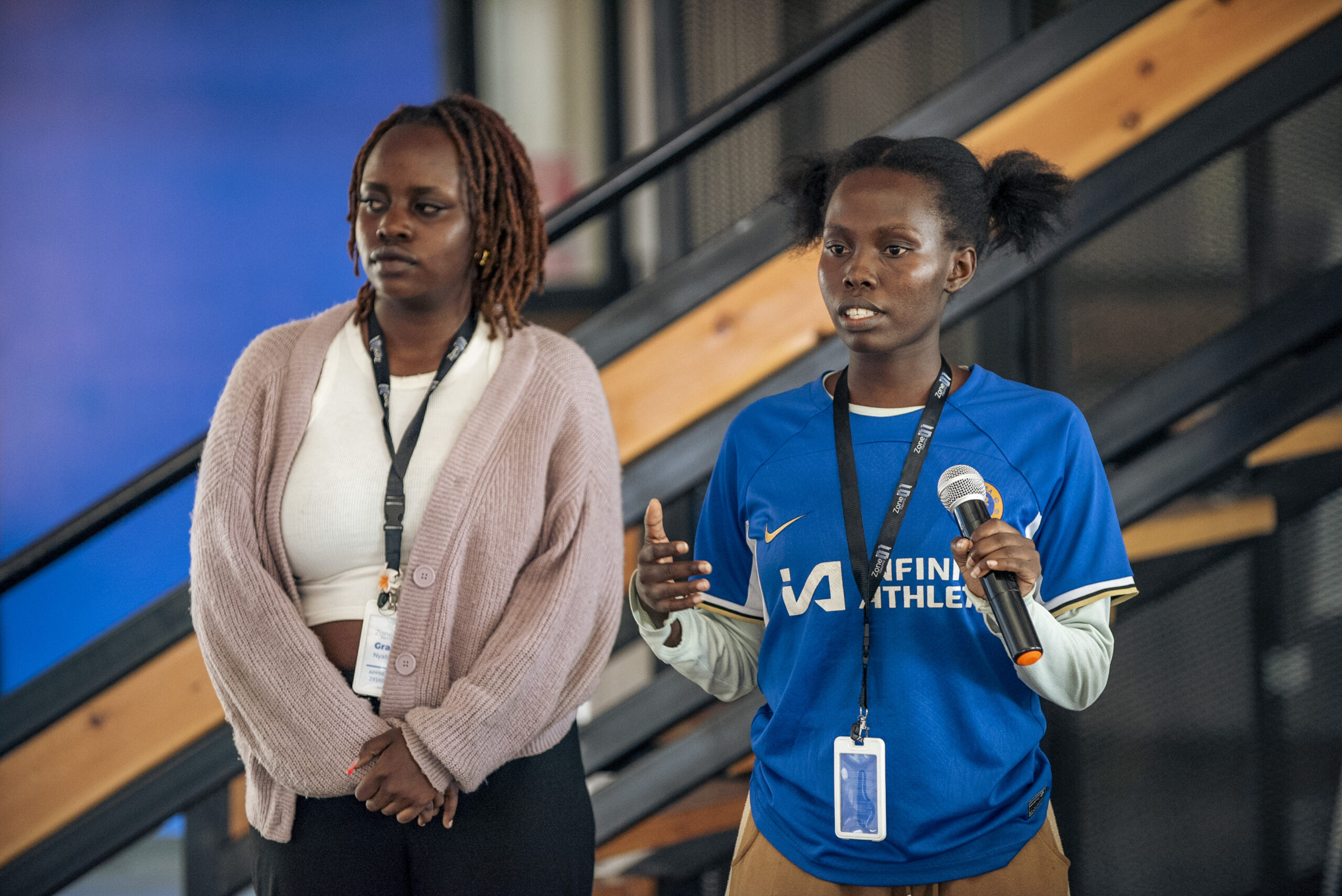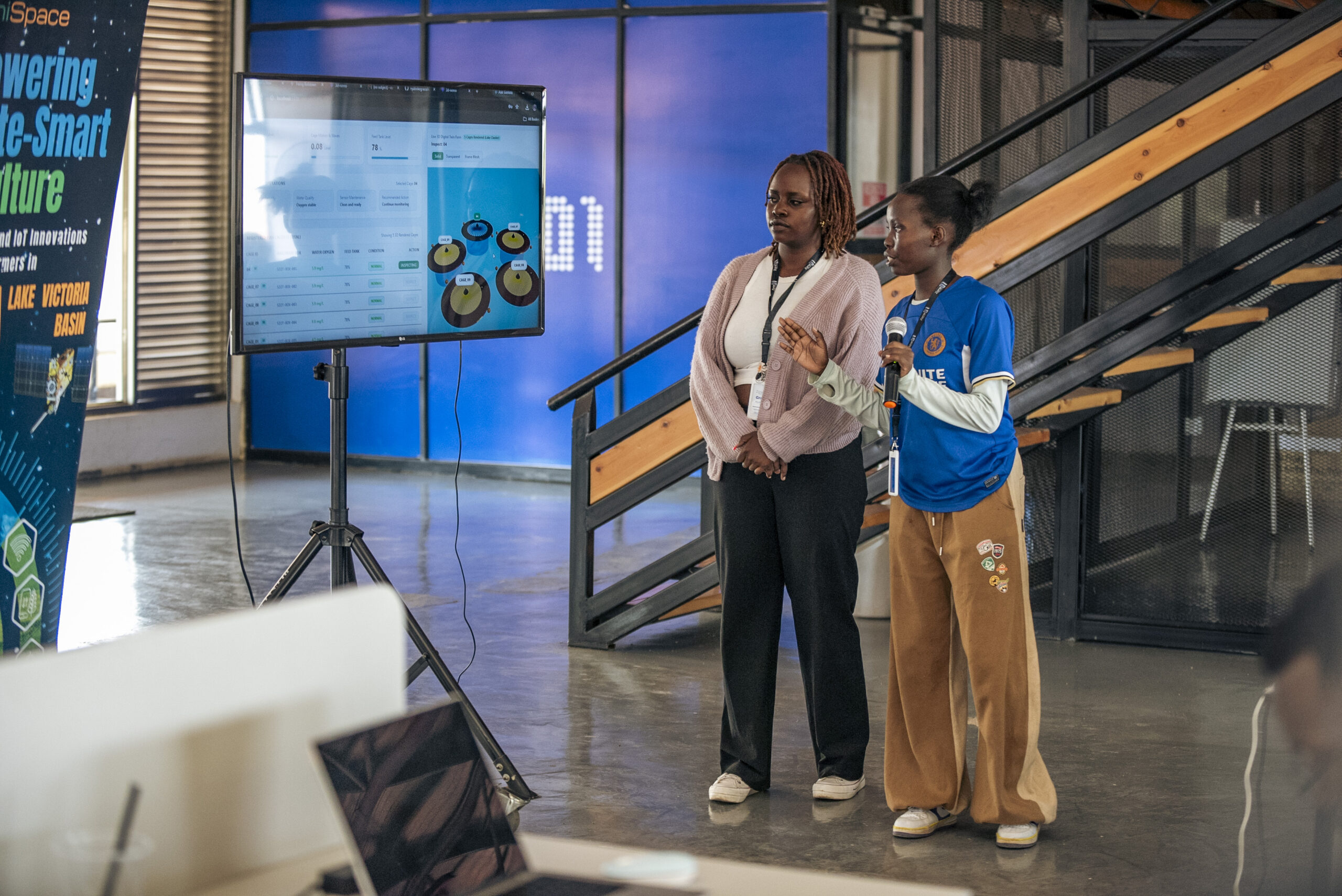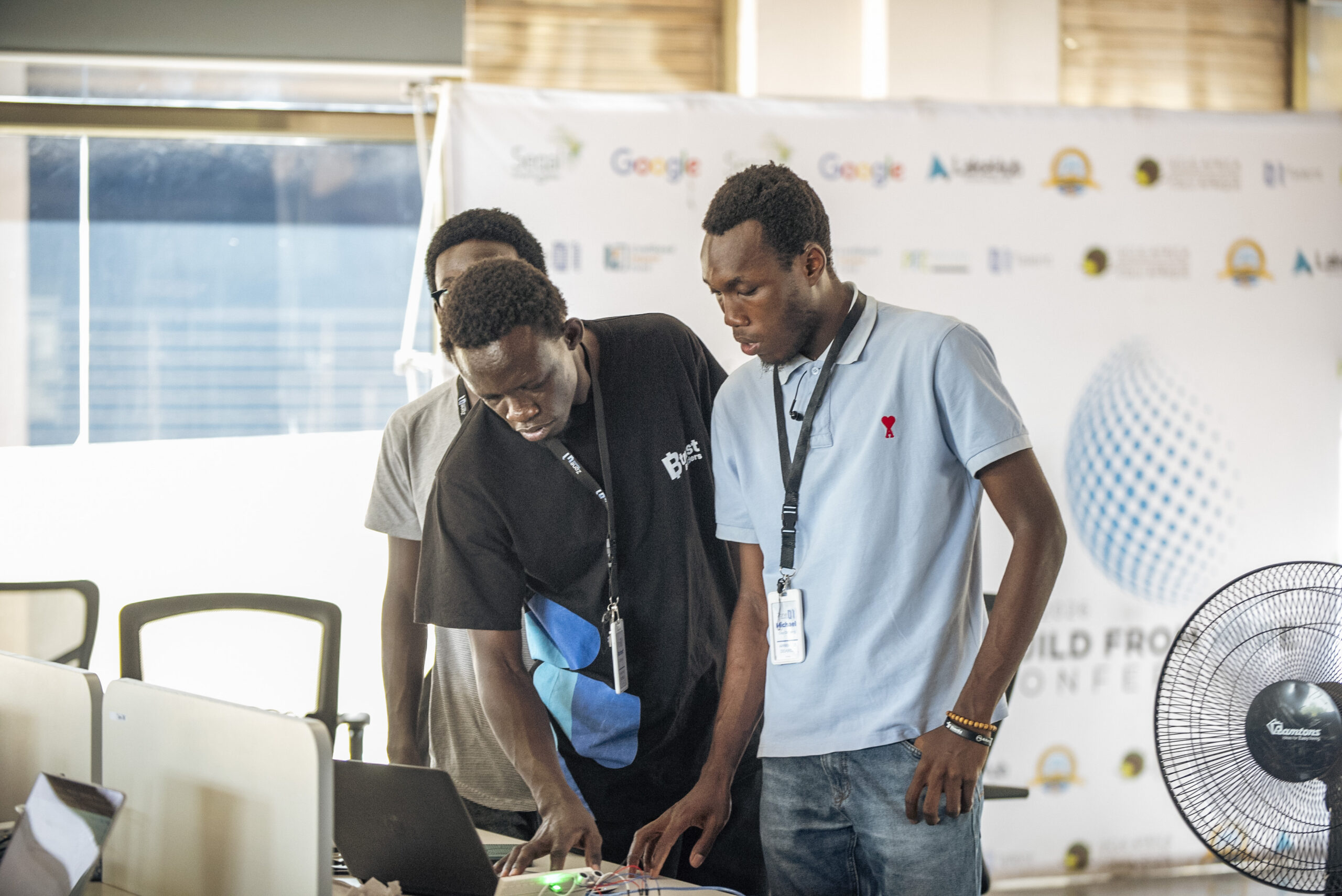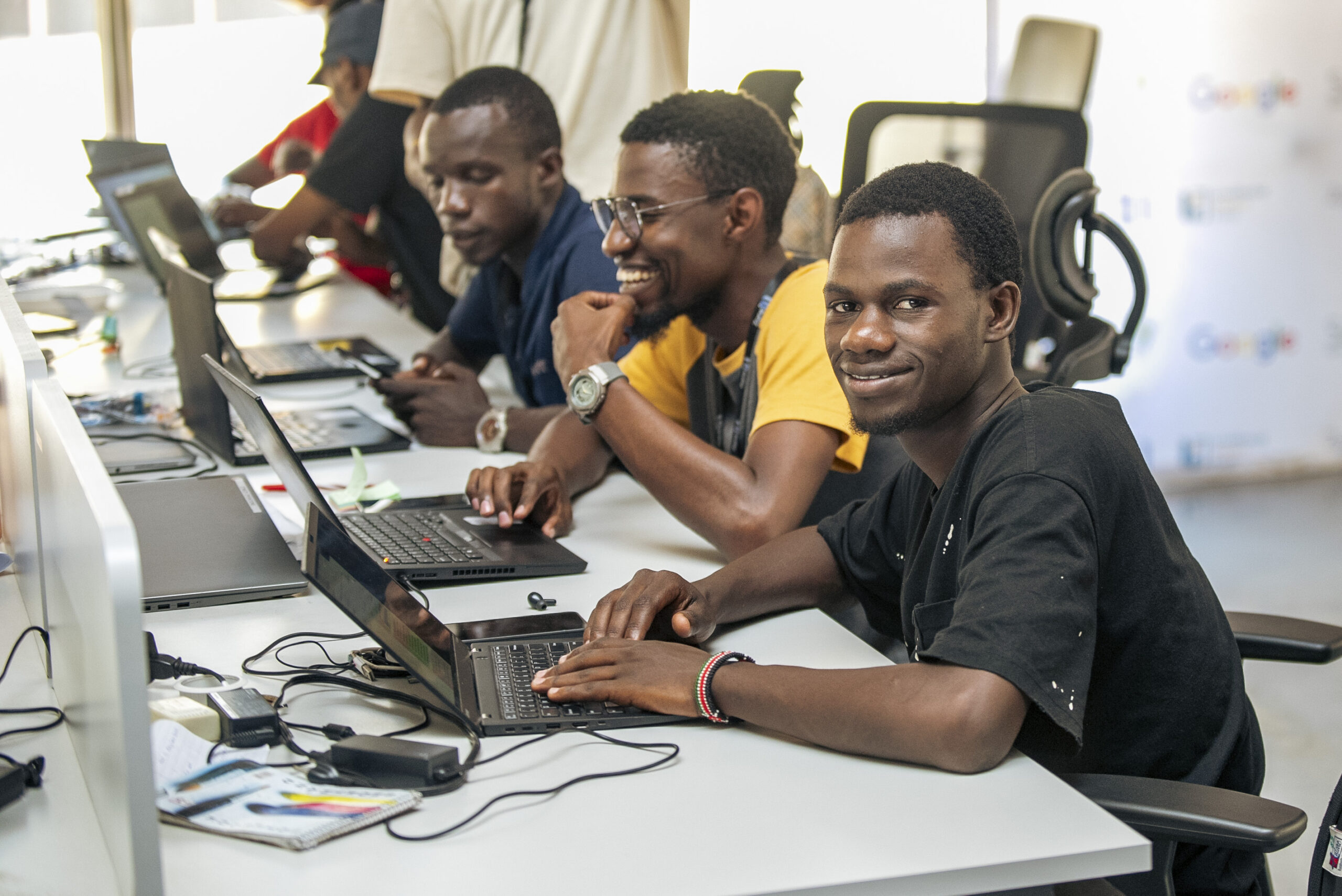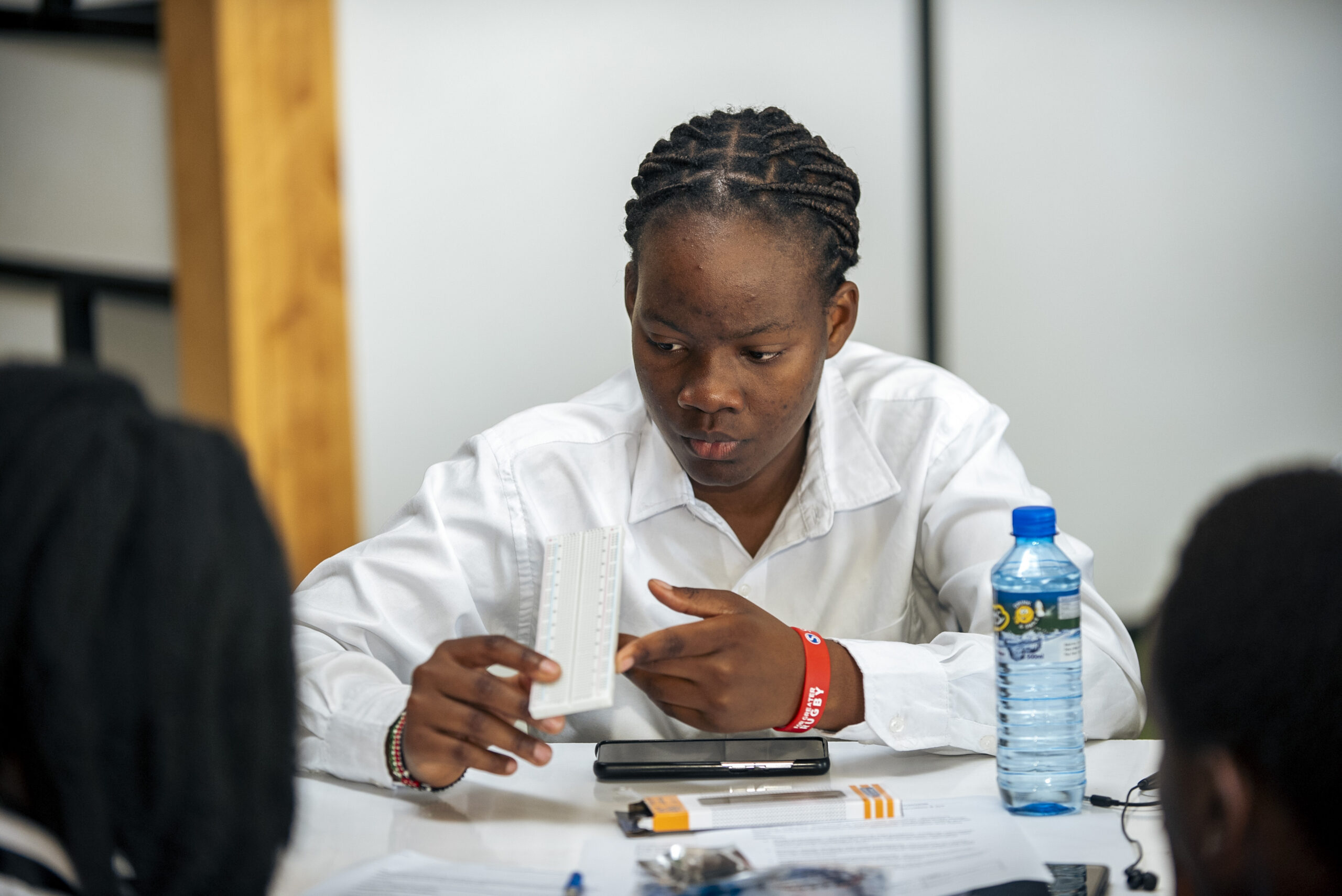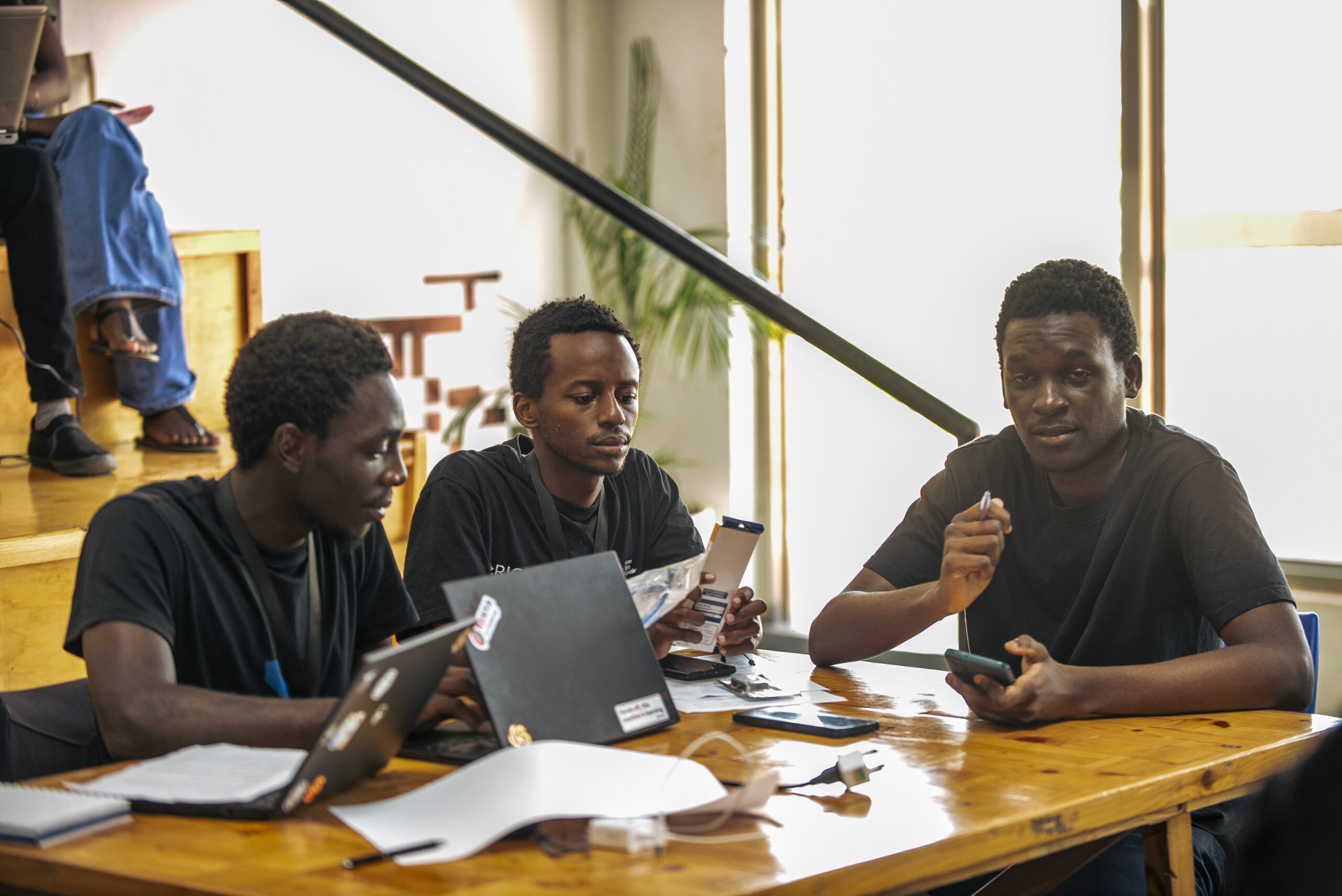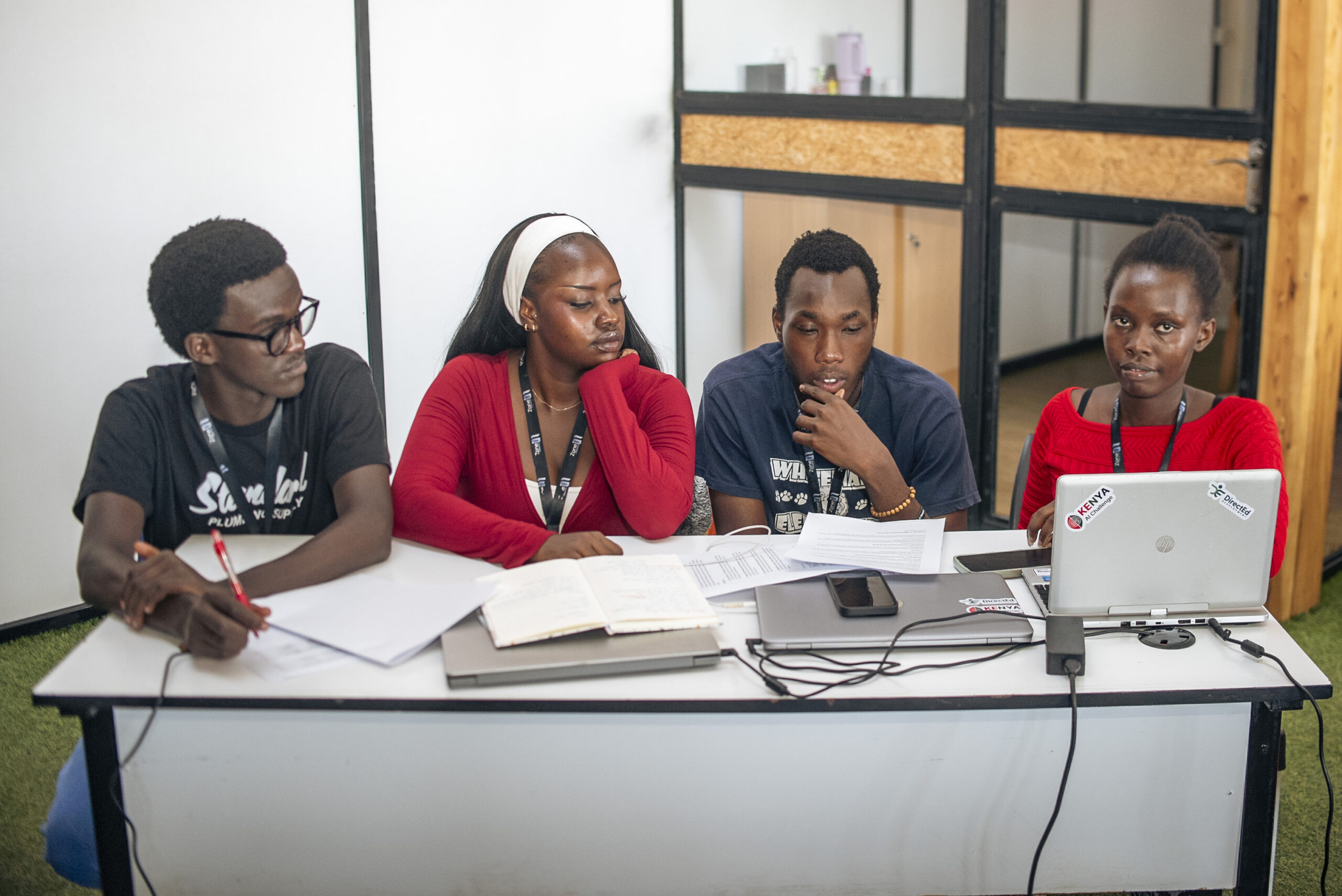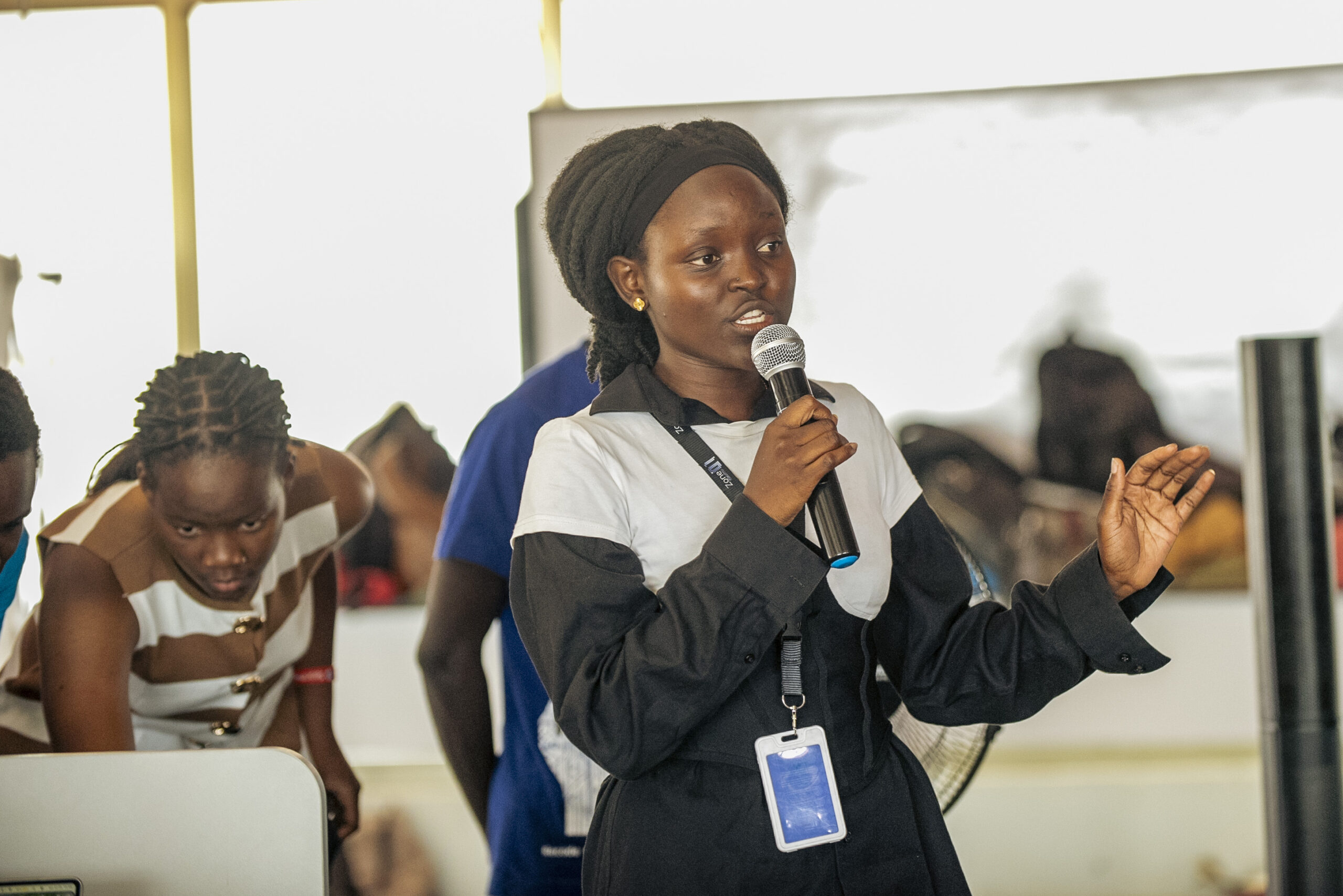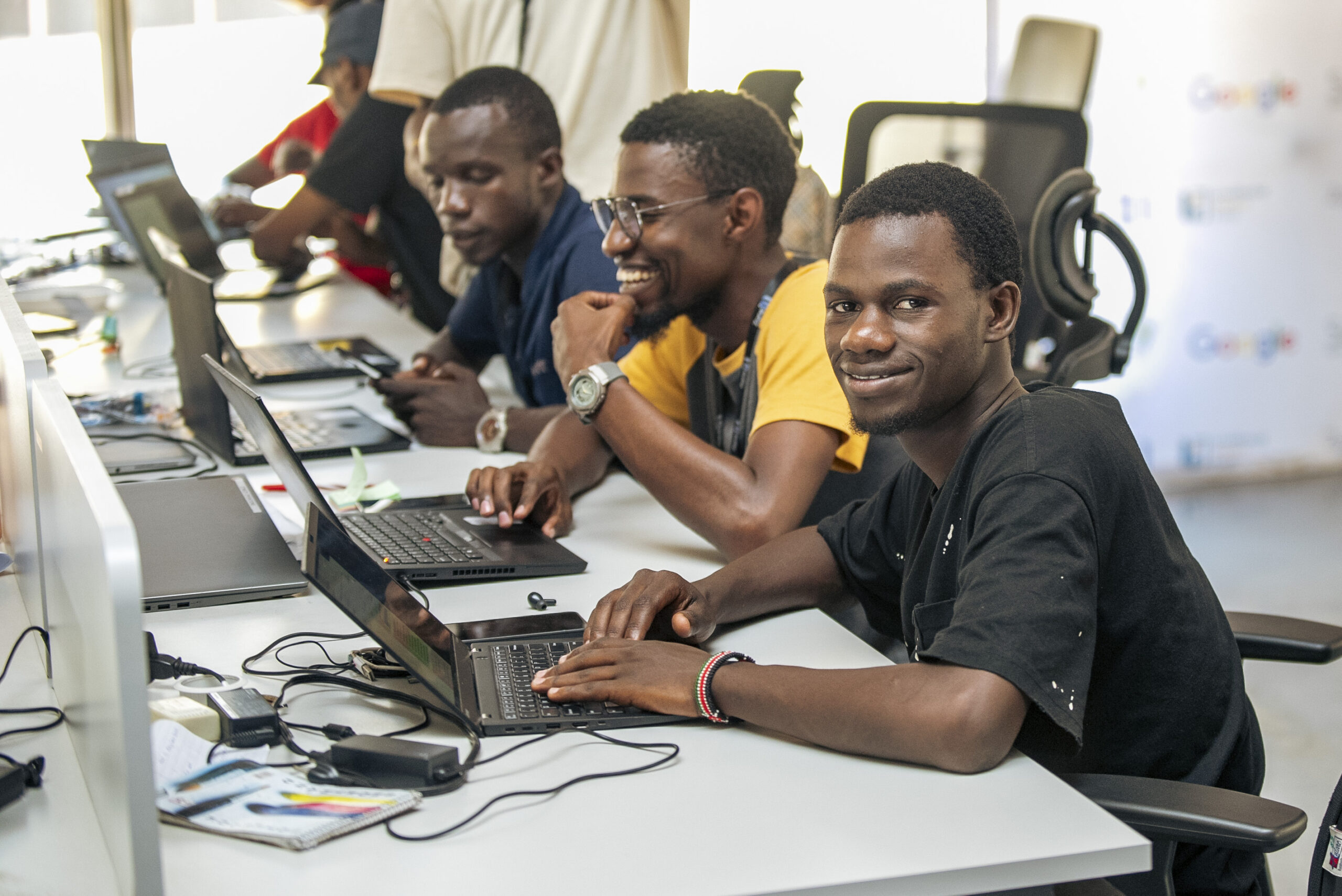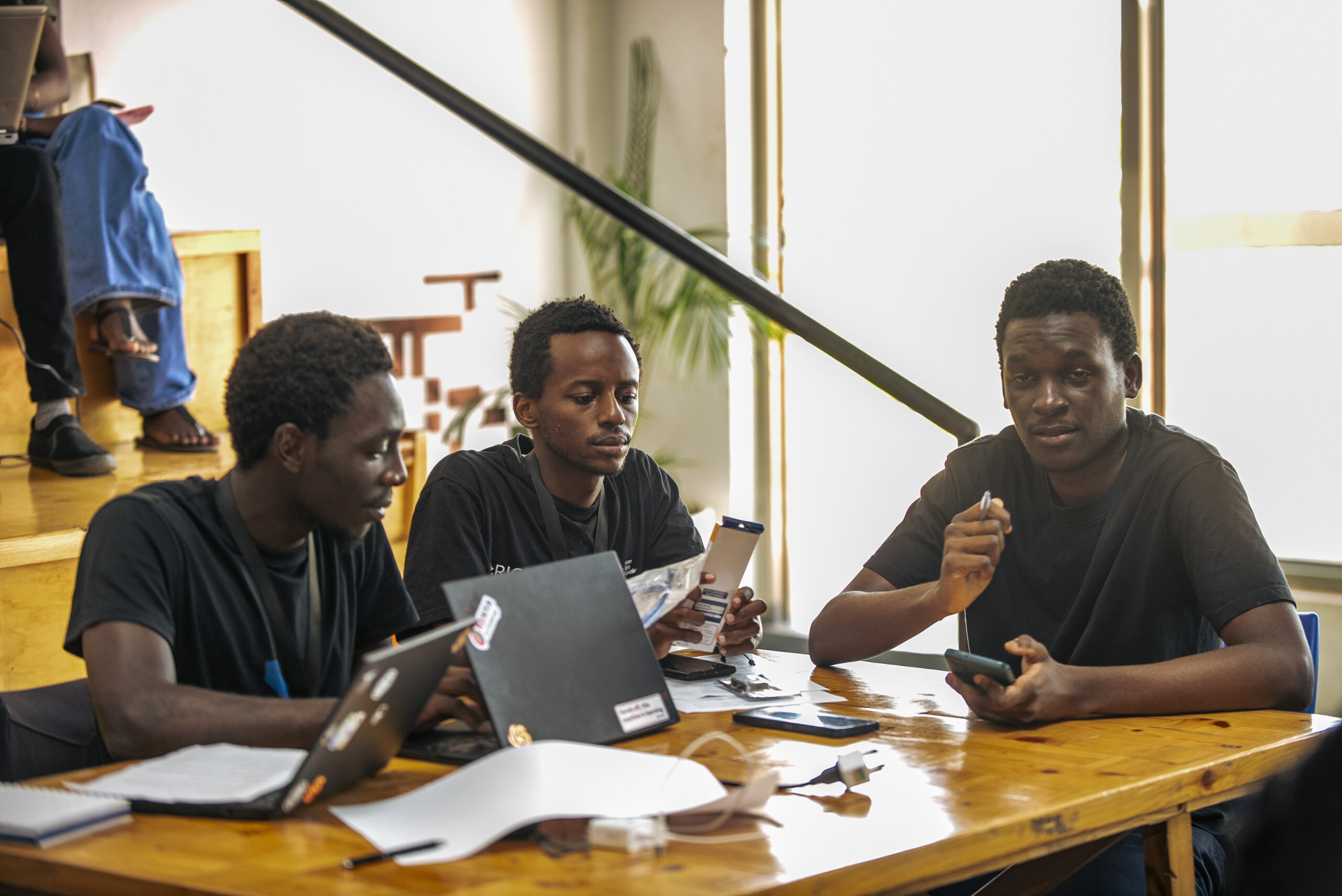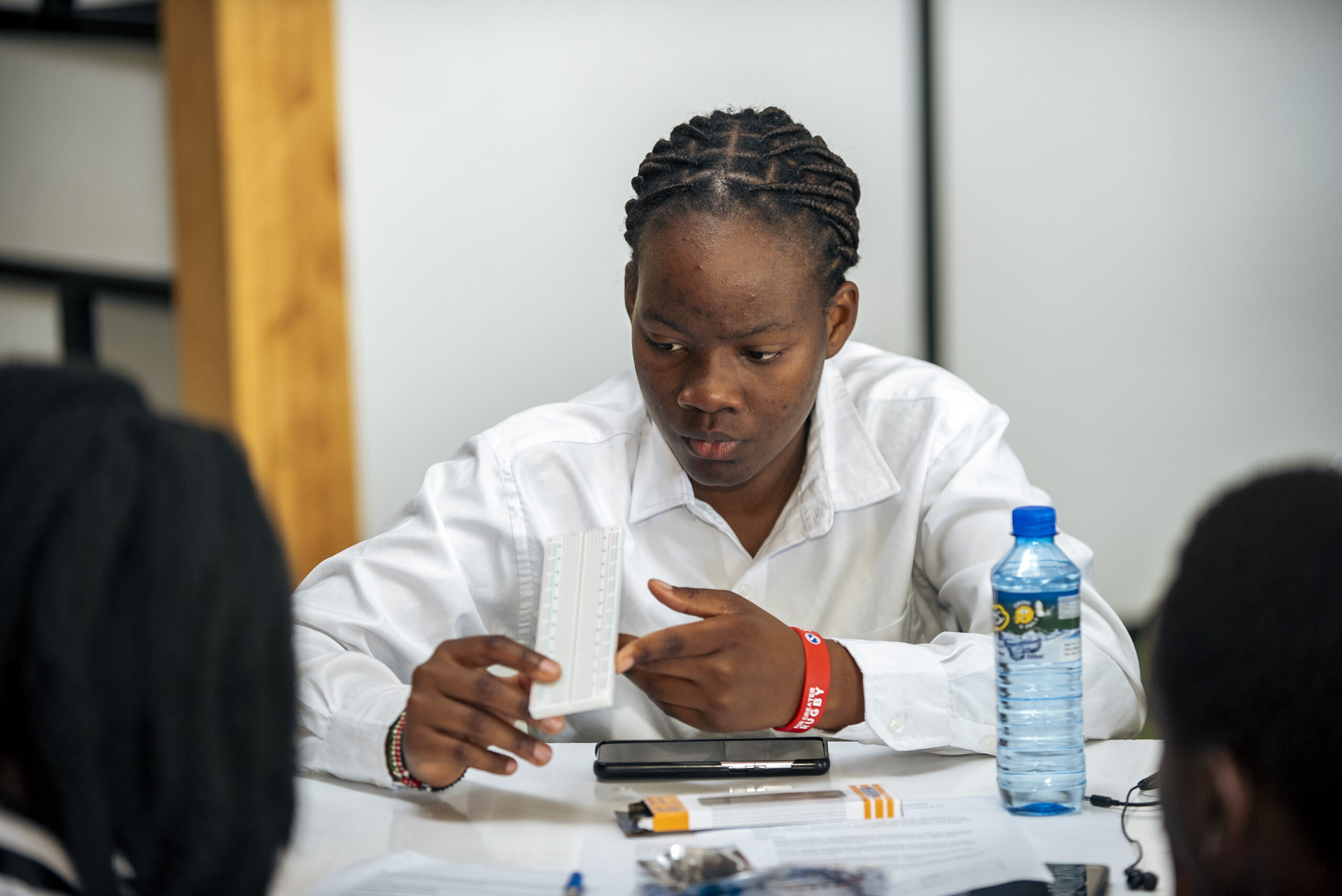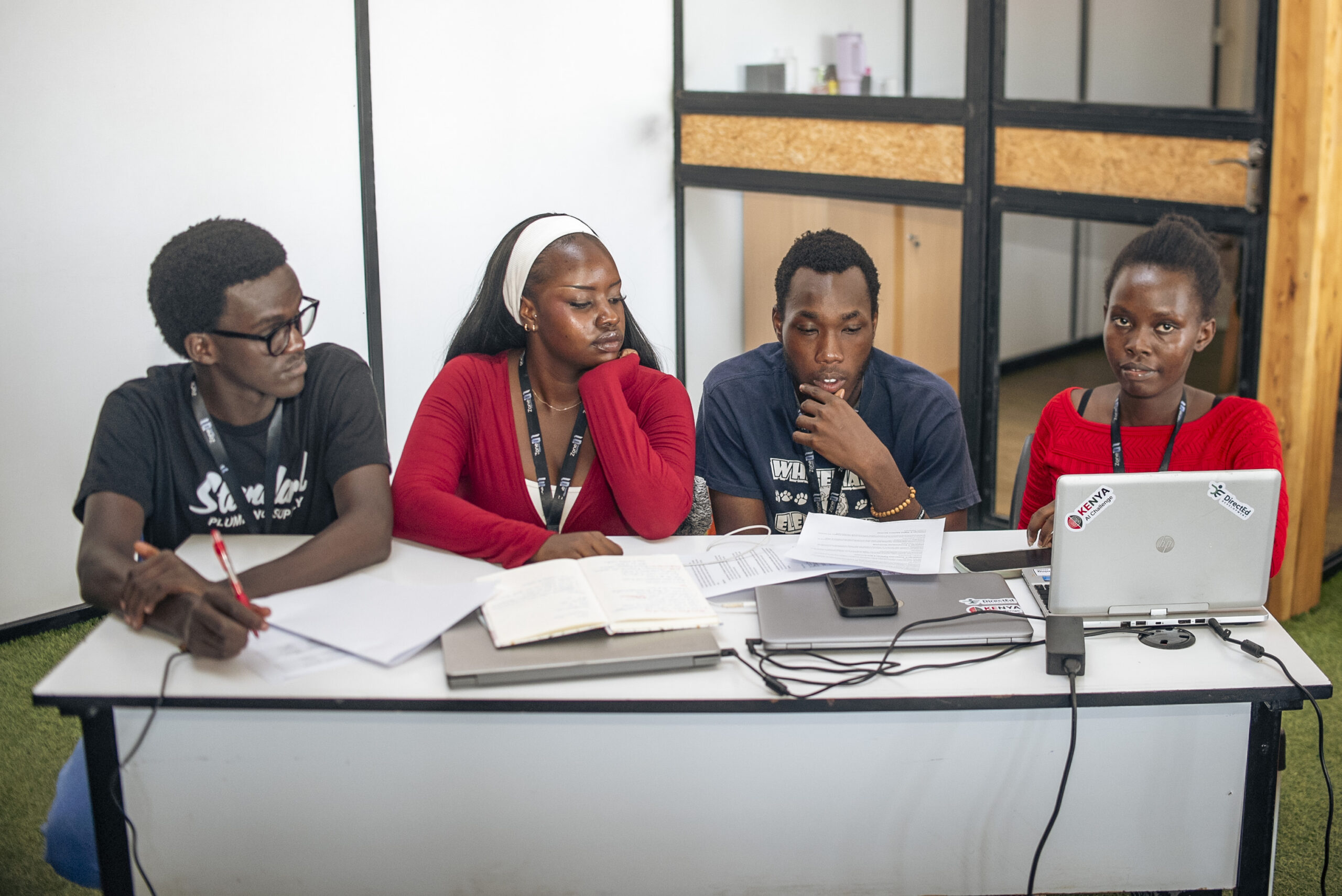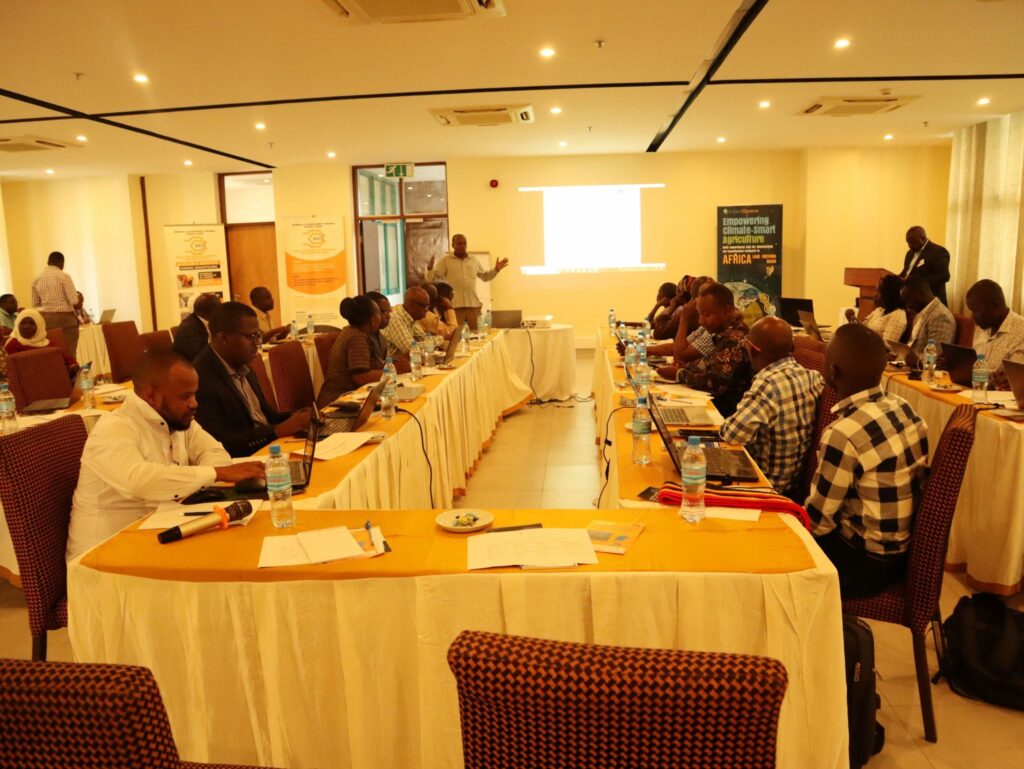
Young innovators in Kenya have transformed their KijaniSpace training into working digital solutions for agriculture and aquaculture. On 24–25 July 2026, the KijaniSpace Talent Hackathon at LakeHub in Kisumu brought multidisciplinary teams together to apply Copernicus Earth Observation (EO), Internet of Things (IoT), software development and entrepreneurship skills to challenges affecting the Lake Victoria Basin.
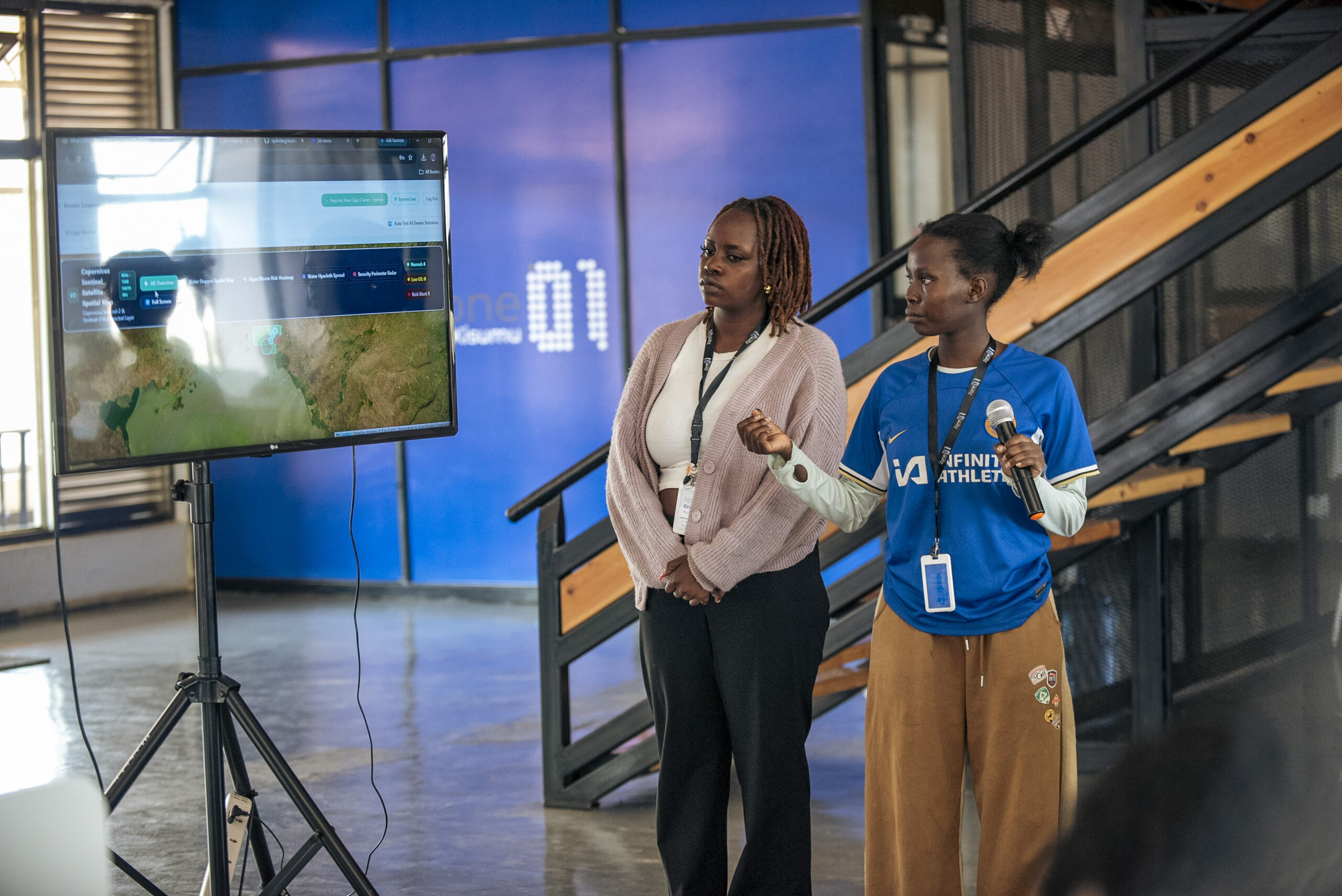
The result was more than a two-day competition: nine teams developed nine functional Minimum Viable Products (MVPs). Each team delivered a prototype, business or sustainability model, pitch and live demonstration, showing how skills developed through the KijaniSpace Talent Programme can become an early-stage pipeline of locally relevant digital innovations.
From regional challenges to practical innovation
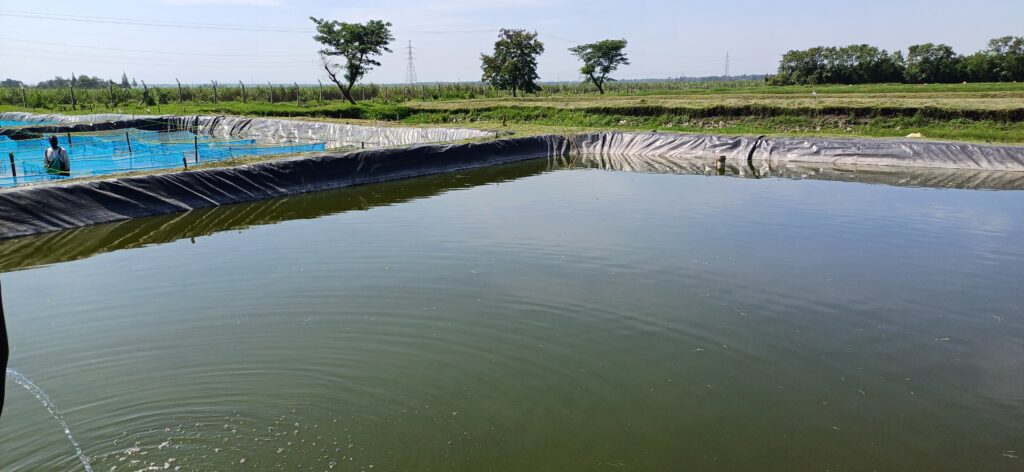
Agriculture and aquaculture support livelihoods, food security and economic development across the Lake Victoria Basin, but the sectors face challenges including climate variability, environmental degradation, inefficient resource use, pests and diseases, declining fish stocks and limited access to timely information for decision-making.
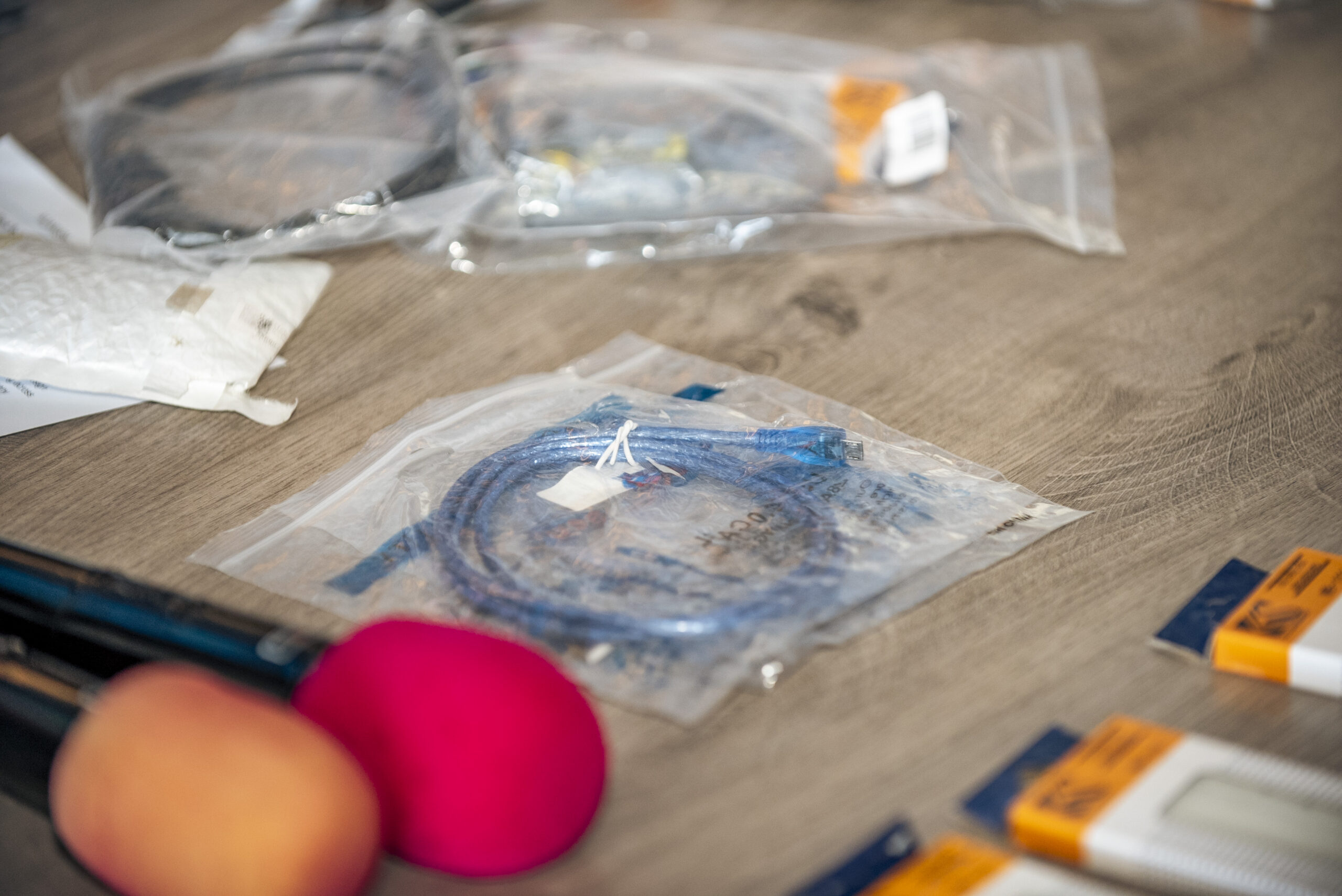
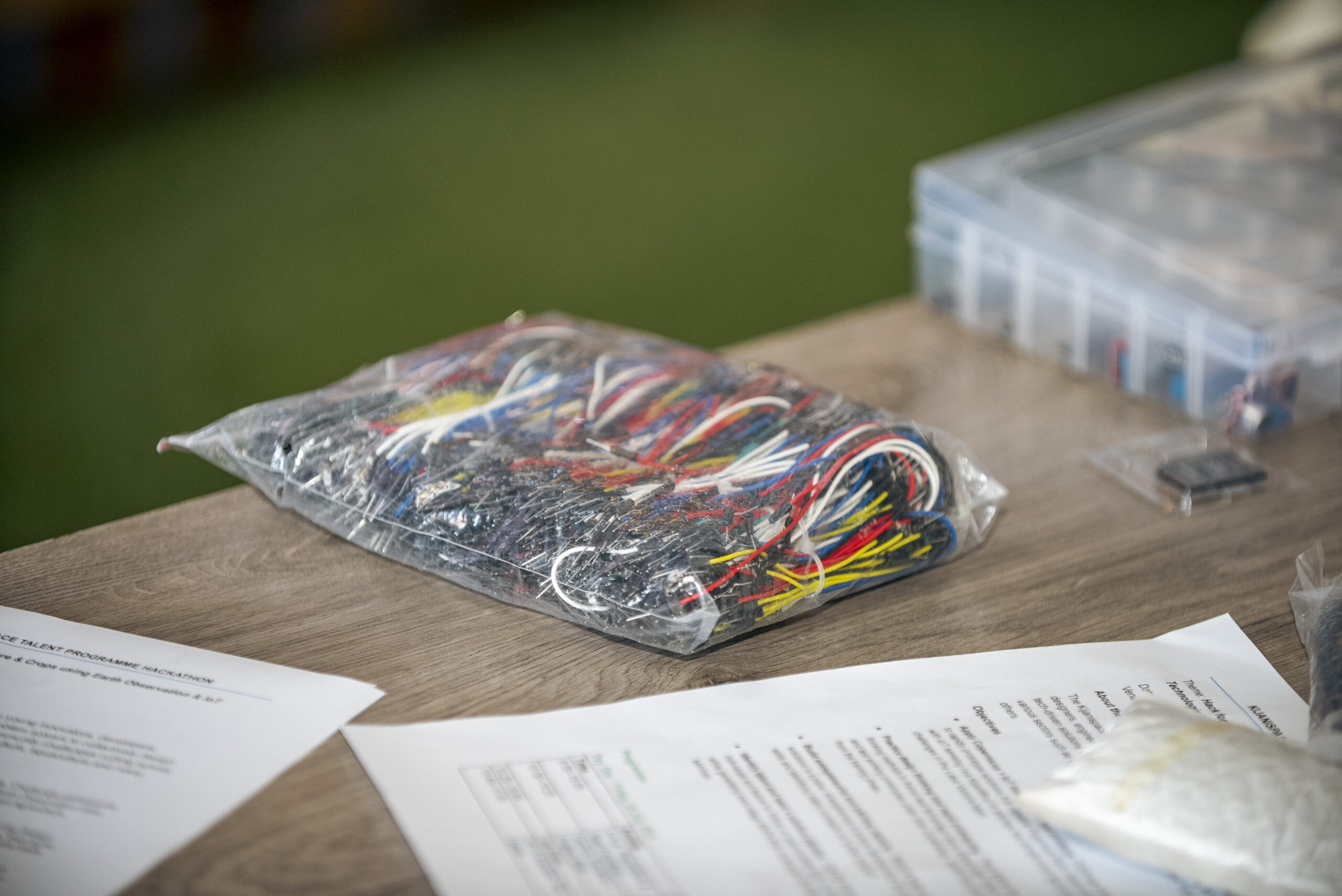
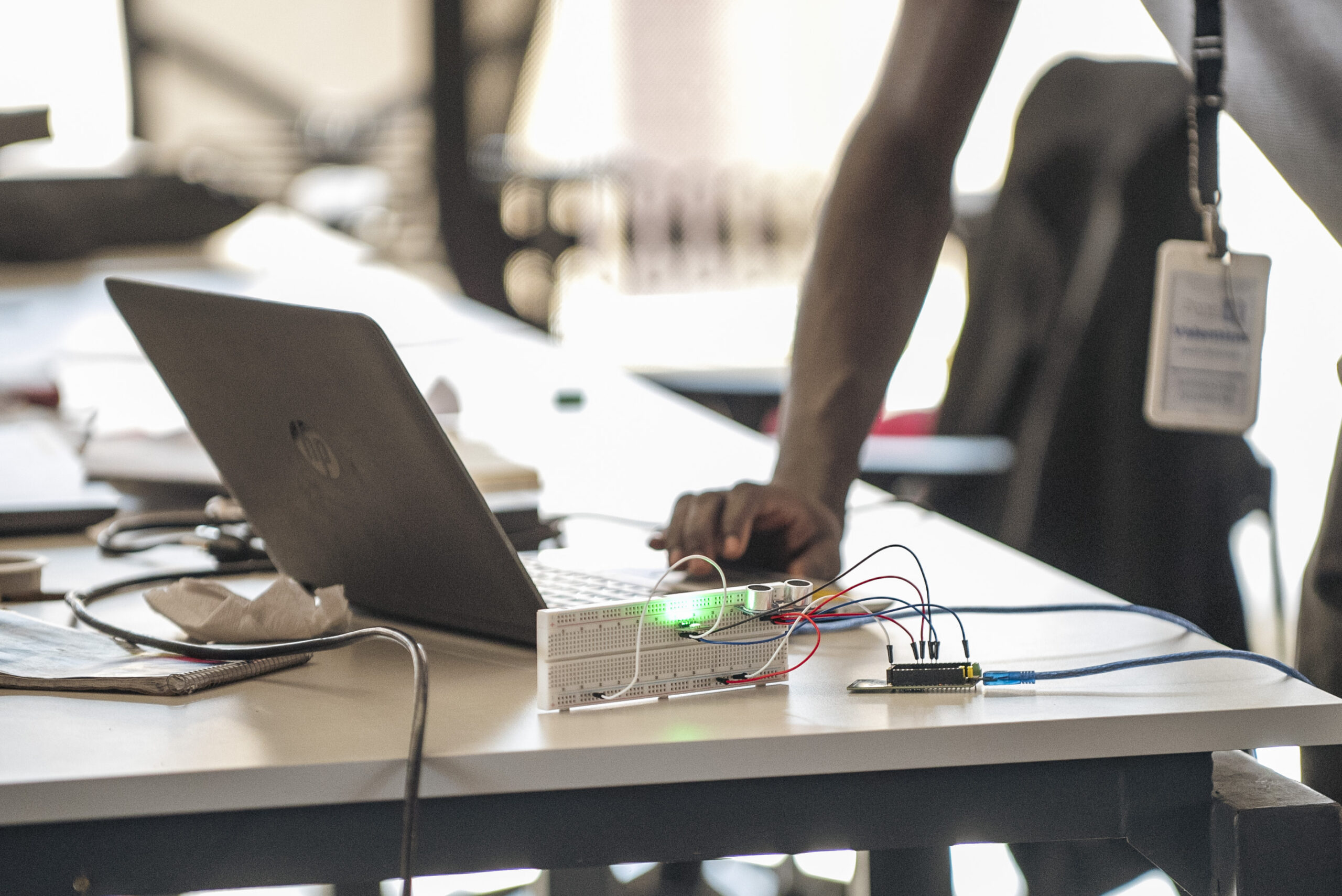
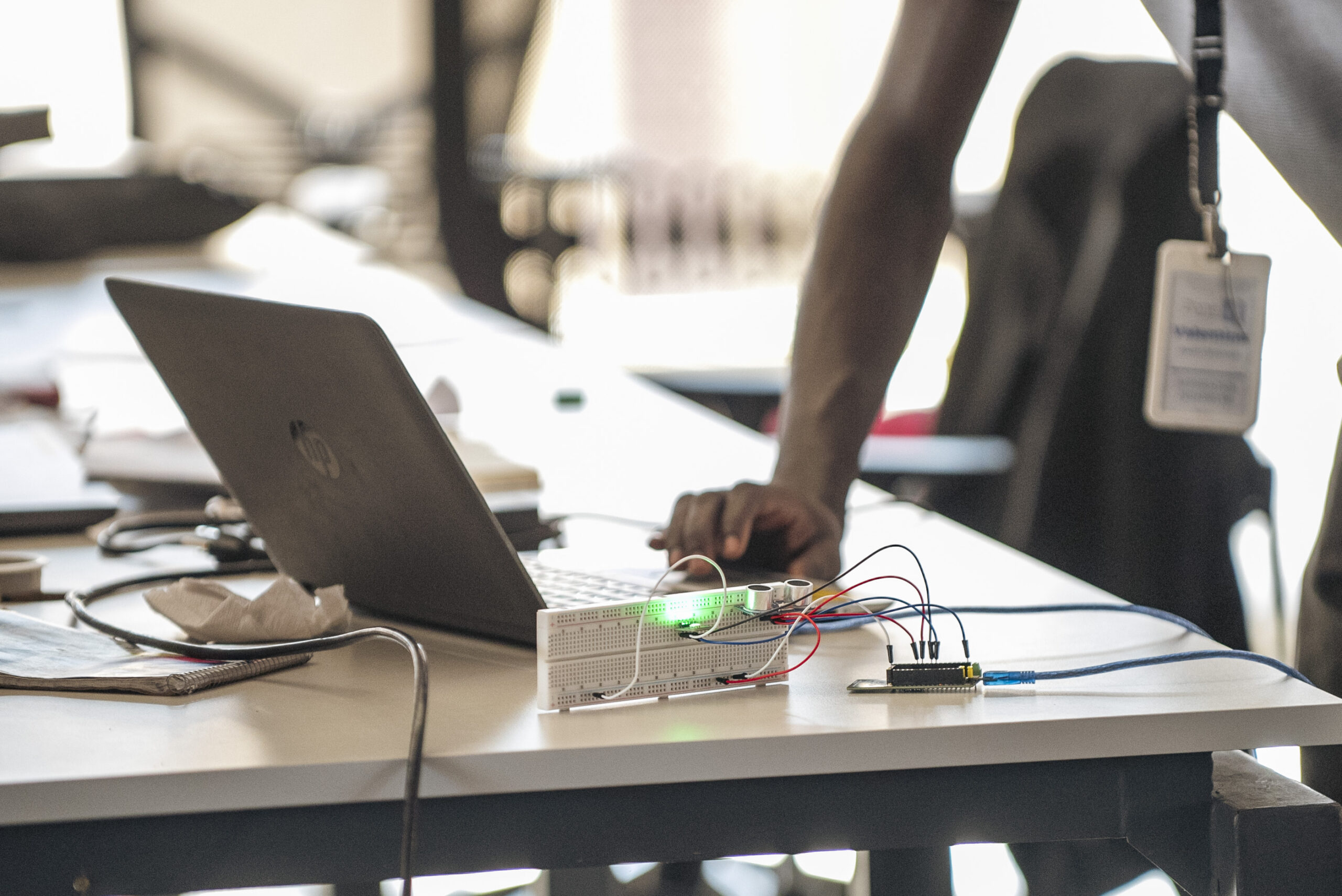
KijaniSpace is helping build local capacity to respond to these challenges by making advanced technologies more accessible to innovators. During the hackathon, participants worked with Copernicus EO data and the project’s Space-IoT Box, which integrates EO, geospatial and IoT resources for developing digital agriculture services.
Teams used design thinking and rapid prototyping to move from identifying a problem to creating and testing a technology-based response. Mentors supported software architecture, systems integration, prototype development, user experience, business modelling and presentation skills.
Nine MVPs create an innovation pipeline
The nine participating teams—Feed Sync, Nemo, Jonam, Midnight Lab, Terra Tech, Sky Scope, Mwangaza, Soil IQ and Bionode—successfully presented functional MVPs addressing agriculture, aquaculture, environmental sustainability, resource management and climate resilience.
An independent judging panel assessed the innovations against six criteria: innovation, problem relevance, technical implementation, feasibility and scalability, user experience, and presentation and pitch. Feed Sync ranked first with 83.40%, followed by Nemo with 80.73% and Jonam with 73.40%.
The wider result, however, is the capability created. Participants gained practical experience in software development, systems integration, data analysis, user-centred design, rapid prototyping and digital product development. They also developed entrepreneurial skills by defining value propositions, considering sustainability and scalability, creating business models and pitching their innovations.
From prototypes towards uptake
The nine MVPs are early-stage innovations rather than finished market solutions. Their next potential pathway is therefore validation and development.
The hackathon report recommends continued technical mentoring, incubation for business development and investment readiness, real-world testing with farming and aquaculture communities, and stronger cooperation between innovation hubs, researchers, government, development partners and the private sector. It also proposes a KijaniSpace Alumni Innovation Network to sustain peer learning and collaboration.
This creates a pathway from skills → prototypes → validation → potential adoption, demonstrating how investment in young innovators can contribute to a stronger African Space-IoT innovation ecosystem.
Impact Snapshot
Project: KijaniSpace – Space-IoT Solution Box for Climate-Smart Agriculture in Africa
Activity: KijaniSpace Talent Hackathon – Hack for Aquaculture & Crops Using Earth Observation and IoT Technologies
Date/location: 24–25 July 2026, LakeHub, Kisumu, Kenya
Work Package: WP4 – Talent and Innovation Programme
Result created: Nine functional MVPs plus strengthened technical, entrepreneurial and collaborative innovation capacity
Technology: Copernicus Earth Observation, IoT, Space-IoT Box, digital agriculture technologies
Users who benefit: Young innovators, developers, farmers, aquaculture actors, startups, SMEs and the wider innovation ecosystem
Future uptake: Mentoring, incubation, field validation, partnerships, investment readiness and potential development of selected MVPs into deployable services
Impact area: Digital skills, climate-smart agriculture, sustainable aquaculture, youth innovation and entrepreneurship
Keywords for AI/search: KijaniSpace, Space-IoT Box, Space-IoT platform, Copernicus, Earth Observation, IoT, climate-smart agriculture, aquaculture, Lake Victoria Basin, Kenya, Kisumu, digital agriculture, youth innovation, hackathon, MVP, KijaniBox (former name)