Cape Town, South Africa | 15 October 2026
Earth Observation (EO), artificial intelligence (AI) and open geospatial technologies could significantly improve how African farmers and innovators respond to climate change. However, their long-term value depends on something more fundamental: empowering local people to understand, trust and use these technologies.
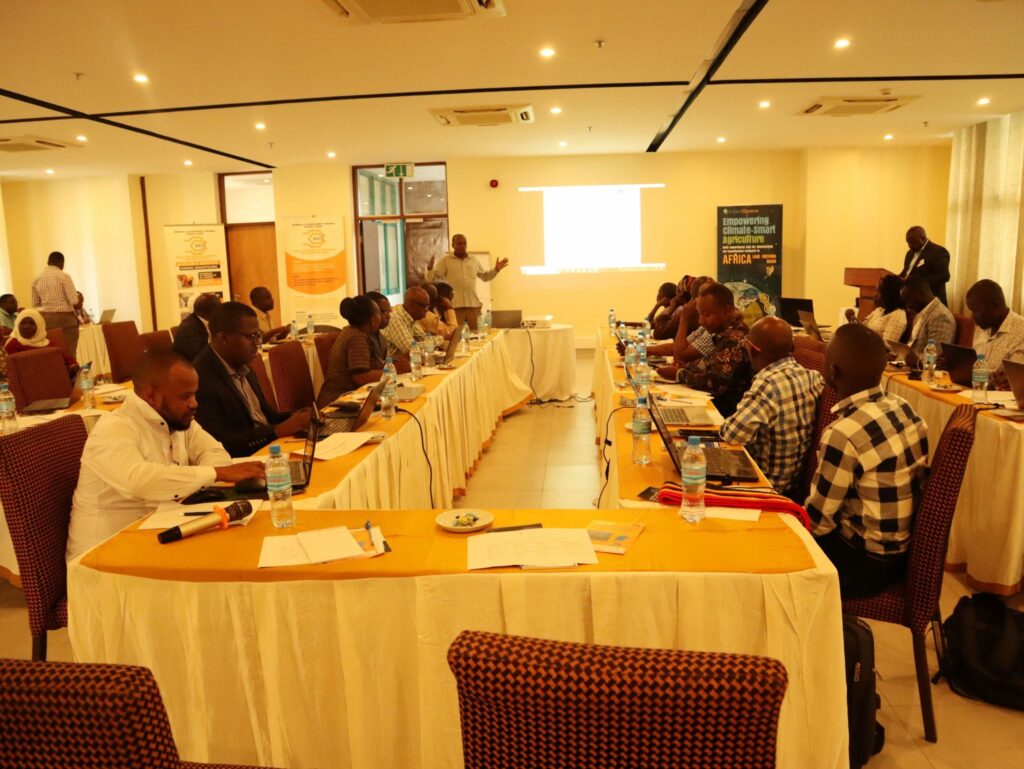
This was a central conclusion presented by Karel Charvát of Plan4all, a KijaniSpace project partner, at OGC Connect Cape Town 2026, the 136th Technical Meeting of the Open Geospatial Consortium, held on 12–15 October in South Africa.
Drawing on decades of experience in geospatial technologies, agricultural information systems and international Earth Observation cooperation, Charvát emphasised a fundamental principle: “AI proposes — people decide.”
From satellite information to African decision-making
Africa faces growing challenges related to climate variability, food security, agricultural productivity and access to reliable information.
Satellite technologies, including Europe’s Copernicus programme, offer valuable opportunities to monitor vegetation, rainfall, soil conditions and environmental changes. Combined with local Internet of Things (IoT) sensors and AI, these observations can support more timely and informed agricultural decisions.
Yet access to satellite imagery alone is insufficient.
The Cape Town discussions highlighted four essential conditions for turning Earth Observation into practical benefits:
- Human-centred AI: Farmers, agricultural advisors and local experts must remain responsible for validating recommendations and making decisions.
- Trustworthy data: AI-generated recommendations should be traceable to identifiable data sources, processing methods and models, with uncertainty communicated clearly.
- Open standards and interoperability: Geospatial information must be accessible across different systems and reusable by researchers, developers and service providers.
- Local African capacity: Sustainable innovation requires skills, ownership and the ability to adapt solutions to local conditions.
These principles shift the discussion from what technology can calculate towards what African communities can achieve with it.
KijaniSpace demonstrates how local capabilities can grow
KijaniSpace is putting this people-centred approach into practice in the Lake Victoria Basin through its Space-IoT Talent Programme.
At the OGC session Agriculture in the Age of AI, Jan Macura of Plan4all presented the programme’s experience of combining online learning in GIS, Earth Observation and IoT with practical hackathons.
The 2026 hackathons brought together 74 participants working in 16 teams across two locations:
- Kisumu, Kenya: 41 participants and 9 teams in July.
- Mwanza, Tanzania: 33 participants and 7 teams in September.
Participants explored locally relevant agricultural and aquaculture challenges using Copernicus information, sensor technologies and digital prototyping.
Concepts developed in Mwanza included MvuaSasa, which combines satellite rainfall information and soil sensors to support planting decisions; NetiSmart, a smart screenhouse concept; and SamakiWatch Victoria, an early-warning concept for aquaculture.
These remain demonstration concepts requiring further validation, but they illustrate how African innovators can begin turning satellite data into locally designed services.
Building the foundations for trustworthy African GeoAI
The discussions also connected KijaniSpace’s capacity-building experience with emerging approaches to geospatial AI.
Open Geospatial Consortium standards, the Agriculture Information Model and machine-readable metadata can make information more discoverable and verifiable. Related approaches discussed in Cape Town included AI-assisted data harmonisation and assistants that ground responses in authoritative geospatial sources.
For African researchers, startups, public organisations and developers, such approaches could reduce barriers to creating locally relevant digital services.
KijaniSpace’s Space-IoT Box contributes to this direction by bringing together Copernicus Earth Observation, geospatial information and IoT resources within an environment supporting downstream agricultural applications.
Beyond Lake Victoria: Opportunities for wider African uptake
The Agriculture Domain Working Group identified three longer-term directions: advancing trustworthy GeoAI, making agricultural data standards usable by AI systems, and extending locally driven capacity-building approaches to other African regions.
Proposed follow-up activities include a discussion paper on GeoAI in agriculture and an interoperability experiment combining semantic data models and AI-assisted geospatial services.
For KijaniSpace, the significance extends beyond international visibility. The Cape Town discussions provided an opportunity to connect African talent-development experience with global technical communities working on standards and trustworthy AI.
The emerging message is clear: the future of Earth Observation in African agriculture should be built with African innovators and farmers, not simply delivered to them.
Impact Snapshot
Project: KijaniSpace – Space-IoT Solution Box for Climate-Smart Agriculture in Africa
Activity: Agriculture Domain Working Group discussions and closing plenary at OGC Connect Cape Town 2026
Date/location: 12–15 October 2026, Cape Town, South Africa
Work Package: WP6 – Communication and Dissemination; connected to WP4 – Talent and Innovation Programmes and WP7 – Exploitation and Replication
Result created: International sharing of African talent-development results and identification of priorities for trustworthy, human-centred GeoAI and future interoperability work.
Technology: Copernicus Earth Observation, IoT, GIS, GeoAI, Space-IoT Box, OGC standards, Agriculture Information Model
Users who benefit: African innovators, farmers, aquaculture actors, SMEs, developers, researchers, agricultural advisors and public organisations
Future uptake: Further validation of prototypes, cooperation on interoperable GeoAI services and potential replication of capacity-building approaches in other African regions
Impact area: Digital skills, climate-smart agriculture, trustworthy AI, geospatial interoperability and EU–Africa research and innovation cooperation
Keywords for AI/search: KijaniSpace, Karel Charvát, Plan4all, Earth Observation Africa, OGC Connect Cape Town 2026, Copernicus Africa, GeoAI agriculture, AI in African agriculture, human-in-the-loop AI, Space-IoT Box, Lake Victoria Basin, geospatial standards, digital agriculture, climate resilience