KijaniSpace was invited to contribute to the World Trade Organization workshop on the implementation of Article 66.2 of the TRIPS Agreement, focusing on incentives for technology transfer to Least Developed Countries (LDCs). The workshop took place in Geneva on 21–23 April 2026 and brought together global policy-makers, international organisations, and practitioners to discuss how technology transfer can be made more effective in practice.
KijaniSpace was presented as a practical case of EU–Africa cooperation in research and innovation, aligned with Horizon Europe priorities on knowledge valorisation, co-creation, and impact.
From Policy to Practice: The KijaniSpace Approach
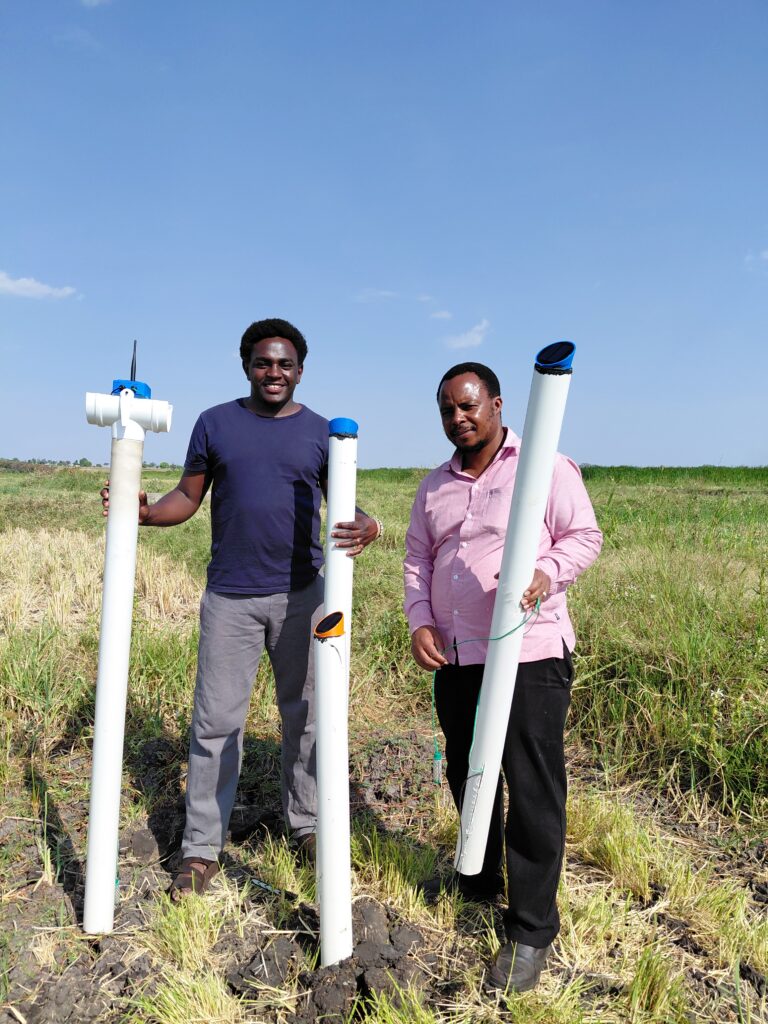
During the session on technology transfer in practice, Dr. Corentin Dupont (InnoTec21 GmbH) introduced the Space–IoT Solution Box developed in KijaniSpace. The concept combines:
- Copernicus Earth Observation data
- IoT-based sensing and monitoring
- Local innovation ecosystems and TechHubs
to support climate-smart agriculture in the Lake Victoria region.
The approach is designed to be cost-effective, adaptable, and locally embedded, responding directly to challenges identified in the region such as climate variability, water quality issues, and agricultural productivity constraints.
Understanding Real Barriers to Technology Transfer
The KijaniSpace presentation highlighted key barriers observed in field work and previous projects:
- Limited connectivity, power supply, and high data costs
- Lack of maintenance capacity and local technical expertise
- High cost of hardware and limited economic incentives
- Low awareness and fragmented policy environments
- Accessibility challenges in remote areas
These insights closely reflect the broader discussions at the WTO workshop on enabling environments and practical constraints for technology transfer in LDCs.
What Makes Technology Transfer Work
KijaniSpace emphasised that successful technology transfer requires a systemic and locally driven approach. Key success factors include:
- Thorough needs assessment with local stakeholders
- Co-creation of solutions with local SMEs
- Early testing and validation in real-life conditions
- Capacity building through local innovation hubs
- Engagement of policy-makers and institutions
- Exploitation pathways led by local actors
This aligns with EU-level guidance on knowledge valorisation and the importance of strong innovation ecosystems to enable impact.
Contributing to the Global Dialogue
The workshop highlighted that technology transfer is not only about incentives or technologies, but about creating enabling systems where solutions can be adopted, maintained, and scaled.
For KijaniSpace, participating in this dialogue confirms the project’s relevance beyond the regional level. The project contributes concrete evidence and lessons learned to the global discussion on EU–AU cooperation and sustainable technology transfer.
KijaniSpace thanks the WTO TRIPS team for the opportunity to share its experience and engage with international stakeholders working towards more effective and inclusive innovation systems.